

I’ve become more and more of a fan of old guns. I cursed myself today when I was outbid on an Ithaca 37 Police, and it’s now going for higher than I’m willing to pay. What wasn’t selling for higher than my willingness to pay was an FN Model 1922. I think what attracts me to older guns is that I don’t know much about them, what makes them tick, or their particular intricacies.
If you showed me the latest wonder pistol from any big manufacturer, I’m likely to see a striker-fired, polymer frame, double-stack 9mm. They can often be neat, but they don’t capture me. They don’t get the blood pumping. Old guns do, at least they do for me. Today we are looking at one of the few classic guns I’ve picked up at a gun show for a decent bargain price.
The Origins of the FN Model 1922
The FN Model 1922 pistol isn’t necessarily an original design. Instead, it’s a (then) new take on the John Moses Browning-designed FN Model 1910. The Model 1910 was a tiny, very concealable pistol that came in either .32 ACP or .380 ACP.
FN saw dollar signs in military contracts and went after them. But the Model 1910 was too small for military use, so they amped up the size in all directions. The barrel gained an inch and went from 3.5 to 4.5 inches overall. The grip saw an extension to fill the hand and allow for a larger magazine. The larger magazine allowed two more rounds for each caliber. FN Model 1922 handguns in .32 ACP held nine rounds and .380 ACP variants increased to eight rounds.
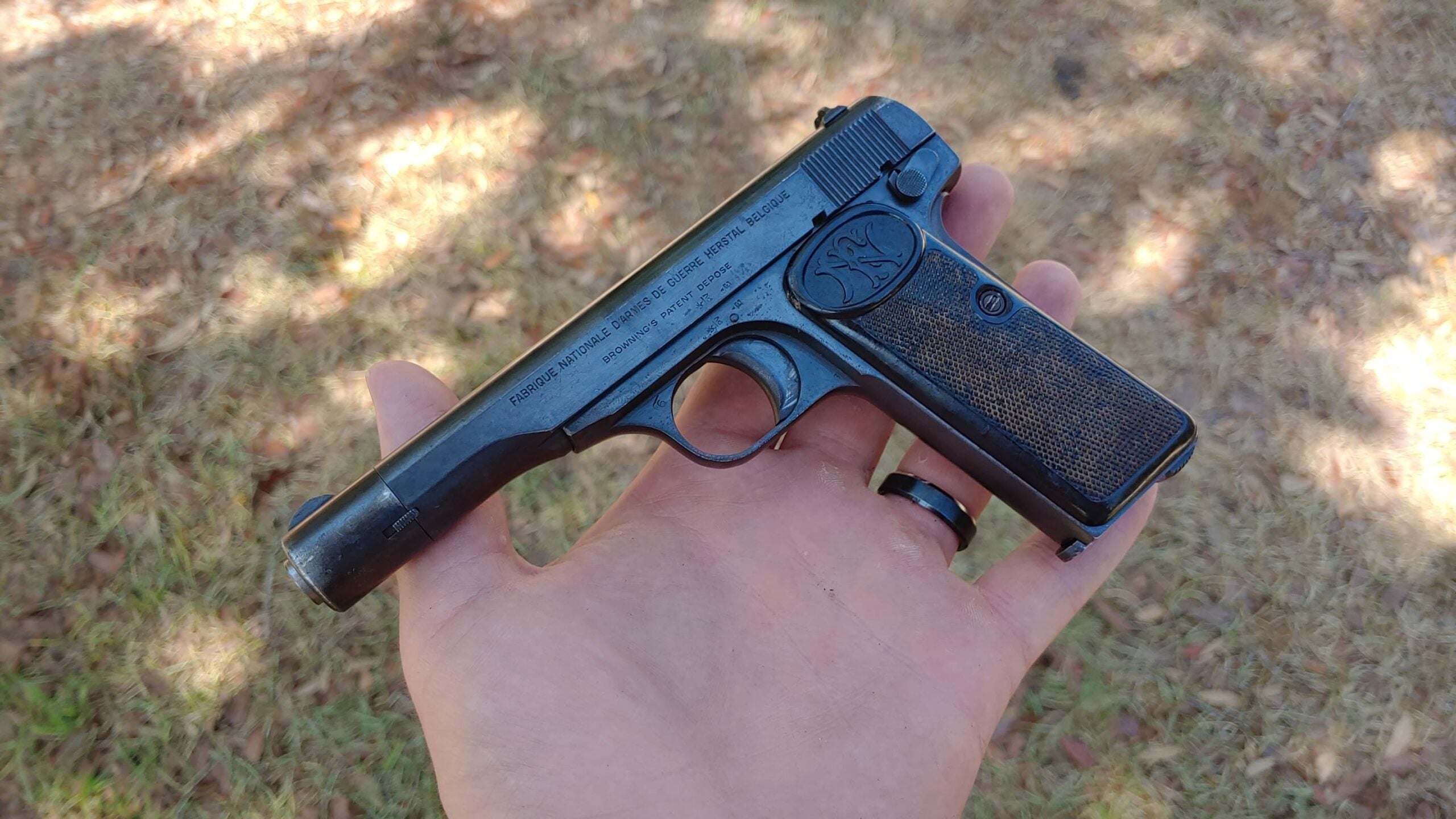
Clearly, what constitutes a duty pistol was different in those days, especially in Europe. The Yugoslavian military adopted the FN Model 1922, and so did police and military forces in Belgium, Denmark, Finland, Greece, and Turkey.
Under Nazi occupation, the Belgium firm continued to produce the pistols for the Wehrmacht, and those models are often considered valuable collector’s items. Fun fact: because of the occupation of Belgium in both World Wars, the Belgians would license the FAL design to them, which led to the G3.
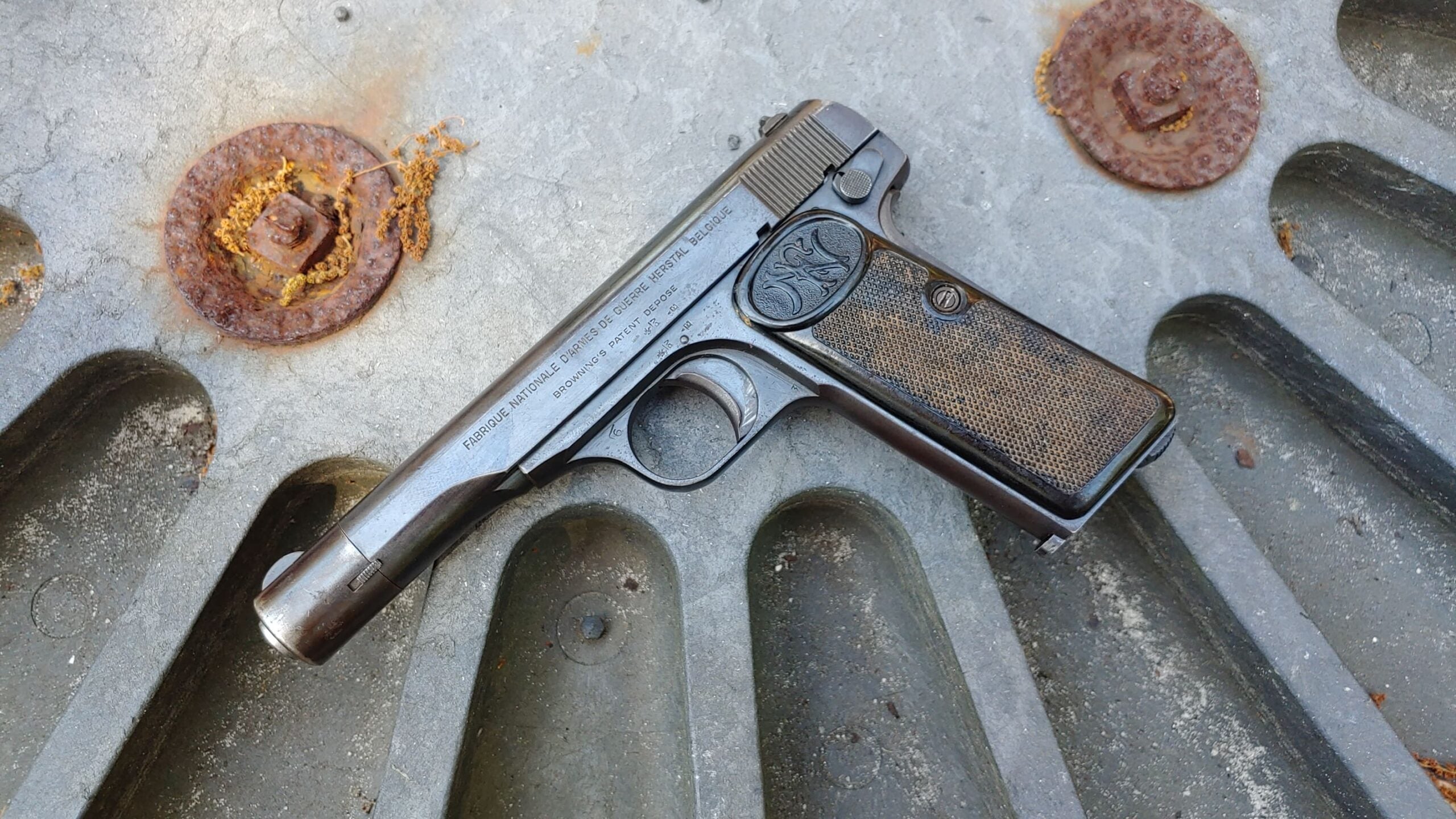
My 1922 is pretty standard without any fancy provenance. After WW2, the pistols were spread everywhere, including West Germany.
At the Gun Show
I picked up the FN Model 1922 — just in time for its centennial — from the same kind fella who sold me the Astra 600. I got both guns for a heckuva deal. This was the first 1922 I’ve seen at a gun show in a decade. The pistol was advertised as a .32 ACP, so I ended up purchasing two boxes of .32 ACP for it. The magazine said 7.65 mm.
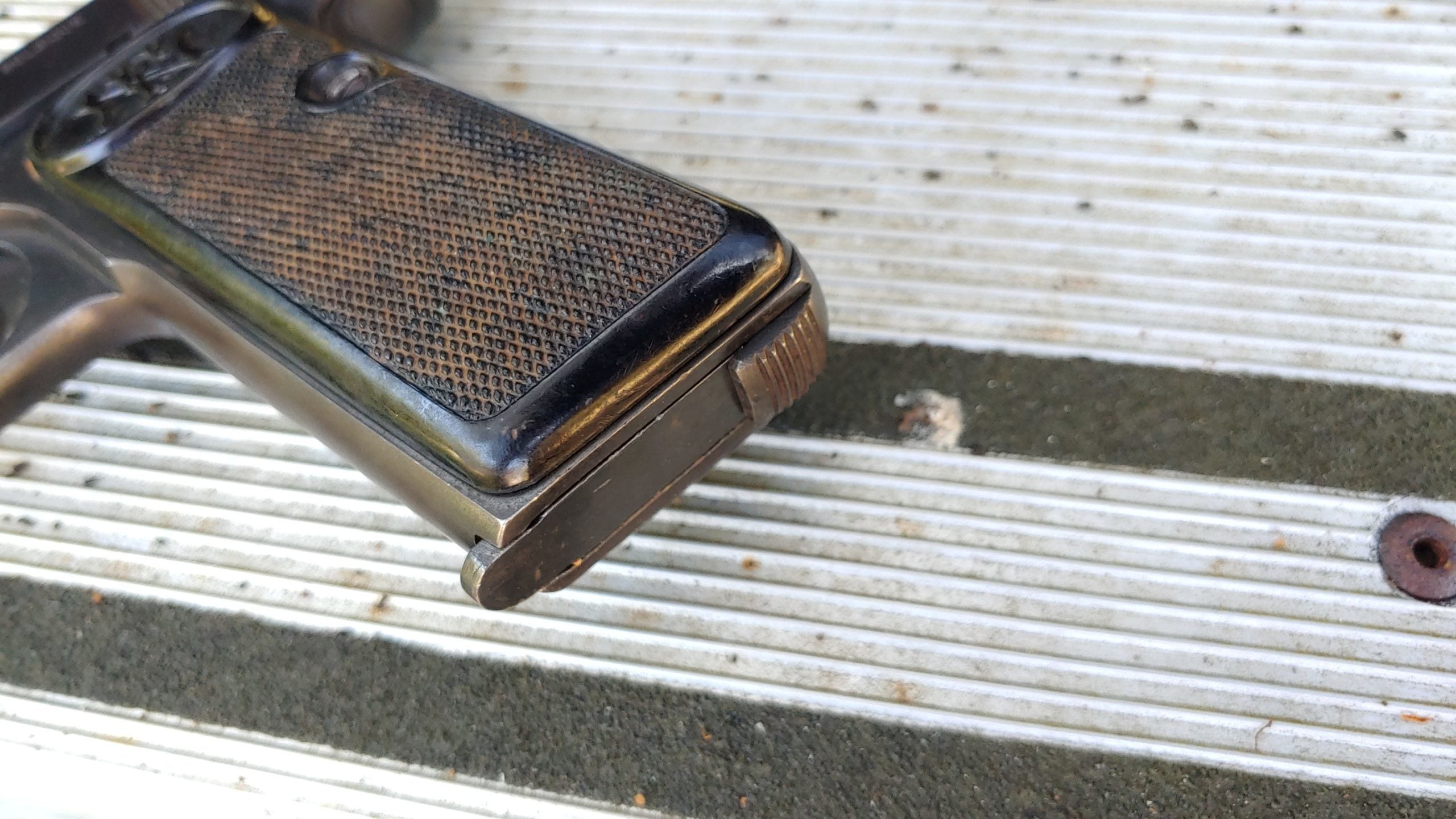
When I got home and examined the pistol more closely I noticed the bore looked a little big for .32 ACP. I dropped a projectile down the barrel and quickly realized that what I actually had the .380 ACP variant.
That ended up being just fine since I had a few boxed of the ole 9mm Kurz in the closet. The rounds fit into the magazines without issue and the mags are likely identical between .32 ACP and .380 ACP pistols.
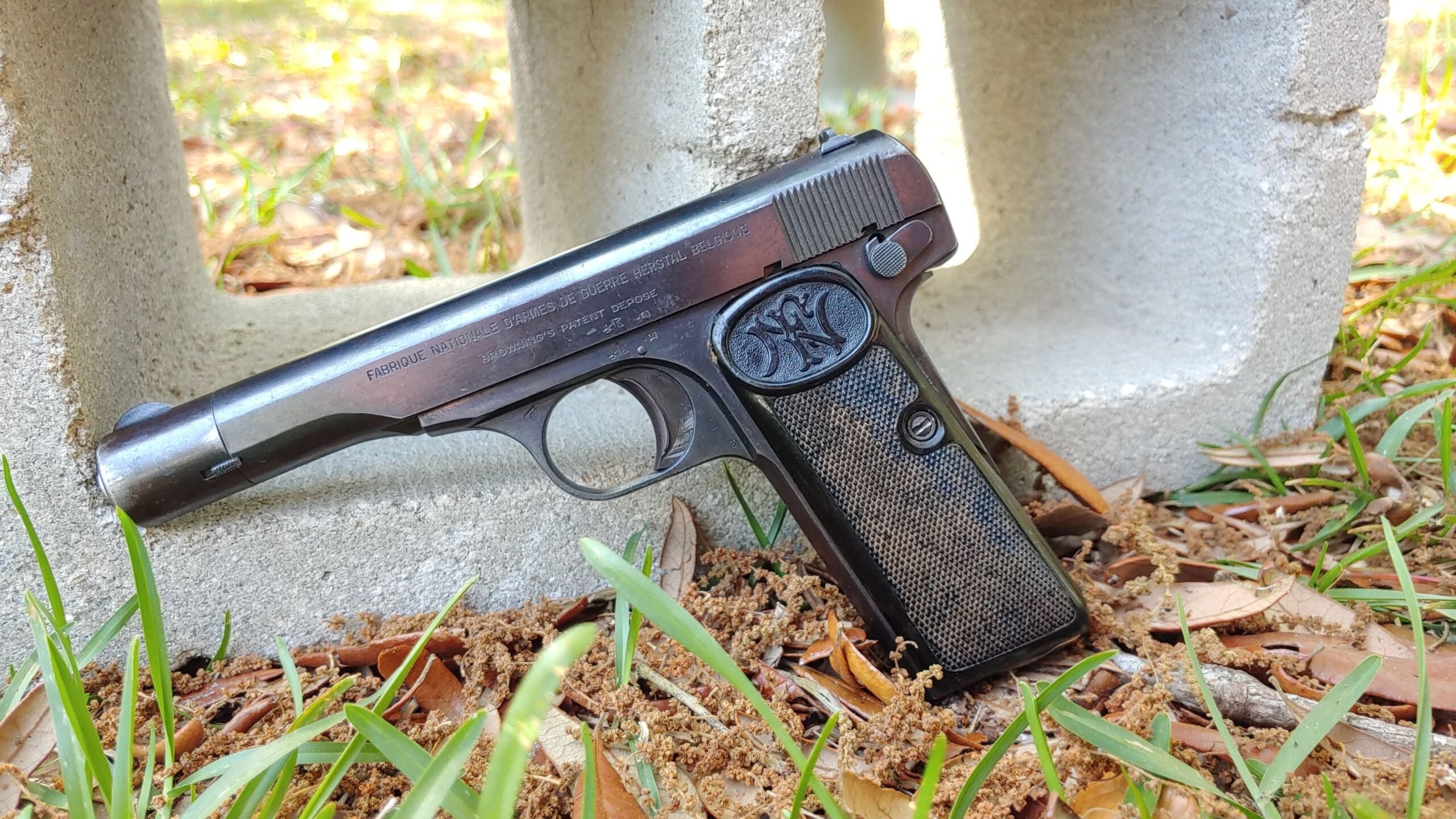
The FN Model 1922 has Browning’s fingerprints all over it. I mean, FN chambered it in two cartridges, both created by JMB himself. Second, it’s a striker-fired gun, a popular choice Browning made. Don’t forget the necessity of a grip safety, a manual safety, and magazine safety. Check, check, and check.
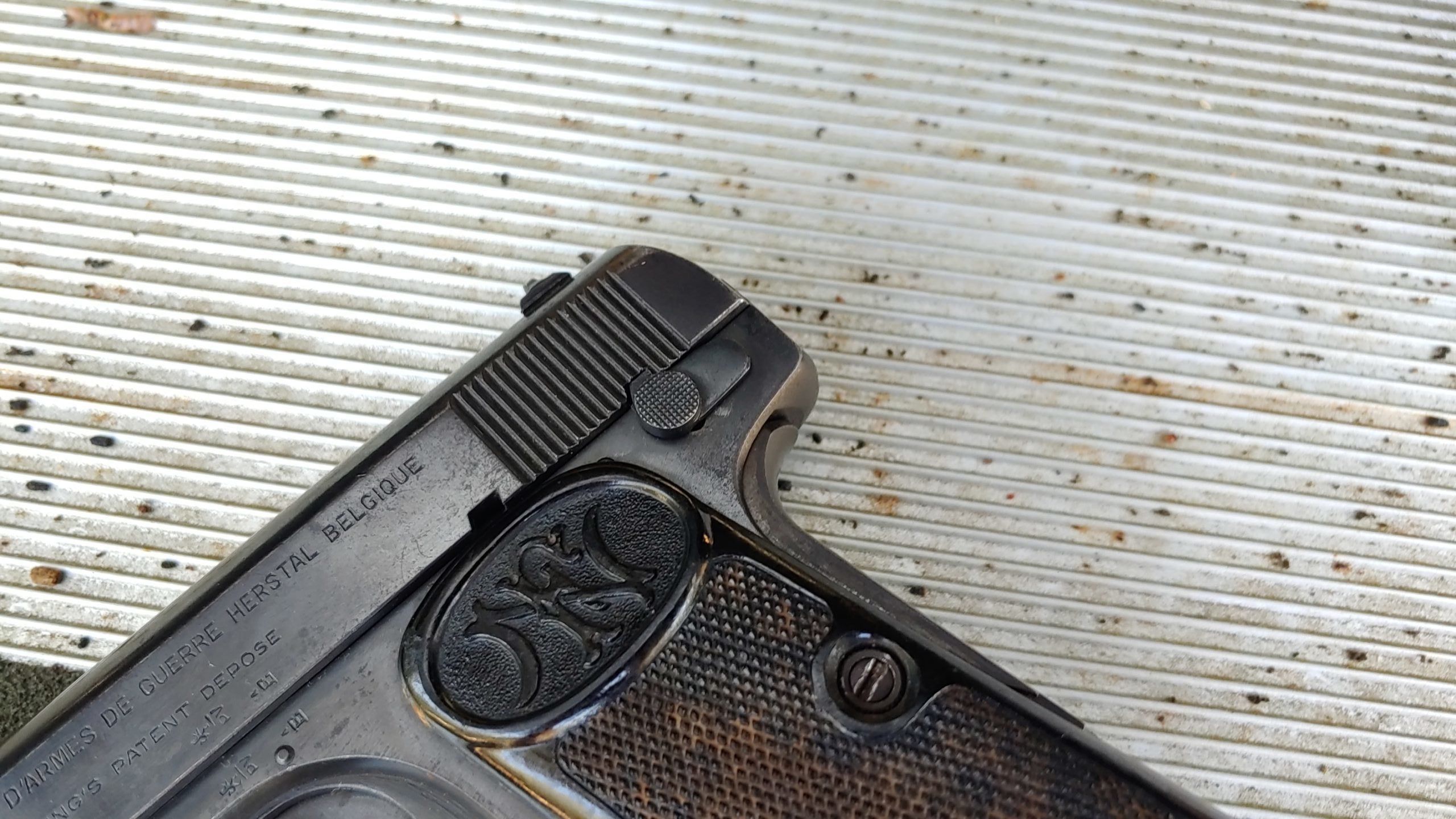
Let’s describe the manual frame-mounted safety as dinky. The safety doubles as a slide lock…the slide won’t lock back on an empty magazine. We also get a Euro style heel magazine release to round things out.
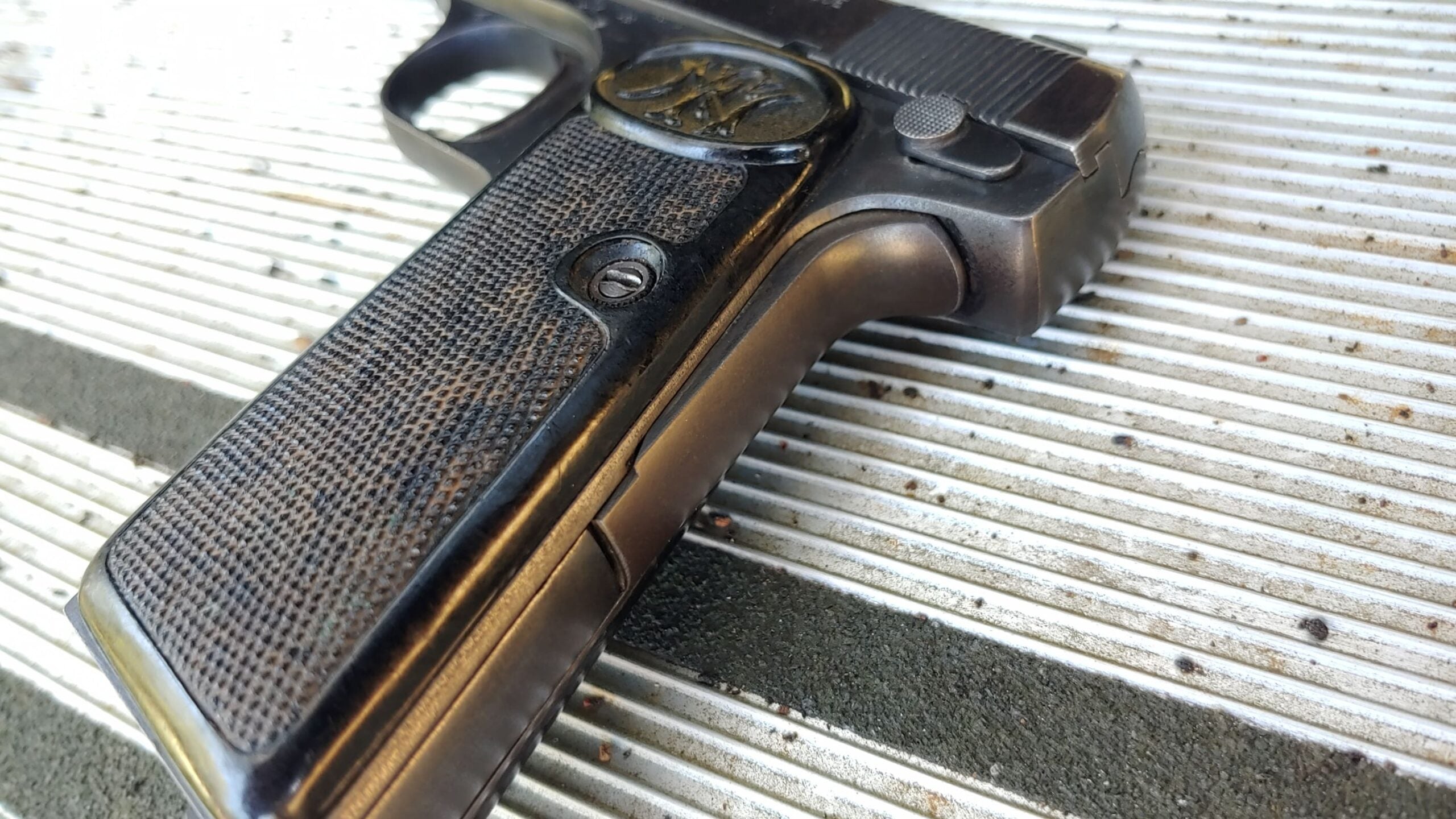
The pistol is a little over seven inches long and weighs roughly 24 ounces. It’s very slim and would drop into an IWB rig quite easily.
At the Range
Unsurprisingly this is a blowback-operated gun. That’s quite common for handguns of the era. The original Model 1910 was the first gun to use a recoil spring wrapped around a fixed barrel. This design would later go on to become the standard for several blowback-operated pistols, like the Walther PP series.
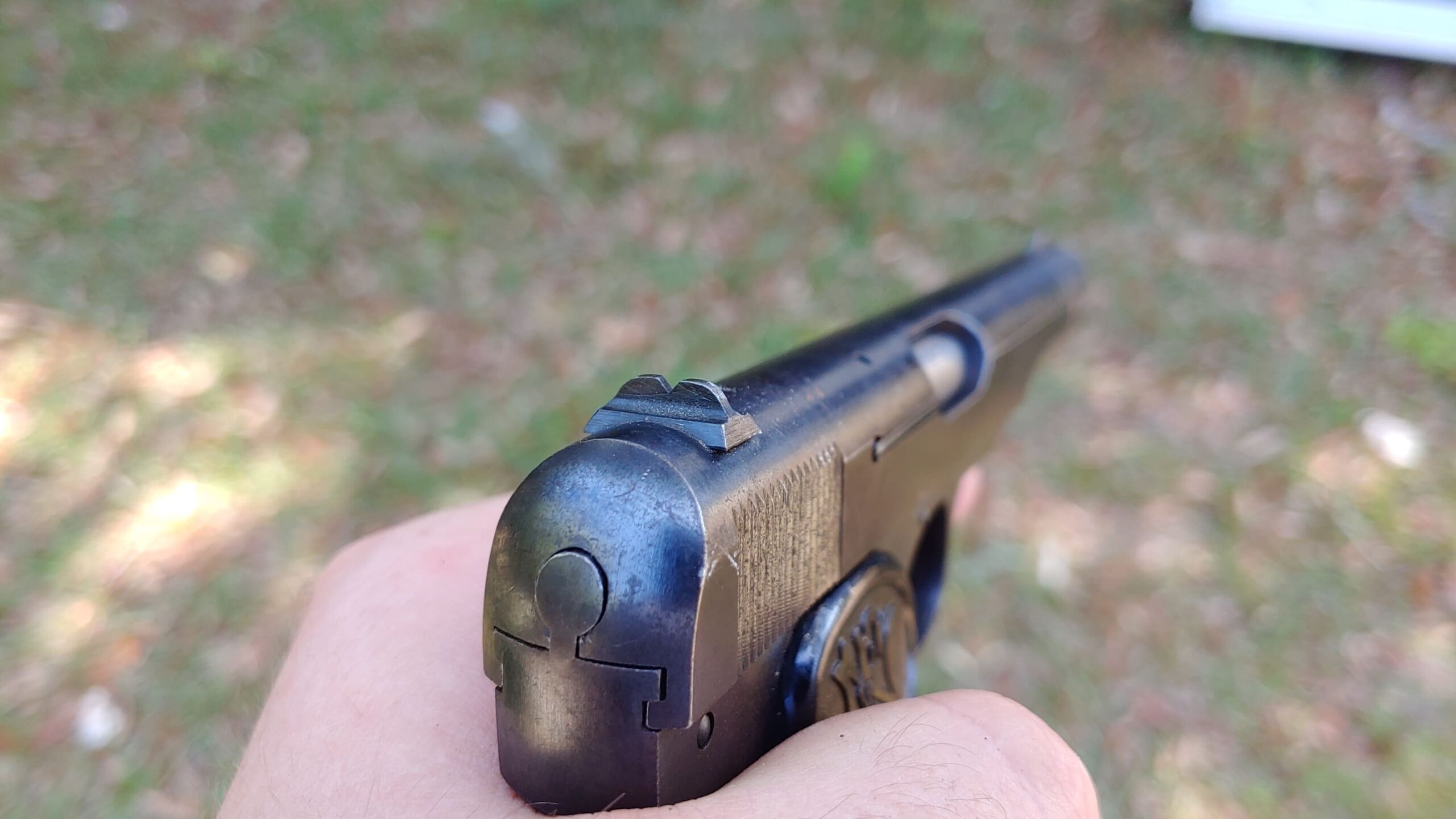
The FN Model 1922 retains that design feature. In .380 ACP and .32 ACP, the blowback action doesn’t tenderize the hand. It’s a stiff kick, but not unpleasant to shoot. The thin grip doesn’t do it any favors, though. However, I shot a box of fifty, and my hand felt a lot better than after I shot the Astra.
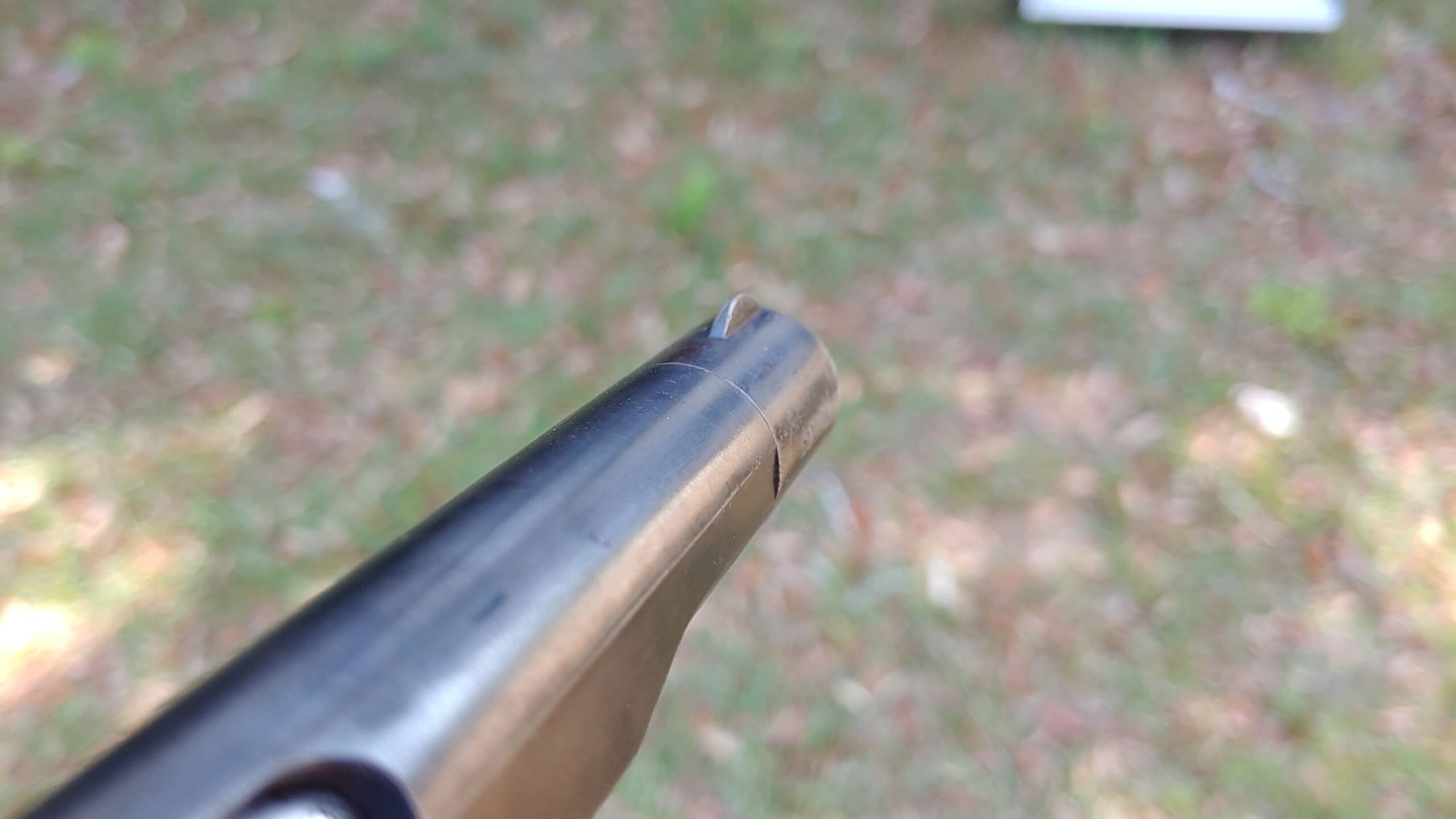
The sights are very small, as was the tradition of the time. Guns like this make me realize why people claim, ‘you’ll never see your sights in a gunfight.’ If I was in a gunfight with the FN Model 1922 in my hand, I doubt I’d see the sights, either.
With careful aim and a good sight picture, the gun is surprisingly accurate. The trigger would probably be better without that magazine safety, but it’s better than you’d expect.
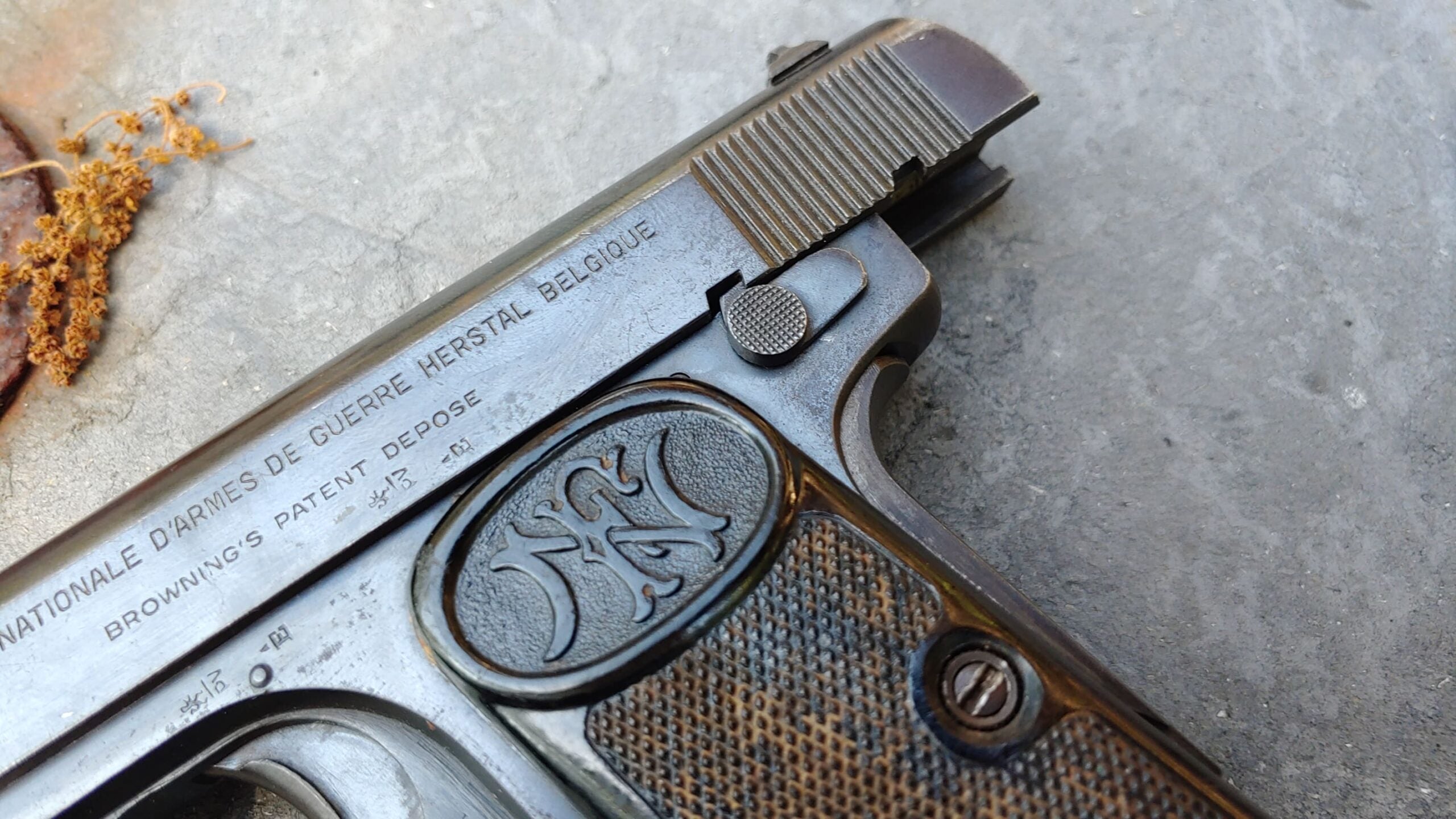
Is fifty rounds much of a test? No, but I’m not going to burn the gun down. In those fifty rounds, the gun almost always went bang. Almost. When my lovely wife tried to shoot the gun, it failed to fully cycle a couple of times. Blowback guns are more prone to limp-wristing than other designs, and that was what got her. I didn’t experienced the same failure when shooting the gun.
A True Classic
The FN Model 1922 was never widely popular here in the states. The Gun Control Act of 1968 made importing them difficult, but FN produced an adjustable sight model that apparently had enough ‘points’ to make it importable. I can’t afford the nicer surplus pistols out there, and it’s nice to see some affordable options are around. FN Model 1922 pistols don’t seem to really inspire collectors, and that’s just fine with me. It’s affordable, reliable, and fun to shoot, and that’s all I need an antique like this to be.






It´s not true that FN 1910 was the first pistol with recoil spring around the barrel. The Savage 1907 it´s a bit more older.
Spanish Campo Giro pistol, while released in 1912, was patented 1904.
Both has recoil spring wrapping the barrel.