
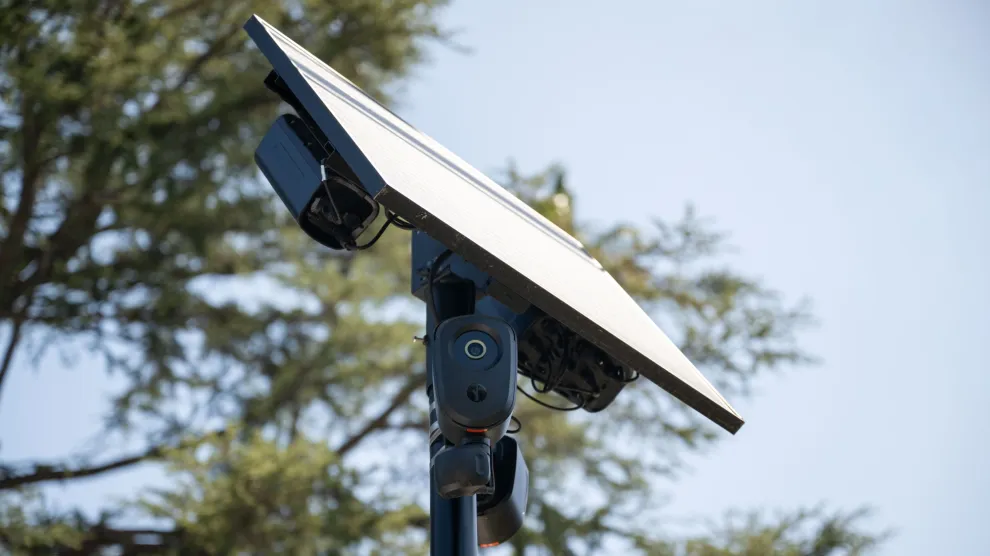
We’ve reported in the past about the ongoing controversy of Flock cameras and similar surveillance systems as they relate to privacy of America’s lawful gun owners.
Now that Democrats control the Texas House of Representatives and a Democrat will soon sit in the governor’s mansion, anti-gun lawmakers in the Lone Star State are pushing legislation to expand and protect the use of the controversial devices.
According to the gun-rights organization Texas Gun Rights, Democrats in the state House have introduced two separate bills related to such cameras.
“Texas Gun Rights opposes two bills filed for the 90th Legislature that would take the Flock-style license plate reader network Texans have been fighting city by city and give it a permanent home in state law,” TXGR wrote in a news report.
House Bill 763, introduced by Rep. Mary Gonzalez, says a governmental entity may not operate a plate reader “for any purpose.” However, according to TXGR, the bill’s text then lists the exceptions. Government may run the cameras and use the data to investigate any felony, to identify unregistered or uninsured vehicles, to investigate missing persons, to recover stolen cars, to collect tolls and enforce parking, and to control access to secured areas. And none of those uses require a warrant.
“That is not a ban on Flock cameras,” TXGR wrote. “It is a state license for them. Any felony investigation, and every routine insurance and registration check, would justify scanning every car on the road. HB 763 does have useful pieces: 48-hour deletion, a ban on federal sharing, an exclusionary rule and a $1,000 private lawsuit. But a deletion clock only starts after the government has photographed everyone.”
The other measure, House Bill 1167 by Democrat Rep. Salman Bhojani, doesn’t pretend to ban anything. Instead, it gives a rulebook for police and fire agencies and the private vendors that run their systems.
The bill assumes the cameras stay on. It says, “… the incidental collection of a plate image by an operating system does not, without more, authorize an individualized search.” Before searching historical plate data for a particular vehicle, an officer needs only documented reasonable suspicion, not a warrant.
The measure does have some real limits, including a requirement to delete date within 30 days, banning sale or handout of the data and requiring a warrant for buying plate data from a private company other than the agency’s own vendor.
“But the dragnet stays up,” TXGR explained. “Enforcement runs through the Department of Public Safety and the attorney general, and the bill expressly creates no private cause of action for damages. Agencies wouldn’t have to comply until September 1, 2028.
Interestingly, Democrat Rep. John Bucy III has introduced a measure, House Bill 331, that actually bans such use. In fact, the measure states: “A governmental entity may not use an automatic license plate reader.” Another measure, House Bill 847, states that police may use a plate reader only under a warrant or court order, only to investigate violent offenses and must destroy the data promptly unless it is tied to such a case.
Ultimately, TXGR’s priority is a complete ban on government use of Flock cameras and any other license plate reader.
“HB 763 and HB 1167 don’t stop Flock cameras,” Chris McNutt, TXGR president concluded. “They hand them a state license. Texas should strengthen HB 847 into a complete ban, borrow the private lawsuit already in HB 331, and reject every bill that keeps the cameras watching law-abiding Texans.”