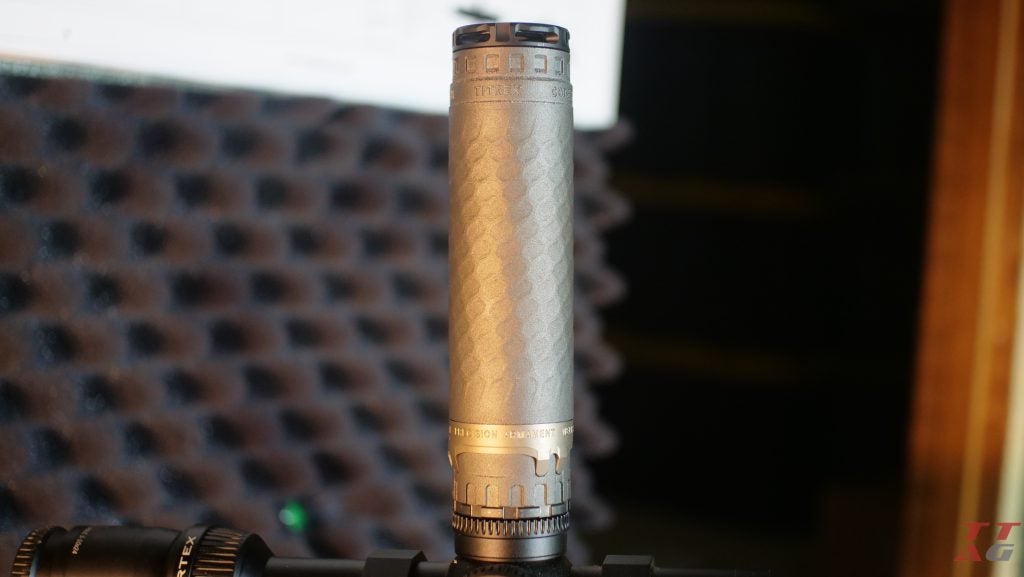
I’ve run two versions of Precision Armament’s brand-new DMLS-printed TiTrex, a .30 caliber and the dedicated 6.5 (TiTrex-260) on a 6.5 Grendel, and what kept pulling my attention wasn’t any one single thing. Rather, what stood out to me was how all the parts come together to make a pretty interesting suppressor.
Precision Armament made its name on muzzle brakes and compensators, and the TiTrex is the company’s first suppressor. That pedigree is what I think shows up all over the design. This is a 3D-printed suppressor that I think is probably one of the more reasonably priced DMLS examples currently on the SiShop catalog, so today we’ll take a look at what it has on offer for those looking to get into the 3D-printed suppressor scene.
Product Link: https://www.silencershop.com/precision-armament-titrex-300.html
TiTrex-300 Specifications
- Caliber compatibility: .30 caliber cartridges, including .308 Win and .300 Win Mag
- Core material: Grade 5 titanium (Ti-6Al-4V)
- Serialized component: 17-4 stainless steel, H900 heat-treated
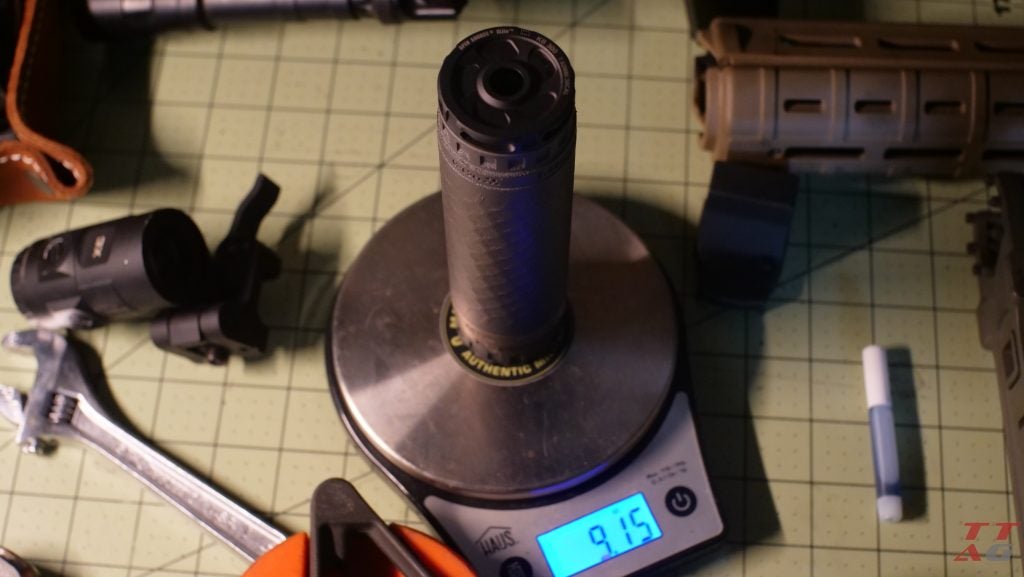
- Weight: 7.2 oz body, about 9.2 oz with mount and front cap
- Length: 5.9 inches body, about 6.2 inches with mount and front cap
- Diameter: 1.65 inches
- Mount: HUB compatible, 1.375×24
- Finish: Cerakote
- Manufacturing: additively manufactured 3D-printed core
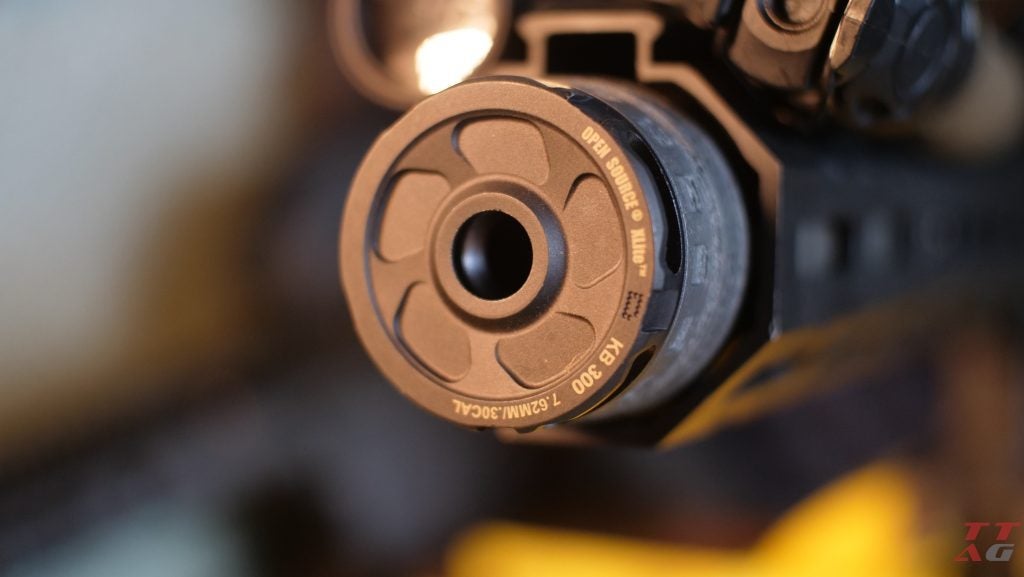
- Included accessory: K-Brake muzzle device
- Price on Silencer Shop: $1,079.10
Features
- NURBS baffle geometry, short for Non-Uniform Reconvergent Baffle Stack, with segments tuned by position rather than one repeated baffle shape
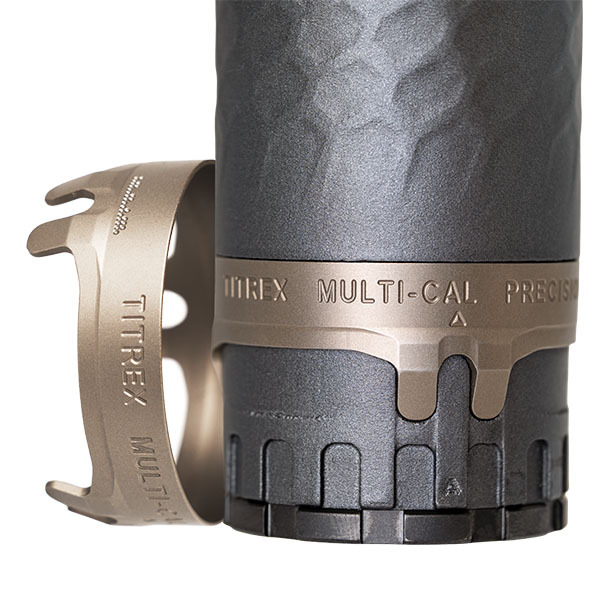
- X-CORE exchangeable core built around the serialized XBand ring, so the core can be rebuilt or upgraded without generating a new NFA item
- Rated up to .300 RUM with no barrel length restriction, per Precision Armament
- HUB rear threads plus Bravo pattern front cap threads for broad mount and end cap compatibility
- Ships with the K-Brake, an ultracompact muzzle brake that doubles as the mount
- Offered in multiple dedicated bores across the line, from 6.5 through .36 caliber, plus a Severe-Duty Inconel option for high-heat use
From Brakes to Baffles
PA has spent years building muzzle devices before it ever even thought about tackling a suppressor design. This is what I personally think affected their design decisions that led to what shaped the TiTrex’s unique features. Every one ships with the K-Brake, an ultracompact muzzle brake that adds exactly 0.165 inches to the end of the suppressor body. A brake company shipping a brake with its first suppressor tells you where its engineering instincts are taking them with their first design.
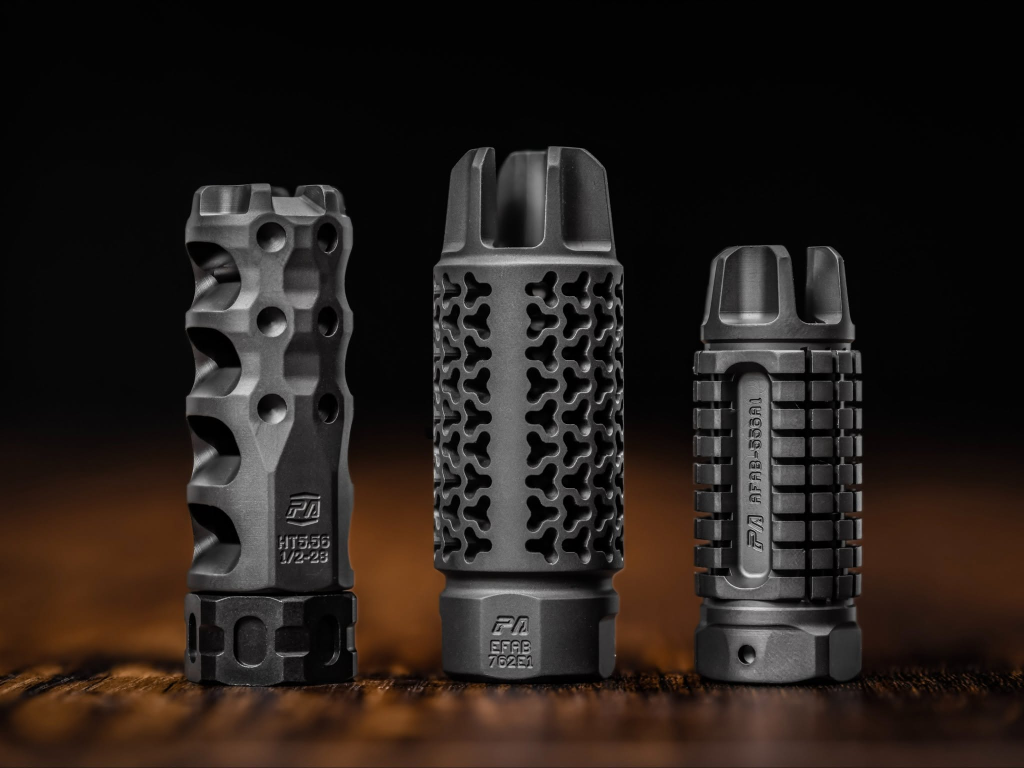
The same instinct runs through the rest of the lineup. Alongside the standard titanium cores, Precision Armament offers a Severe-Duty version printed in Inconel for high-heat, high-round-count use.
Ben Webb over on his YouTube channel has already gone through the task of burning down one of the Inconel versions of this suppressor. If you’re interested in seeing what a full-auto will do to the tougher version of this suppressor, his video is below.
My testing, thus far, has been far less aggressive. I run the K-Brake on most of my setups. On 300 Blackout subsonic loads, honestly, it isn’t doing much, and I mostly just like how it looks compared to the standard end cap. Subsonic ammo makes so little pressure and recoil that a brake has almost nothing to work with, especially when mounted on the much longer Henry LASR. The suppressor would be put to far better use on heavy hitters, where there’s real recoil to redirect, but a compact tucked carbine suits it just fine as well.
Non-Uniform Reconvergent Baffle Design
The TiTrex is a 3D-printed titanium can, built with direct metal laser sintering. Instead of machining separate baffles and welding them into a tube, the process prints the baffle structure in one continuous piece. That opens the door to shapes you can’t cut on a lathe. There is no published internal image of the inside of a TiTrex can (probably to protect the design), so you’ll just have to imagine what it looks like based on their description alone.\
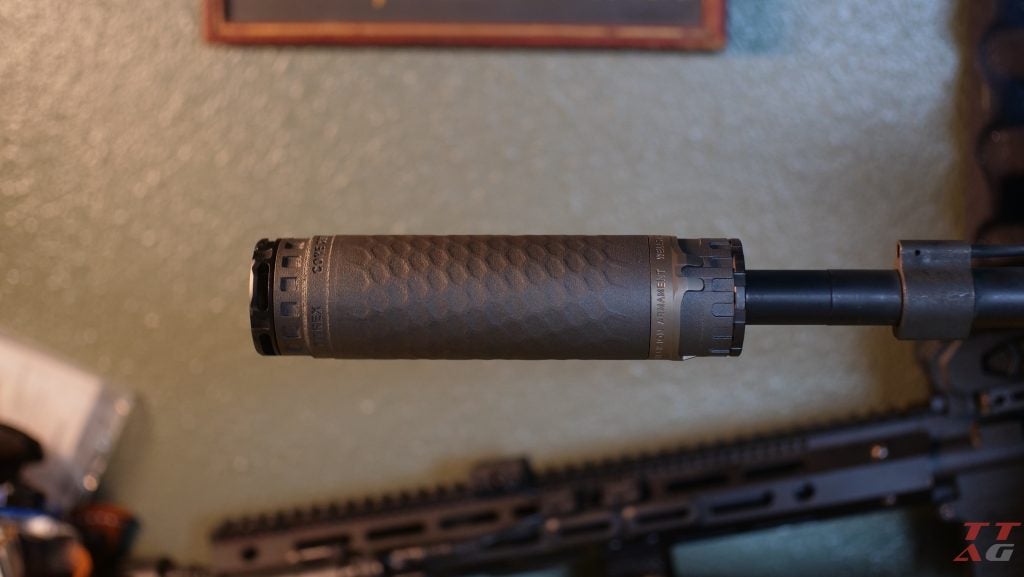
Precision Armament uses that freedom for what it calls a NURBS core, short for Non-Uniform Reconvergent Baffle Stack. Most suppressors run identical baffles. You could pull the second baffle and the seventh, swap them, and the can wouldn’t know the difference. The TiTrex works differently.
Each baffle segment changes based on where it sits, tuned by position to handle gas and heat as pressure drops from the blast chamber toward the muzzle. Picture a river narrowing and widening to control its flow instead of running through one uniform channel. That’s the design philosophy in one line: let the geometry do the work rather than the raw volume of the suppressor (although in this case I think that’s helping a lot, too).
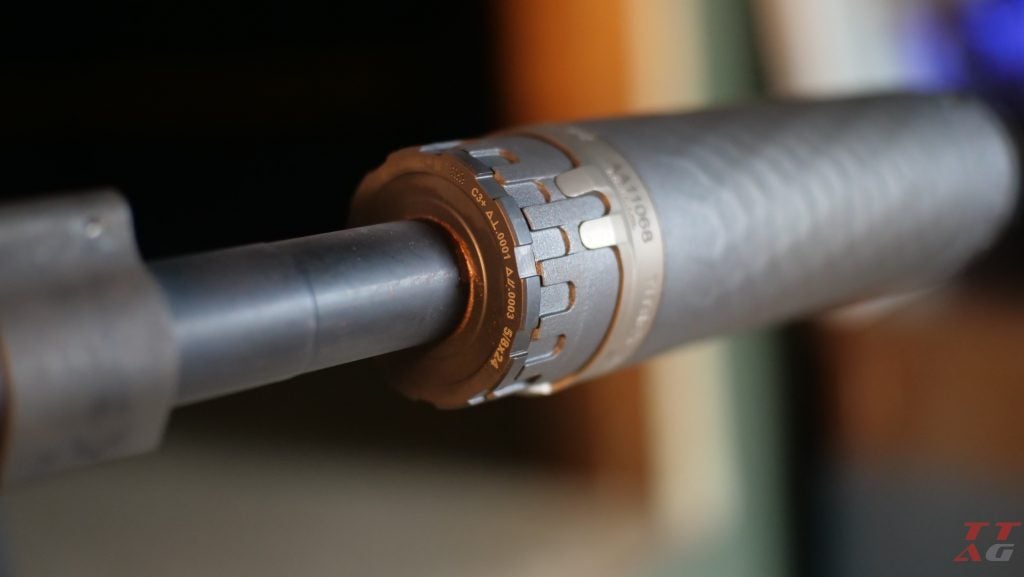
The company put the design through a long test program before release, including acoustic tuning, structural modeling, and destructive testing that ran cans through magnum abuse and full-auto fire until they broke. Precision Armament also points to low first-round pop from the baffle tuning, which is the kind of claim you’ll want to confirm on your own rifle.
Open Mounting and the XBand
Mounting stays open. The TiTrex uses a HUB-compatible rear mount. The hub is 1.375×24 standard, so it runs mounts a lot of shooters already own, and the front cap takes Bravo pattern attachments. You’re not stuck inside one proprietary system, which is a bonus for flexibility’s sake. The band is even marked as “multi-caliber.”
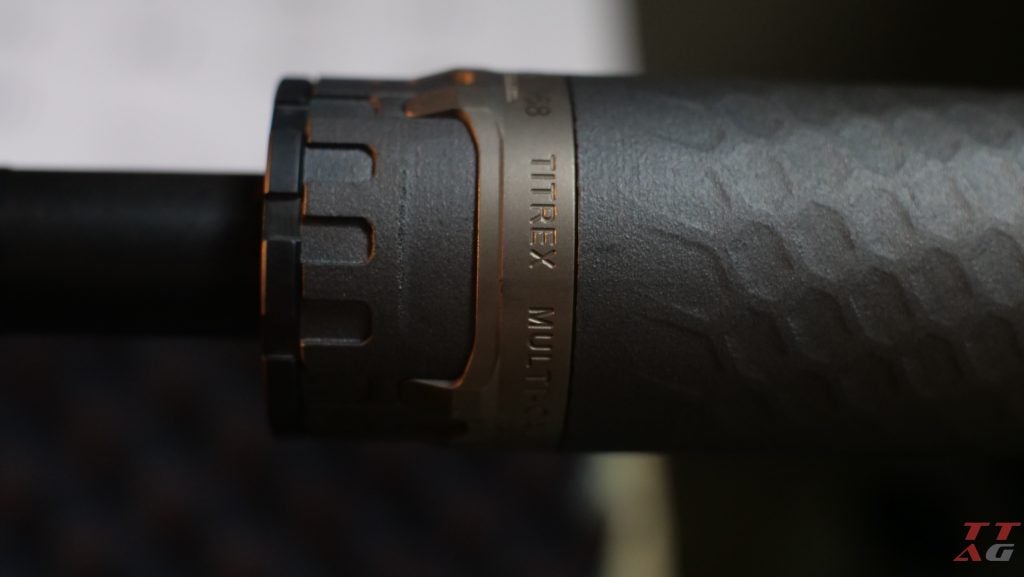
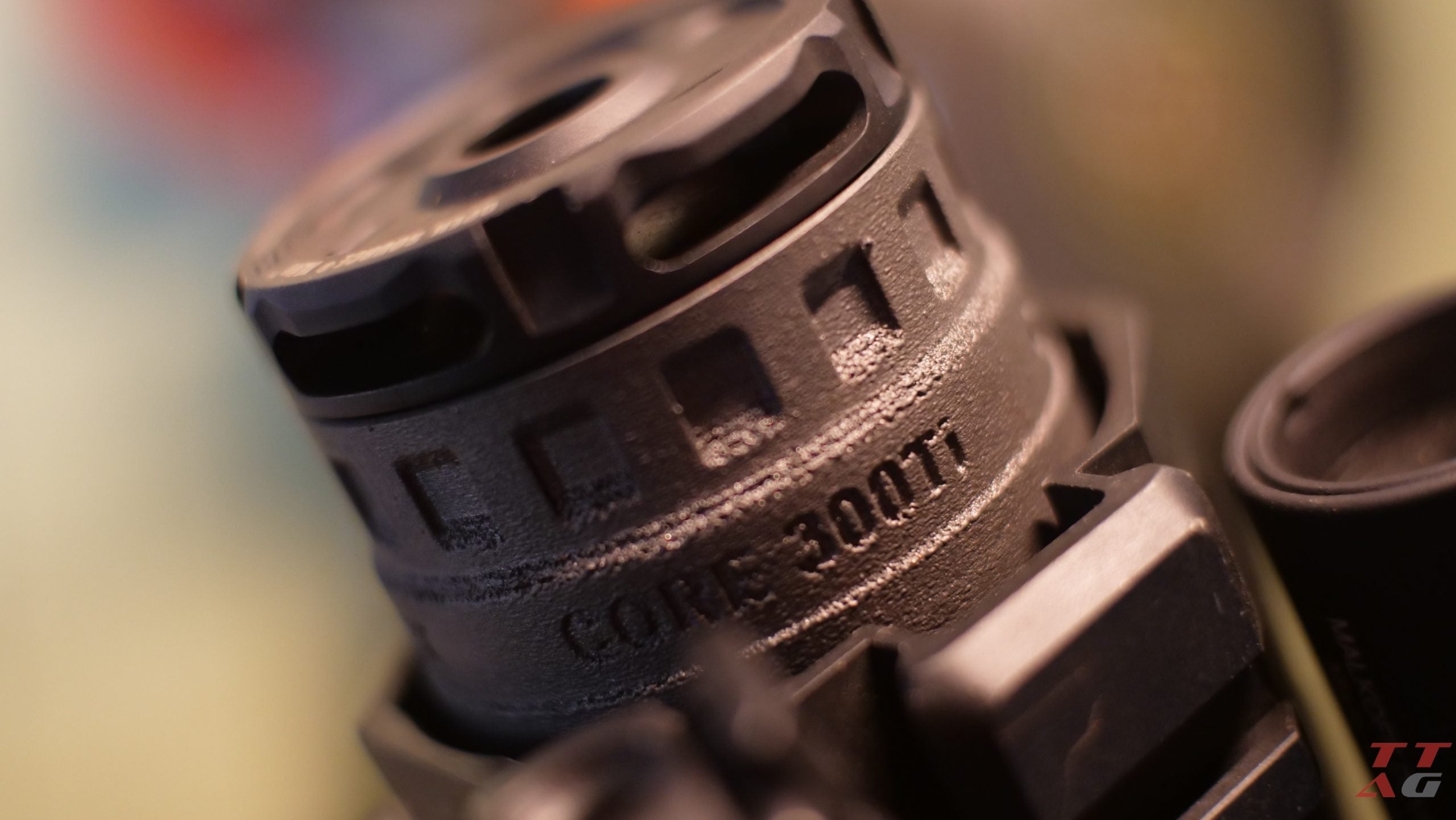
The more interesting feature, mentioned in the specifications above, is the XBand, the stainless ring at the base of the can. It’s both the serialized part of the suppressor and the only stainless steel part that is press-fit onto the core (X-CORE) at the factory, which means the core underneath can be swapped or rebuilt without generating a new NFA item. It’s a clever piece of engineering.
This is also a feature most owners will probably never use for that express purpose. Sending a can back for a core exchange makes sense if you damage the core or want a different bore years later, but plenty of people will buy one bore, shoot it hard, and never think about it again and likely just buy a new one in this new environment. I’d treat this particular feature as insurance and a resale angle, not the reason to buy.
Light, and Rated Harder Than It Looks
For a titanium can this light, the pressure rating is the part that surprised me. The core runs about 7.2 ounces bare and closer to 9 with the mount and front cap. Plenty of light cans come with a catch, usually a barrel length restriction or a modest caliber ceiling. The TiTrex has neither. It carries no barrel length limit and is rated up to .300 RUM, about the most abusive cartridge you’ll find in this bore size.
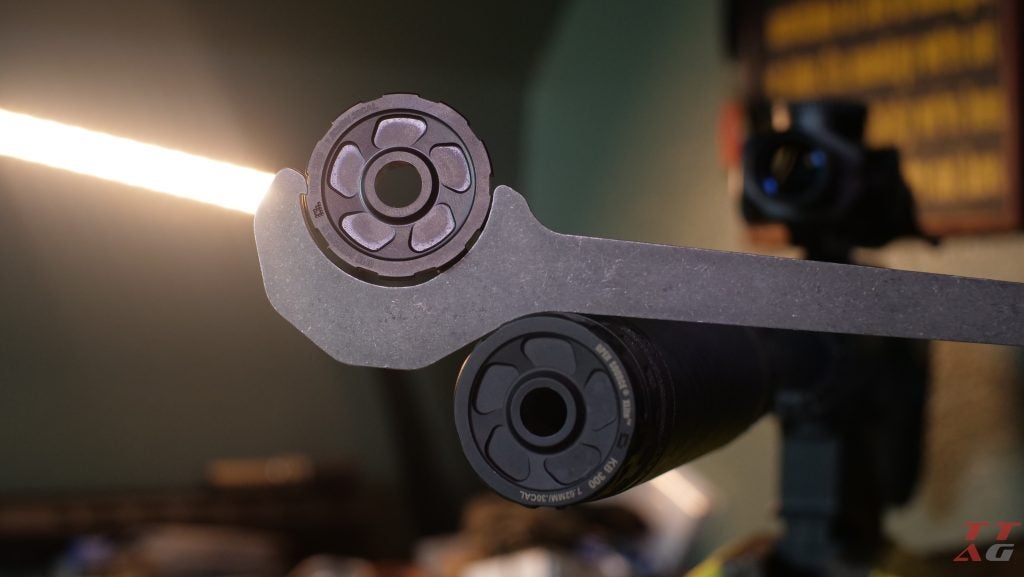
That rating is where the brake-mount idea is supposed to actually pay off. Put a brake under a can on a .300 RUM or a stout magnum hunting rifle and the recoil reduction will be noticeable, and sometimes an entirely different experience than running the same setup on quiet subs on a carbine like I am. Precision Armament also offers dedicated bores rather than one oversized hole for everything. I’ve also put a lot of rounds through the TiTrex-260, designed for 6.5 calibers, that Hop currently has on a 6.5 Grendel. This suppressor on the grendel platform is particularly good since Precision Armament designed the suppressor with 6.5 projectiles and cartridges in mind.
Thoughts So Far
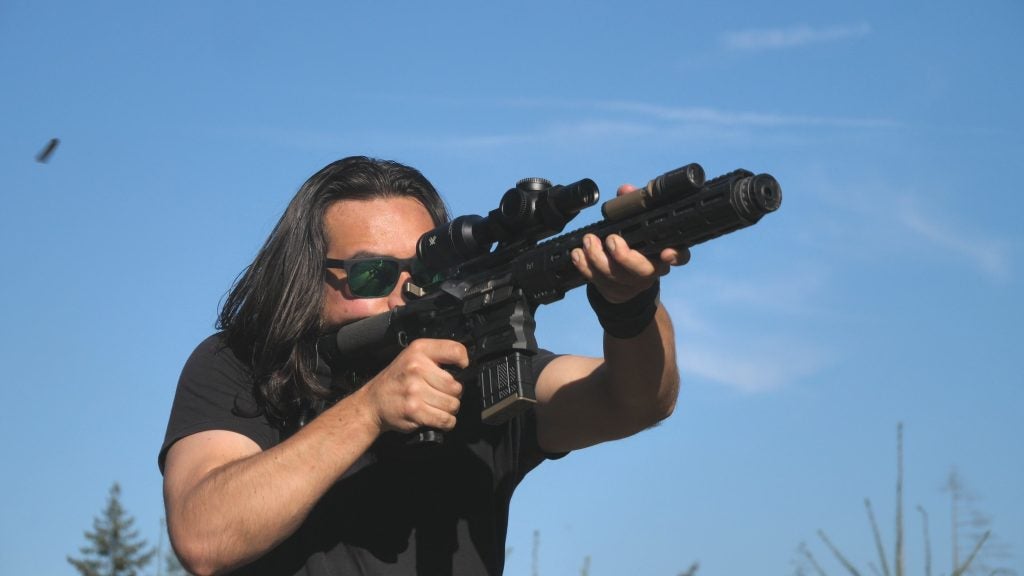
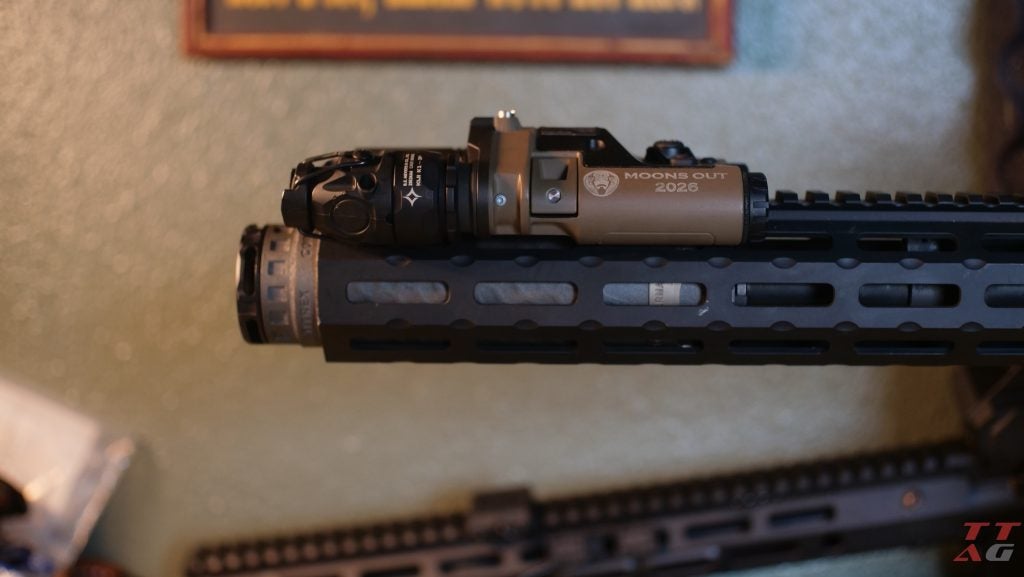
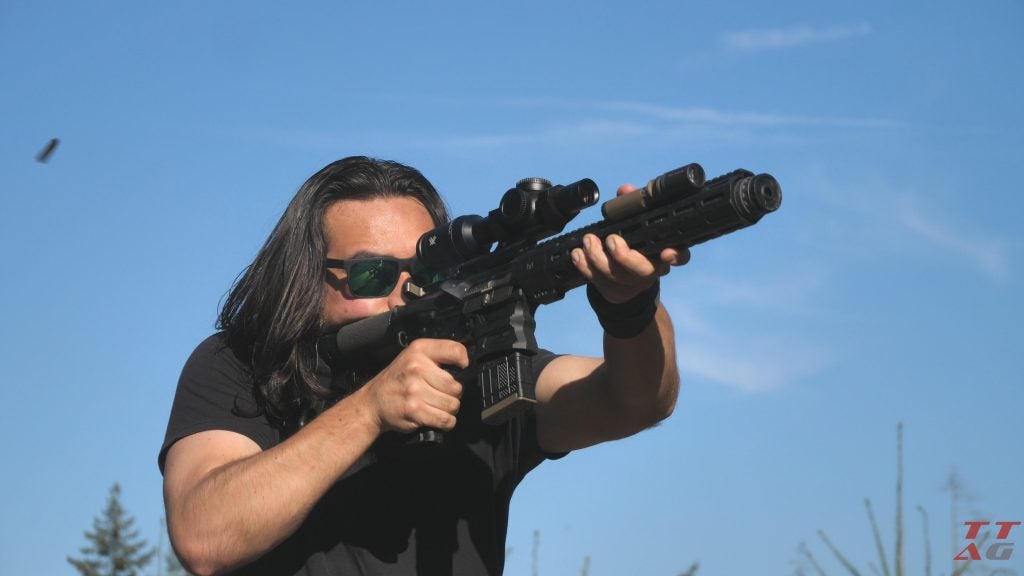
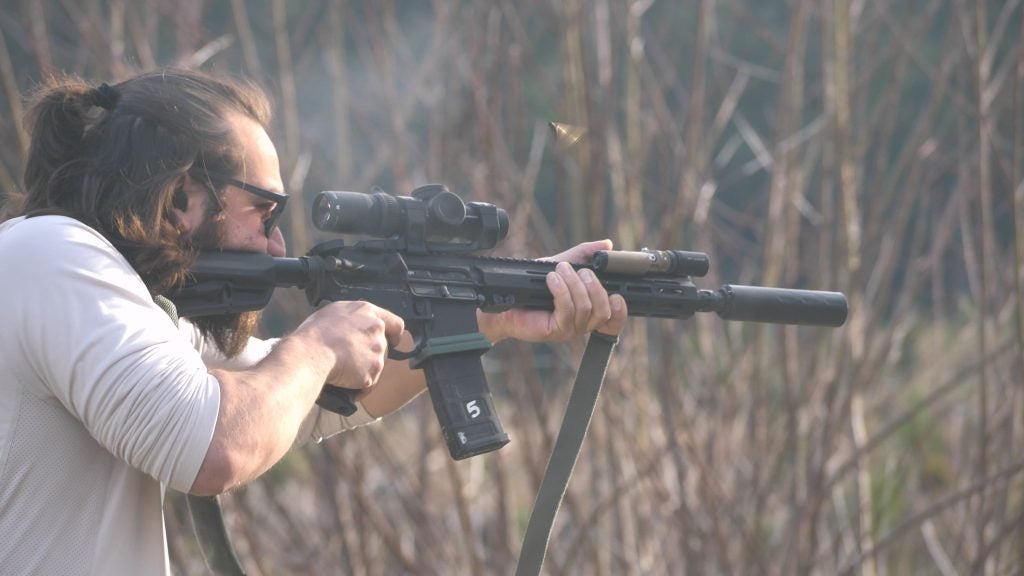
I ran the .30 caliber version mostly on my 300 Blackout SBR, neatly tucked under a Midwest Industries Suppressor Series handguard. Subsonic through the TiTrex is about as quiet as centerfire gets, with the loudest sound coming from the action, or sometimes the impact downrange instead of the muzzle.
The K-Brake is almost always on up front as my mount, and on subs it has nothing to redirect, which is exactly what I expected. Winchester’s 123-grain supers give it a little more to push against, and the TiTrex suppresses them just fine, but the brake is still barely noticeable in 300 BLK. The cartridge doesn’t move enough gas to give a brake much to do, and the can is rated so far beyond 300 BLK that the round isn’t stressing it.
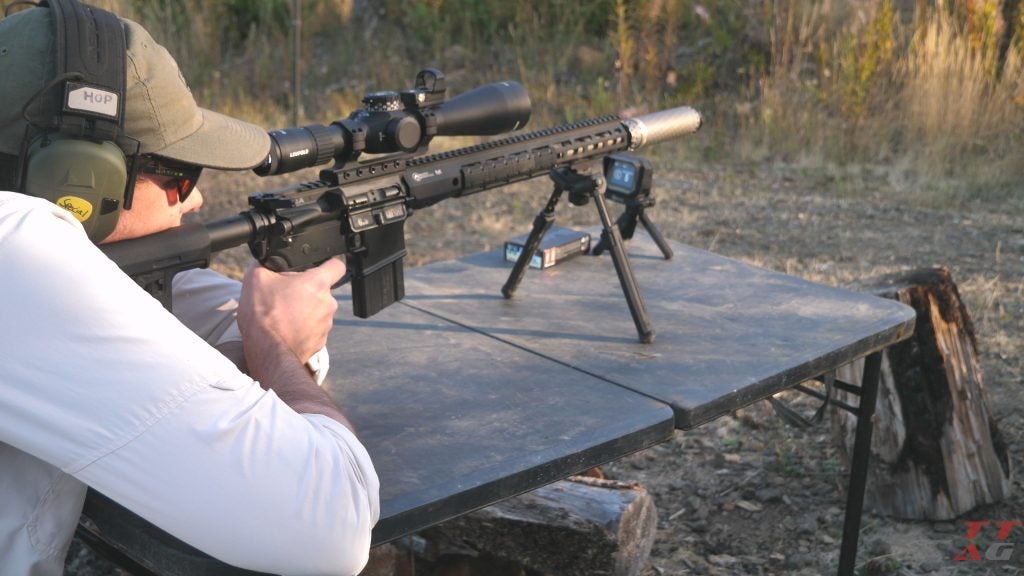
The dedicated 6.5 core went on a 6.5 Grendel. A .264 bore matched to the caliber trims the muzzle signature a touch compared to sending the same round through a wider .30 can. Grendel recoil is mild to begin with, and the can is light enough that the rifle pointed the same as it did bare. The brake is where the Grendel pulled ahead of the .300 BLK. It drives a bullet in the same weight class as a .300 BLK Super but at far more velocity, so the K-Brake finally has real gas to work against. That extra bite settles the rifle enough to spot your own impacts through the glass, which is exactly what you want on a DMR or SPR-style carbine.
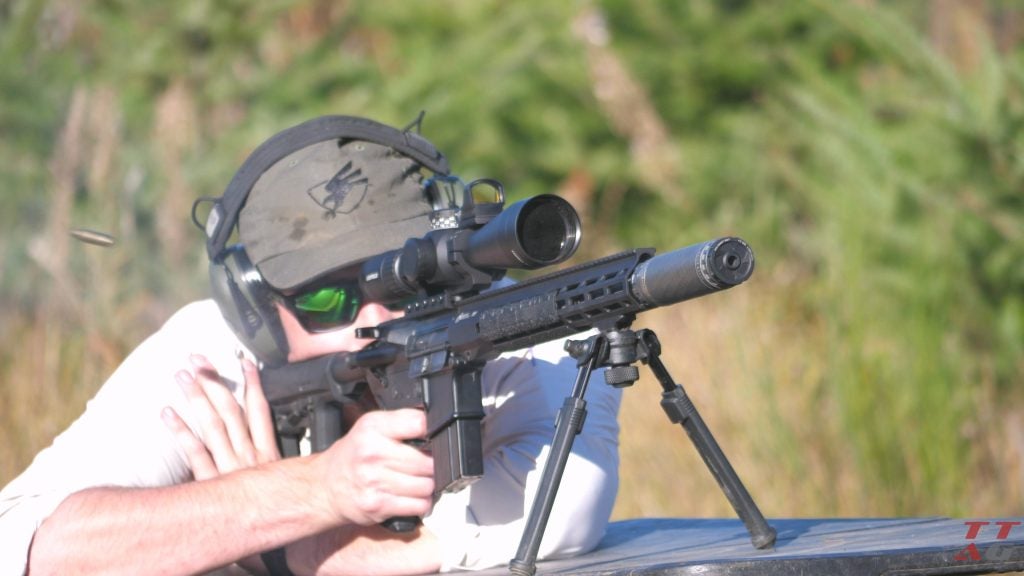
I also briefly tossed it on the Henry LASR ( a mag-fed lever gun). With no gas system bleeding off pressure, and a sealed receiver with nowhere for gas or sound to escape, a suppressed Supreme runs about as quiet as the can allows and never spits hot gas back at your face as an AR would. Hang the TiTrex off the .300 Blackout version, feed it subs, and the lever throw is louder than the shot. The TiTrex neatly fits on the LASR’s 16.5-inch barrel without pulling the muzzle down, turning an otherwise unwieldy platform into something slightly more manageable, though still comically large.
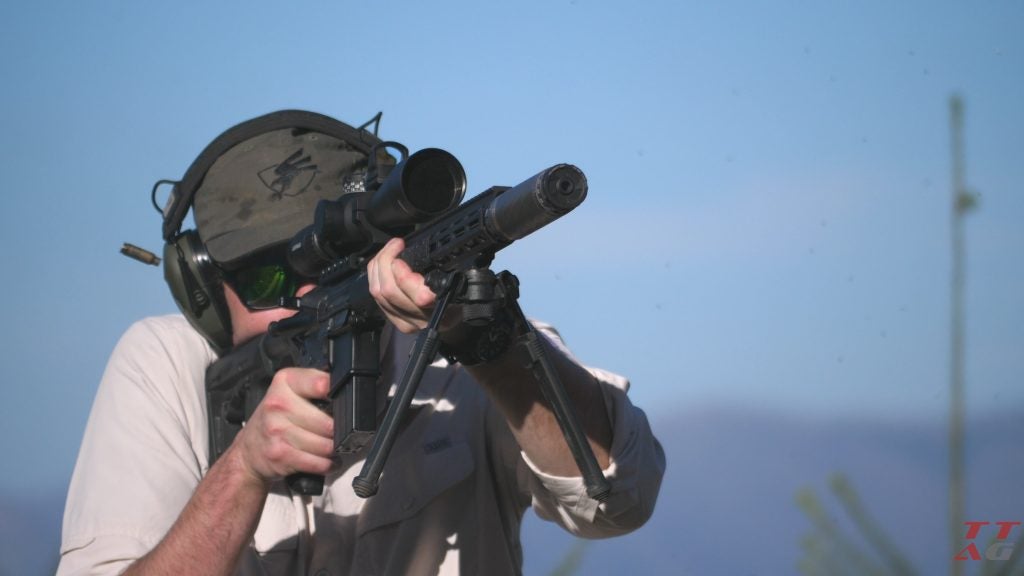
Three very different hosts with three good results so far, at least for this class of suppressor (~$1,100). I think to give this can a real rundown, I’ll have to pair it up with a .30 caliber magnum cartridge, or at minimum, a .308 to see what this rather short and lightweight suppressor can give us back in terms of full-rifle caliber suppression.
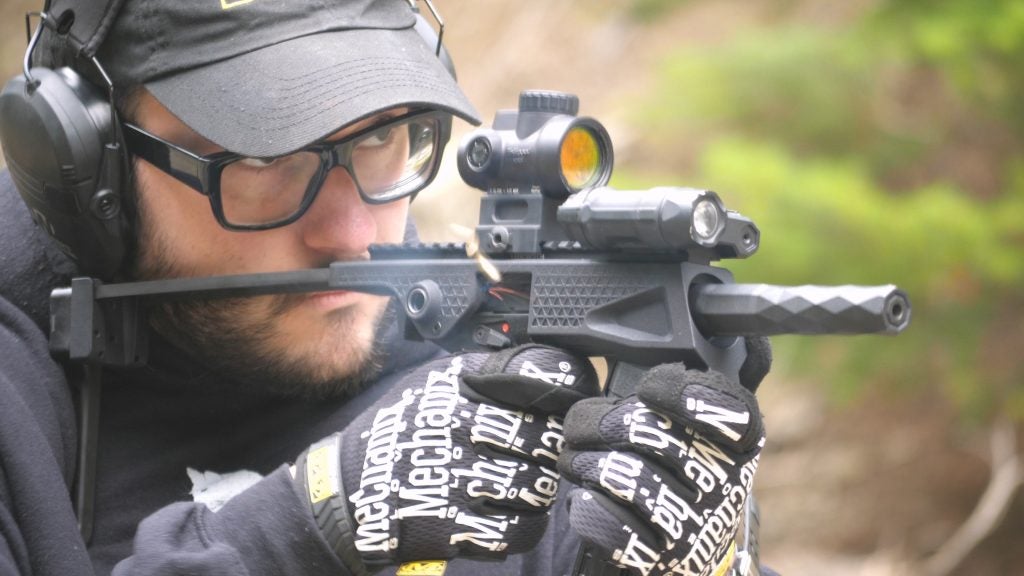
This is a can for someone building light and building forward. If your setup already leans toward a Grendel-class DMR or a hunting rifle where every ounce matters, the TiTrex is probably one of the better suppressors you could pick for the job, and the K-Brake stops being a design curiosity and starts doing real work once there’s recoil to redirect. The .300 RUM rating and open HUB/Bravo mounting mean you’re also not boxed in if that rifle collection grows into something heavier later and you don’t mind re-mounting the suppressor.
If you’re running quiet subs, you can absolutely run this can, but you’re buying pressure headroom you won’t use, and the brake that you’re paying for with every TiTrex ends up having nothing to do other than look good. If you’re interested in taking a closer look at the TiTrex family of suppressors, you can check Precision Armament’s latest additions to the TiTrex series, including more caliber sizes, material options, and availability on Silencer Shop.
More Suppressor Reviews on TTAG:
- Griffin HRT-556 AM Review: Low Backpressure Without the Trade-Off
- Thunder Beast Arms SPIRO Review: Low Back Pressure Without the Trade-Offs
- The Suppressor Behind SOCOM’s MK1: Inside the HUXWRX Flow 556K Black Magic
- Ruger Mark IV 22/45 SSH | Silencer Shop Exclusive — The Suppressed .22 Pistol You Didn’t Know You Needed