
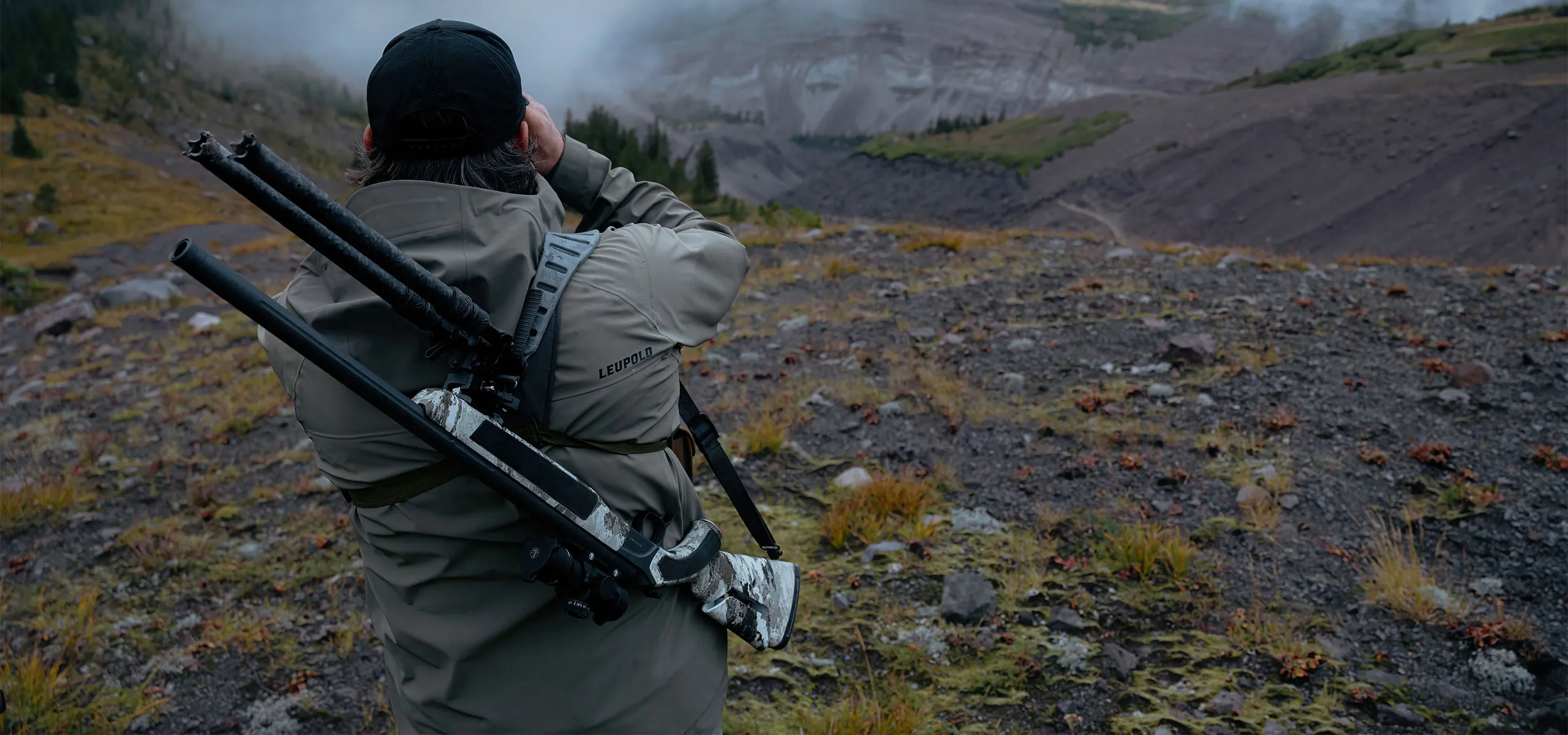
When I tested Christensen’s new Evoke rifle chambered in 7mm Backcountry earlier this year, one question dominated conversations with fellow shooters: when would reloading data become available? Federal has finally answered that call, releasing comprehensive data and guidelines for the cartridge. Now, handloaders can explore the full capabilities of this innovative cartridge while tailoring loads to their specific rifles.
Revolutionary Case Technology Demands New Approaches
What makes the 7mm Backcountry unique isn’t just its ballistic performance but the proprietary Peak Alloy case technology that enables it. This one-piece, high-strength case material delivers magnum-level performance at higher pressures from a standard bolt face, achieving the coveted 3,000 fps threshold with 170-grain bullets through 20-inch barrels.
But here’s the catch: Peak Alloy cases require different handling than traditional brass. Federal’s reloading data sheet emphasizes several critical points that handloaders must understand. The revolutionary material doesn’t exhibit traditional pressure signs, so you can’t rely on indicators like flattened primers to warn you when you’re pushing too hard. This makes strict adherence to published data absolutely essential.

Case Selection and Preparation Guidelines
Federal recommends using only the bright nickel-plated cases from their Premium line ammunition, specifically from Terminal Ascent, Barnes LRX, and Berger Elite Hunter loads. The Fusion Tipped ammunition uses zinc-nickel plating only on the exterior, leaving uncoated surfaces after firing and introducing corrosion risks if cases are washed before reloading.
The preparation process differs significantly from brass case reloading. Don’t trim or debur Peak Alloy cases, as these processes remove the protective nickel plating. If a case has stretched beyond usable length, discard it rather than attempting to trim it back. Similarly, Federal advises against deburring primer pockets to preserve the plating integrity.
Federal also recommends wax-based lubricants for full-length resizing, which reduces the force required and protects the case material. When flaring the case mouth, use just enough expansion to prevent the bullet jacket from scraping during seating. The company also suggests seating bullets in one smooth motion rather than multiple pushes.
Comprehensive Load Data Across Popular Bullets
The published data covers five bullet weights ranging from 155 to 195 grains, with five different powder types for each weight. All loads use Federal 210 primers and were developed in a 20-inch SAAMI chamber test barrel, matching the Evoke rifle I tested.
Several loads show compressed charges, marked with asterisks in the data, indicating powder charges that fill or slightly exceed case capacity. This isn’t unusual in efficient cartridges designed to maximize performance, but it requires careful attention during powder charging.
Reloading Equipment
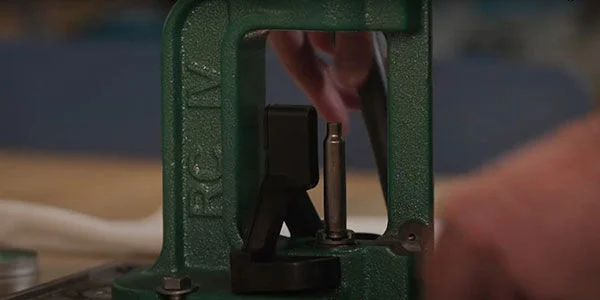
Federal has partnered with Lee Precision to produce the reloading equipment needed. The Lee 7mm Backcountry Micrometer Full-Length Die Set includes everything needed to get started: a full-length sizing die, a universal flaring die, a micrometer bullet seating die, a universal shell holder, a powder dipper, and instructions with load data. Lee also offers a factory crimp die as an accessory.
This partnership addresses a critical need in bringing new cartridges to market. Without readily available reloading dies and data, even the most promising cartridge designs struggle to gain traction among serious handloaders who form the core of any cartridge’s long-term success.
Practical Implications for Shooters
For early adopters who invested in 7mm Backcountry rifles based on the cartridge’s impressive ballistic potential, Federal’s reloading data release represents another key piece of the puzzle. The cartridge can now fully realize its potential in the hands of dedicated handloaders who can experiment with seating depths, within safe limits, powder charges, and bullet selection to optimize performance in their specific rifles.

The ability to reload also addresses one of the practical concerns many shooters have with any new cartridge: ammunition availability and cost. While Federal has done an admirable job keeping factory ammunition in stock, handloading provides a little more insurance against supply chain disruptions.
The release of Federal’s reloading data sheet, combined with specific handling guidelines for the revolutionary case material, demonstrates the company’s commitment to supporting this cartridge beyond just selling factory ammunition. That support will likely prove critical for the 7mm Backcountry to continue gaining acceptance among serious hunters and shooters seeking magnum performance with shorter barrels. Learn more at Federal’s website.







I do personally enjoy geeking out over personal victories in engineering, etc. (“I attained X performance level without crossing arbitrary parameter Y”), but I don’t see how this cartridge appeals to the mass market who aren’t bound by arbitrary parameter Y.
While the cartridge in particular is not likely to disrupt much outside of niche use the materials involved applied to existing popular options for increased velocity is interesting. Still more expensive than brass for repeated loading I would guess but I could see someone having a lot of fun with a Ruger #1.
I agree. For a big organization working within strict constraints, this tech has a lot of potential.
I’ve been thinking about this since reading about the various NGSW approaches. IMHO one could, for instance, get 6ARC-ish performance out of a 6×45 cartridge that would fit STANAG mags and AR bolt faces, and offer similar carry weight (through the use of steel-base plastic cases) to 5.56.
7mm Backcountry doesn’t scratch that kind of itch, though.
Hopefully it ends up being a proof of concept that gets applied elsewhere but share the hope of seeing the 6 ARC equivalent in a 5.56 case dimension. Or even silly things like 50 beowulf or 300 PRC/winmag.
I think outside those narrow niches, most people will just prefer the marginally less technologically dazzling, but common / affordable / familiar solutions.
Well one more niche (otherwise generally agree short of copper going up in price enough to break even with these alloys) pushing AP and varment bullets faster in existing firearms.
But an existing firearm that can endure a given bolt thrust from pushing a given bullet to a given velocity from a “.30-06+P” case can endure the same bolt thrust from a plentiful, affordable conventional magnum case.
One could apply the same tech to get even more velocity from a steel +P version of that magnum case, of course, but that would likely exceed the sheer strength of existing actions.
*shear
Dear Safe, Federal is after the military Lightweight Case with this…we have already seen high pressure 7.62x51mm at ISOF. Steel is actually much cheaper, but this is an alloy allegedly with Copper and other materials in it. SiG and Winchester both favor the two piece case, which is one piece too many whether polymer or metal…failure rates for SiG case head separations will allow our soldiers an opportunity to be killed holding a bad jam every combat day. Seven in 2,000 rounds separated and the barrel could drop a bullet into the bore part way through that. Stupid idea…
FYI we made millions of rounds of Steel ammo in America as far back as WWII…for the Russians. Secret then was use the cheapest Steel and don’t anneal it. The military is not concerned with reloading, so Steel is fine for them…they can wear out and burn their barrels with 4,500+ temperatures all they want, and you and I pay for it.
I remember we essentially built the soviet war machine especially the tanks so not too surprised we had a hand in making the ammo. The lightweight ammo program has had a lot of interesting ideas from cased telescopic to polymer that matches (more or less) existing brass, to a few fancy alloys (this is one of the more interesting ones) but nickel plated soft steel probably would be the cheaper option if copper prices get more wonky.
I’m always looking for a new/new to me rifle. What I’m not looking for is a new caliber.
Am I crazy to think that this is what was rejected in the XM7 project? I mean it looks neat and all but is running 80K and its implications worth it for most people?
I guess I could see this being neat for a hunting rifle where you’re not shooting a lot of rounds and want to “size up” without the extra weight. To be fair it seems to be about 400ish FPS faster than a 7-08 in 155gr trim, so that’s not a bit extra by any means.
A lot about how that project went was crazy. Did spawn a lot of neat new/updated ideas and technology but ended up with well something that could work if done very well…………
It’s similar to what was accepted. As I alluded above, though, there’s a big difference. The military is carrying hundreds of rounds in magazines (and shipping billions), so there’s a lot to be gained by using a slimmer, lighter case.
To a hunter, using a popular magnum case that’s an extra few mm in diameter has zero downsides – precisely because you’re not shooting a lot of rounds. There is an ounce or less difference between 10rds of Backcountry vs. Magnum.
Now that you mention it having the extra internal diameter from thinner/stronger case walls would be an interesting margin to work with in some pistol (revolver really) rounds. 357 sig……..well I am sure I could make something silly but 480 Ruger to 500sw would be the likely better range for crazy………and potential frame damage.
Not really what I meant, but that does sound like a cool idea!
9×25 might be a good basis for experimentation. Since 10s are almost always built on .45 frames for economy of scale, there’s already some added metal in the barrel, and a longer dwell cam shouldn’t be difficult either.
I keep meaning to pick up a 9×25 barrel but barrel+various components and dies keeps ending up being money better spent elsewhere. Also yeah my mind goes to odd tangent thoughts.
I had similar thoughts about 9×25 for the longest time. Now the sweet results with my .357SIG have recalibrated all my expectations. I’ve looked at other projects (planned or even begun) and thought “I probably could make this work, but why bother when it will never be as good as that?”
Also, while people act like the latter cartridge is “dead”, it still has a wide variety of mainstream ammo available.
I was more thinking a .308 length action vs a magnum length one not necessarily ammo weight.