

Nobody buys a suppressor thinking about their own funeral or estate plan. They’re thinking about which rifle they’re going to use it on and enjoying their time at the range or in the woods.
But suppressors are federally regulated property, and federally regulated property doesn’t just pass down the way grandpa’s shotgun did.
If you own NFA items and you haven’t thought about what happens to them after you’re gone, you’ve got a gap in your planning that’s worth closing before it becomes somebody else’s headache.
Your Suppressor Doesn’t Disappear, But It Doesn’t Move Itself Either
Here’s the good news first: dying doesn’t turn your suppressor into contraband, and your family doesn’t have to hand it over to the ATF at the funeral home. The item stays registered, and the law has a specific pathway built for exactly this situation. The bad news is that the pathway has rules, and if your heirs don’t know them, that suppressor can sit in limbo for months while paperwork catches up to reality.
When an NFA item is individually owned, meaning it’s registered to you as a person rather than to a trust, it becomes part of your estate the moment you pass. Your executor or administrator can legally possess it during probate without that possession counting as an illegal transfer. That part is automatic. What’s not automatic is getting it into your heir’s hands, and that’s where Form 5 comes in.
Form 5, Not Form 4: The Distinction That Saves Money
This is the detail that trips people up all the time. A Form 4 is the standard, taxed transfer you filled out when you originally bought your suppressor, the one that came with a $200 tax stamp and a long wait. A Form 5 is different. It’s the Application for Tax-Exempt Transfer and Registration of Firearm, and it’s intended specifically for transfers that occur “by operation of law” rather than by sale. Inheritance qualifies.
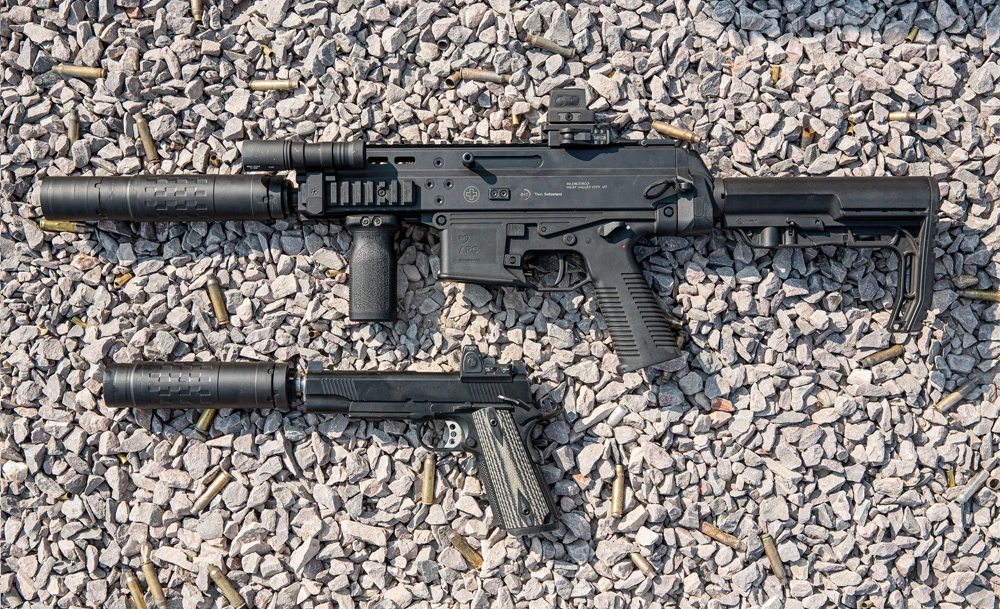
The executor files Form 5, listing the estate as the transferor and signing on the decedent’s behalf, with their title noted as executor, administrator, or personal representative. No transfer tax applies. No CLEO signature is required anymore, thanks to the 41F rule change, though a copy is still sent to local law enforcement as a courtesy notification rather than an approval request. The executor needs to include the death certificate, a copy of the will if one exists, and documentation proving they’re legally authorized to dispose of the estate’s property.
The catch is who qualifies to receive it this way. A “lawful heir” is anyone named in the will, or if there’s no will, whoever would inherit under the intestacy laws of the state where the decedent lived. Friends, girlfriends, that nephew you always liked better than your actual kids — none of them count unless they’re named in the will or fall in line under state law. If someone outside that circle wants the suppressor, the estate has to sell it to them using a Form 4, tax stamp, and all.
Why a Trust Changes the Whole Conversation
This is where NFA gun trusts earn their reputation as the smarter long term play, and it’s a big reason so many suppressor owners set one up before they ever pull the trigger on a purchase. When your suppressors are registered to a properly drafted trust rather than to you personally, the trust owns the item, not you. You don’t die, the trust doesn’t die. Successor trustees you named take over administration according to the trust document, often without triggering a new ATF transfer application at all for the transition of control.
Eventually, if the trust distributes the suppressor out to a named beneficiary as their personal property, that step still typically uses a Form 5, since it’s a transfer by operation of the trust document rather than a sale. But the messy part, the part where your family scrambles to prove heirship and hunt down probate court in the weeks after a death, gets skipped entirely if the item was already sitting in trust. A well-built trust also lets you name co-trustees who can legally possess and use the suppressors while you’re alive, something individual ownership doesn’t allow without a separate transfer for every person who might touch the gun.
A Wild Card: The Silencer Shop Foundation Ruling
Everything above describes the system as it has worked for decades, but that system is currently getting shaken hard. On August 5, 2026, Judge James Wesley Hendrix of the Northern District of Texas ruled in the consolidated cases of Silencer Shop Foundation v. ATF and Jensen v. ATF that the NFA’s registration and approval requirements for suppressors, short barreled rifles, and short barreled shotguns are unconstitutional.
Here’s why you shouldn’t rewrite your estate plan around this news just yet. The injunction is narrow. It protects the named plaintiffs and, depending on how things shake out, members of the organizations involved in the suit, not every suppressor owner in the country. It doesn’t touch state law, so plenty of states still treat suppressors as regulated items regardless of what a federal court in Texas says. The DOJ still has time to appeal, and if it does, the Fifth Circuit could stay the ruling while it reviews the case, which would put things right back where they started. Other courts are already weighing similar arguments, including a separate case pending in Missouri, and there’s no guarantee they land the same way.
For suppressor owners thinking specifically about estate planning, this ruling raises real questions with no solid answers yet. If registration requirements eventually fall away nationwide, does a Form 5 transfer to an heir still matter, or does the whole tax-exempt heir framework become moot? What happens to items already sitting in an NFA trust if the underlying registration scheme changes shape mid-course? The honest answer is that it’s too early to build any estate plan around this decision. Treat your suppressors as registered NFA items for planning purposes until there’s a final, nationwide, appeal-proof answer, and keep an eye on how this litigation develops before you change a single form.
Common Misconceptions Worth Killing Off
A few myths circulate at gun counters and online forums that deserve a direct hit. First, suppressors do not automatically become illegal or unregistered when the owner dies. The registration in the National Firearms Registration and Transfer Record doesn’t evaporate. Second, your family cannot simply hand a suppressor to whoever they think should have it without paperwork. Verbal wishes and a handshake mean nothing to the ATF. Third, an unregistered NFA item, meaning something that was never properly transferred in the first place, cannot be inherited at all. It has to be surrendered, which is another reason to keep your paperwork organized while you’re alive rather than relying on memory or a shoebox of receipts.
The Practical Takeaway
If you own even one suppressor, sit down and figure out who’s supposed to get it and whether your current setup, individual or trust, actually gets it there smoothly. A conversation with an attorney who specializes in NFA trusts costs a fraction of what a stalled Form 5 application costs your grieving family in time and frustration. Your suppressor will outlive you. Make sure your paperwork does too.



Well if one dies in a terribly unfortunate boating, accident…
Whoever finds it has a very bad problem, if they are ever found with it, in the future…
And their name is not on the paperwork…
Well if one can identify as anything they want these days cannot they identify as the name on the paperwork?
What Happens to Your Suppressors When You Die?
They have a period of silence to mourn my passing.
😁
Considering one has to think about whether they should individually own it or create a trust (I have no idea why anyone thinks that’s a good idea), the first thing I did was find out how an individually owned suppressor could be transferred after my passing BEFORE I bought my first suppressor, and put that in my Will.
Do it individually and let your Executor handle it whether it’s Form 4 or 5.
Hopefully when I die the registered suppressor and all things NFA will be a think of the past.
I’m not holding my breath on that though, turning blue and passing out to often causes your brain to vote Democrat.
This
This article is a great ADVERTISMENT back in 2025 and earlier.
But as of this year (2026), there is no $200 transfer tax on suppressors, and thus, it matters not whether or not you form 4 or form 5 it.
In my personal experience, ATF tends to look more closely at a Form 5, and requires a bunch of extra documentation, that may in 1960 was worth the trouble to avoid a $200 tax, but, frankly, it was and still is, at least for MGs, to pay the $200.00 on a form 4, than to pay 4 times that paying an estate attorney to get a court order, a will, a this, a that, to avoid the $200.00, and now for silencers, Form 4s are free anyway.
That, and it appears that in 5 weeks, its likely that suppressors will no longer need to be registered anyway to be legal, at least at the federal level. Granted, not a done deal yet, but sure looks promising.
Forty is in the black again…but alternatively, they will be tossed in my coffin for future anthropologists to find thousands of years in the future along with several firearms and ammunition. It’s OK if I have to be cremated to make more room…
On the other hand, Duly is having dementia delusions trying to convince us he’s not actually Tampon TIm, again. Nice try, Governor.