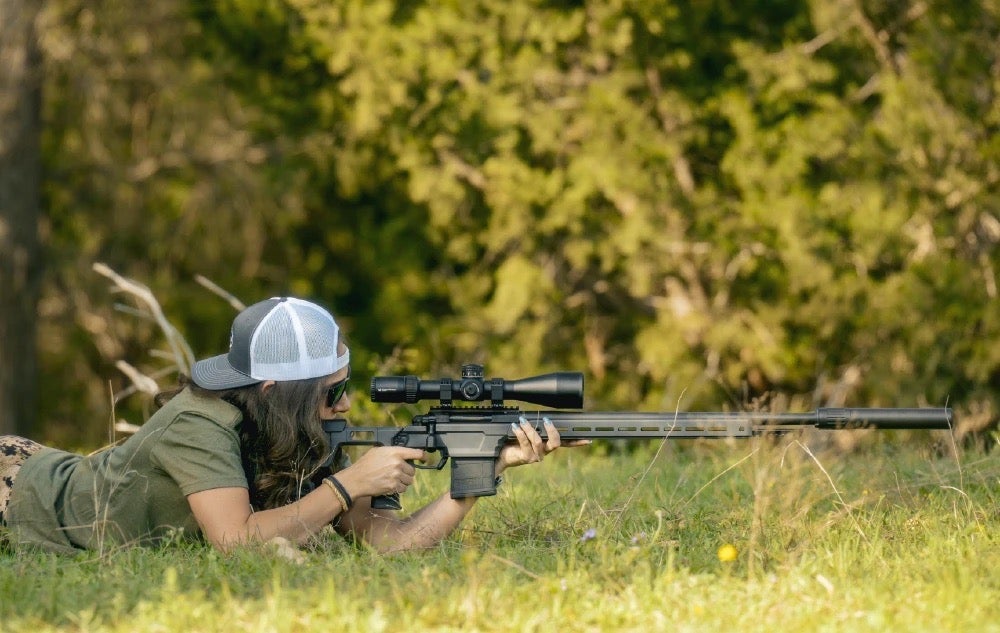
A .280 Remington and a 7mm Remington Magnum look like cousins on paper. Both are bolt-action darlings, both use .284 caliber bullets, and both have killed more elk than anyone could count. But strap a suppressor onto each one, and you’ll find out fast that they are not the same.
Magnum cartridges generate more pressure, more muzzle blast, and more heat than their standard counterparts, and a suppressor built for a .308 doesn’t always survive a steady diet of 7mm Rem Mag or .300 Win Mag. If you hunt with a magnum and you’re shopping for a suppressor, the conversation needs to start with durability, not decibels or lightweight designs.
The magnum cartridge family covers a lot of ground. You’ve got the 7mm Rem Mag and .300 Win Short Mag on the milder end, the 300 PRC and .338 Lapua stretching things out further, and true beasts like the .375 H&H or .458 Win Mag on the far side. Each one hits a suppressor with a different combination of gas volume, velocity, and blast energy.
A can rated for one magnum isn’t automatically rated for all of them, so the first job is matching the suppressor’s caliber and pressure rating to your actual rifle, not just eyeballing the bore diameter.
Baffle Material and Wall Thickness
Almost every suppressor manufacturer will tell you their can is magnum rated. Read the fine print anyway. What actually determines whether a suppressor survives regular magnum use over the long haul comes down to baffle material, wall thickness, and how the manufacturer engineered the unit to handle sustained high-pressure gases.
Titanium suppressors are popular for their light weight, and plenty of them handle magnum cartridges just fine. But some ultralight titanium cans are designed for .308-class rifles, and running them hard on a .300 Win Mag or larger could shorten their service life.
Inconel and stainless steel baffles cost you additional weight, sometimes a full pound or more compared to titanium, but they shrug off the heat and pressure of repeated magnum shots without the erosion that thinner titanium baffles can suffer over time. For a hunter who only fires a few shots per season, that erosion risk is low. For someone who’s out at the range shooting a magnum rifle every week, it’s a real consideration.
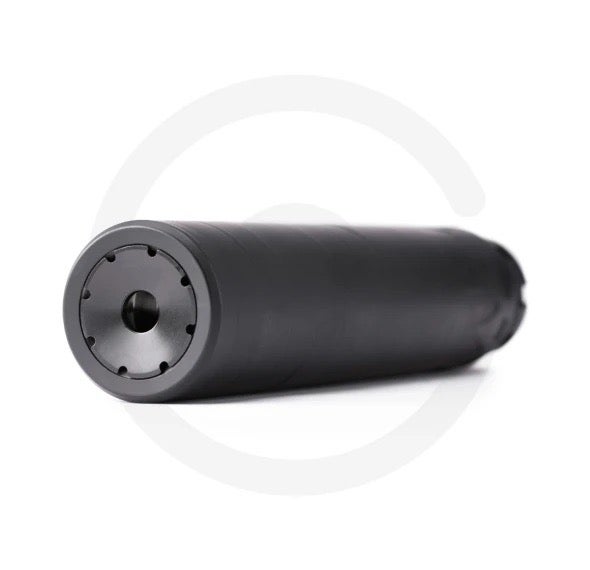
Look for suppressors explicitly rated for the largest cartridge you intend to shoot through them, and don’t assume a “multi-caliber” label means unlimited headroom. Manufacturers publish pressure and caliber limits for a reason, and those numbers exist because someone found the failure point the hard way.
Quick note on bore size: a bigger cartridge sometimes means a bigger suppressor bore, not just a beefier one. The .338 Lapua Magnum, for example, needs a large-bore suppressor built to handle a .338 caliber projectile. Always confirm the suppressor’s bore diameter is large enough for your bullet diameter before you even get to the pressure rating consideration.
Rifle Weight and Balance
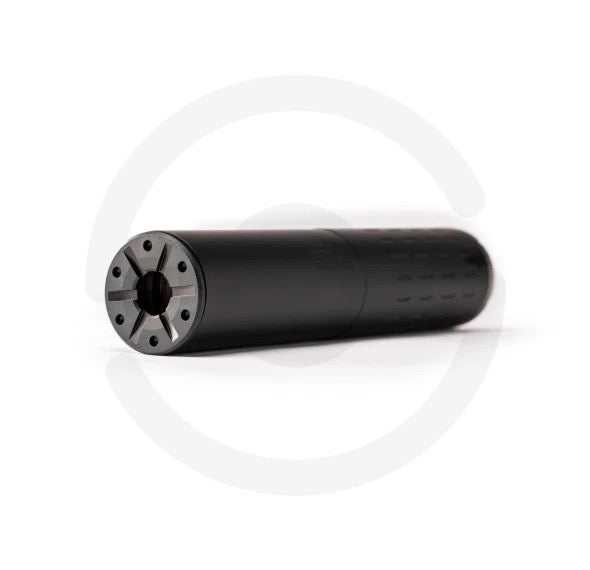
A suppressor built to handle 300 PRC is going to be heavier and often longer than one designed for a 6.5 Creedmoor. That extra weight sits out at the muzzle, which is the worst place to add mass if you care about how a rifle carries and points. A hunting rifle that swings smoothly unsuppressed can turn into a nose-heavy chore once you thread on a full-size magnum can, especially on a mountain hunt where every ounce matters by mile four.
This is where over-the-barrel (OTB), or reflex suppressor designs, deserve a look. By sliding back over the last several inches of barrel instead of extending entirely forward from the muzzle, an OTB suppressor reclaims length that would otherwise stick out past the end of your rifle. On a magnum bolt gun already carrying a 24 to 26-inch barrel, that difference between an OTB can and a traditional muzzle-forward design can mean the gun still fits comfortably in a case and still handles like a rifle instead of a fence post.
It’s not a universal fix, since OTB designs demand tighter manufacturing tolerances and aren’t available for every host rifle, but for magnum hunters fighting length and balance, it’s worth considering as more OTB suppressors are becoming available.

Sound Reduction Expectations
Here’s the part that often surprises new suppressor buyers. Magnum cartridges are loud to begin with, often 5 to 10 decibels louder unsuppressed than a comparable standard cartridge, and a suppressor doesn’t erase that gap entirely.
You’re still going to hear a magnum report through a can. What the suppressor buys you is a reduction from truly dangerous sound levels down to something your ears can tolerate without permanent damage, along with noticeably less recoil and muzzle rise.
Don’t expect a .300 Win Mag suppressed to sound like a .308 rifle with the same can. It won’t, and anyone that tells you otherwise is selling you a fantasy. What you should expect is a hearing safe level, recoil reduction that helps you get back on target faster, and durability that holds up over many hunting seasons.
Matching the Suppressor to How You Hunt
Before buying, think honestly about your hunting plans. A backcountry elk hunter carrying a rifle five miles a day wants every ounce trimmed and will lean toward titanium and OTB designs despite the potential tradeoffs in long-term durability.
A competitor shooting off a bench or a ranch hunter shooting out of a blind can afford the weight of a steel or Inconel can built for maximum service life. Either path can be the right one. The mistake is buying based on a marketing claim instead of matching the suppressor’s actual engineering to the cartridge you’re running and the way you carry a rifle in the field.
Magnum cartridges reward patience in the buying process the same way they reward patience behind the trigger. Do the homework on baffle material, confirm the caliber rating actually covers your cartridge, and think through the length and weight before you commit. Get that right and you’ll end up with a suppressor that survives years of magnum recoil and provides reliable hearing protection.
More Silencer Shop content on TTAG:
- Scout Rifle Reflex Suppressors and the Reflex Suppressor Mount
- Monocore VS Baffle Stack Suppressors: Is One Clearly Better?
- Q Drops the Tall Boy: A .30 Cal Silencer Built to Push Subsonic .300 BLK as Quiet as It’ll Go
- Best Suppressed Hunting Cartridges for Deer, Elk, and Small Game




Uhhh, ,,, and with a suppressor the gun is still loud.
Theres to much confusion
There must be some way out of here