For decades, European shooters have had access to suppressors that struck a real balance between performance and price. American shooters, meanwhile, have mostly had to choose between budget cans that underdeliver and premium options that often cost more than the rifle wearing them.
Lyman Products decided to close that gap with their new Sonicore lineup of suppressors built in Middletown, Connecticut, based on a proven European platform. The pitch is simple. Take a design that’s already logged years of field use overseas, manufacture it here under tight quality control, and sell it for a price that virtually anyone can afford. I’ve been testing two Sonicore cans for several months, and I wanted to walk through the whole lineup while giving some real trigger time impressions on the two I know best.
What Ties the Lineup Together
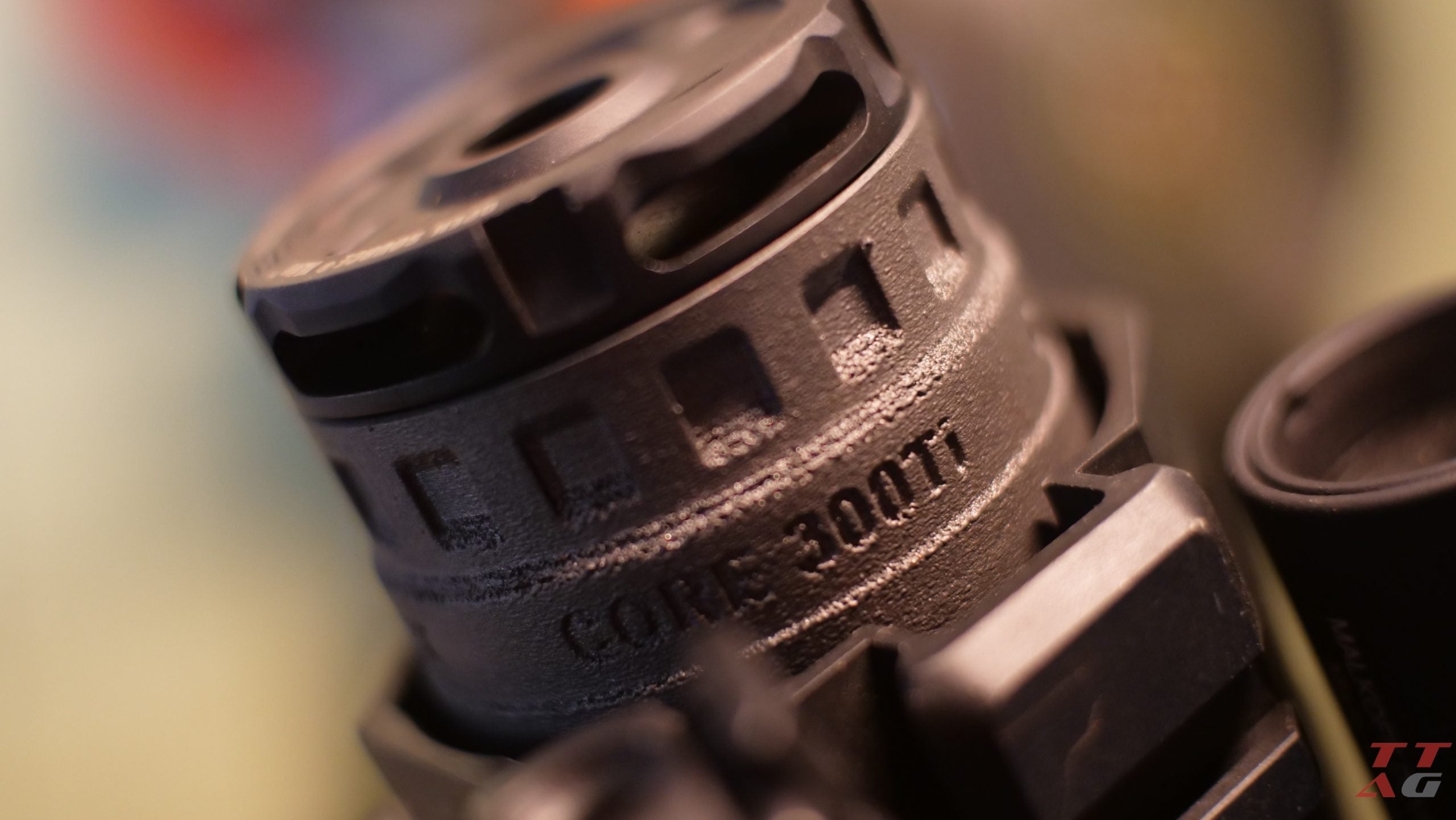
Every Sonicore suppressor shares the same DNA. They’re machined from 6026-T9 aluminum with a 303 stainless steel core, and that combination matters. The aluminum keeps weight down for guys carrying a rifle up a mountain or through a blind before sunup, while the stainless steel handles the heat and gas erosion that actually wears out a suppressor over time. Every model gets a black, non-glare Mil-Spec hard coat anodized finish, and the whole line is modular. That means you can break a can down to a shorter configuration when maneuverability matters more than maximum suppression, which is a nice bit of flexibility for guys who bounce between a stand hunt and a run-and-gun coyote setup.
The centerfire models in the lineup, the Paradox and Rekkr families, use an integrated stainless steel muzzle brake that actually spins gas in a way that keeps tightening the can onto your muzzle as you shoot. It’s a small design touch, but anyone who’s had a suppressor work itself loose mid-hunt will appreciate it. None of the Sonicore lineup is full auto or FRT rated, so keep that in mind if that’s your use case. These are built for bolt guns, lever guns, and standard semi-auto modern sporting rifles.
The Skarv 22: Rimfire Versatility
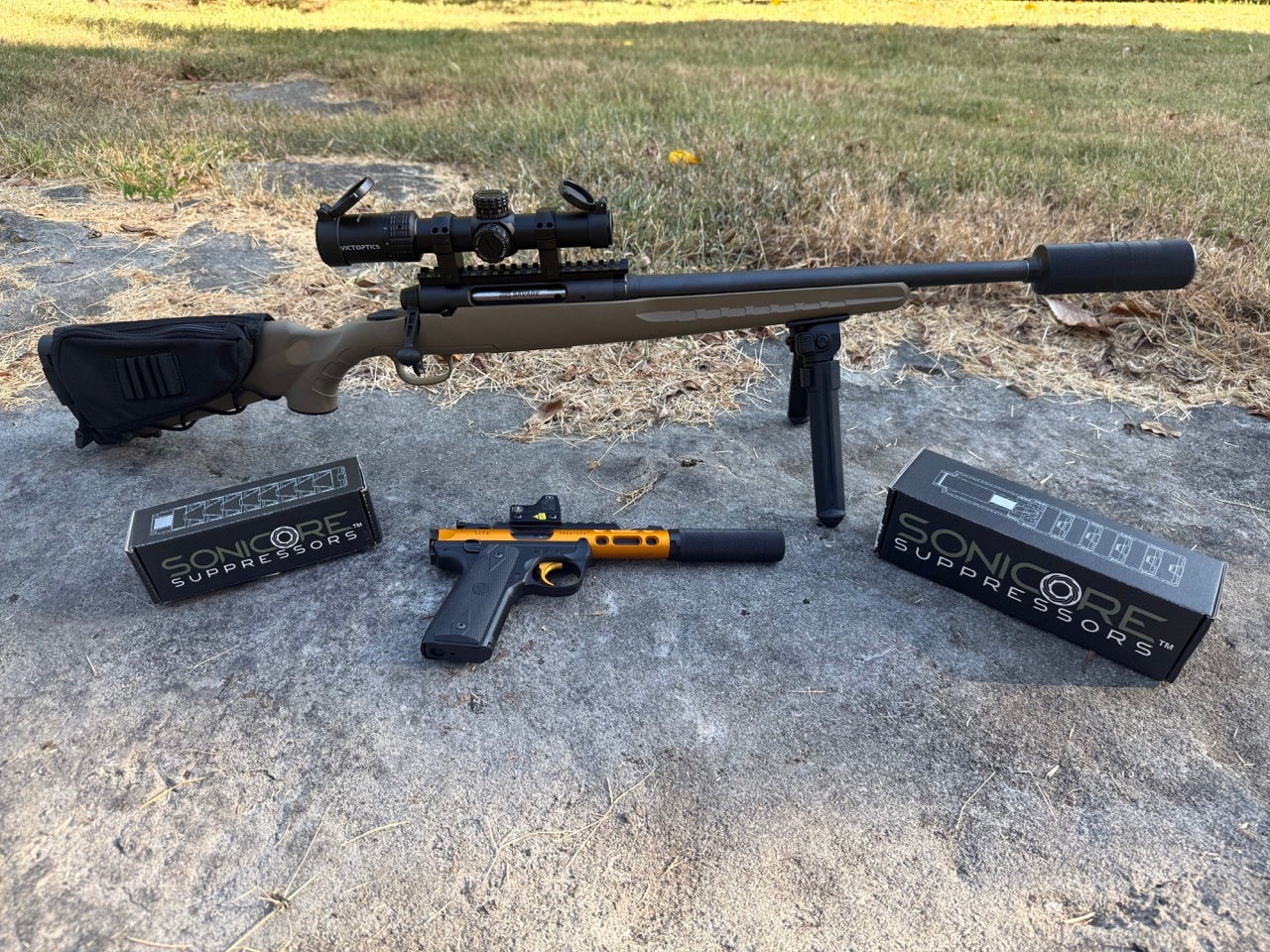
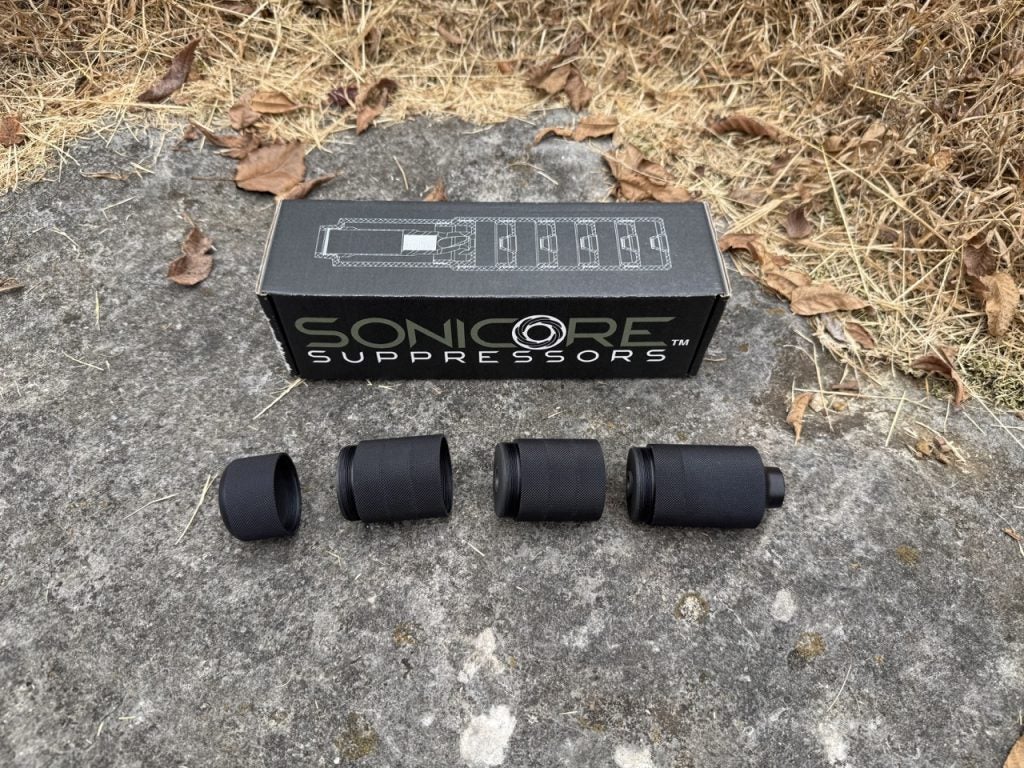
I’ll start with the Skarv 22 because it’s the one that I’ve been running on my rimfire rifles and pistols since the spring when it became available. At $199.95, it’s a lightweight, modular rimfire can threaded 1/2-28 for easy installation on just about anything with a threaded barrel. There’s no minimum barrel length requirement on .22LR, which is a nice bit of freedom if you’re running a shorter barreled pistol or a suppressor-ready rimfire rifle.
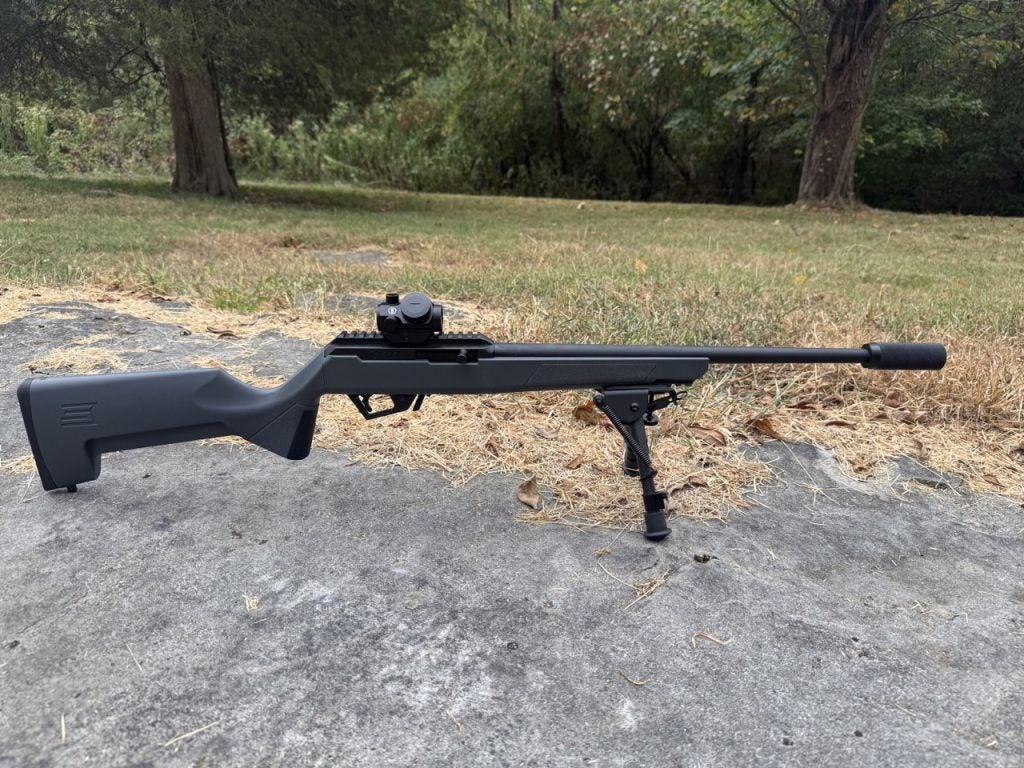
What sold me on the Skarv is how quiet it actually gets with subsonic .22LR, and the modularity makes it even more versatile than I expected. I run it short on my .22LR rifles, where the compact length keeps things balanced and doesn’t add unnecessary bulk out front. Then I put the full length configuration on my rimfire pistol, where the extra baffle volume helps tame the blast a lot more than a stubby can would on a shorter pistol barrel. Having one suppressor cover both platforms instead of needing separate cans for rifle and pistol duty is a real advantage, especially at this price point.
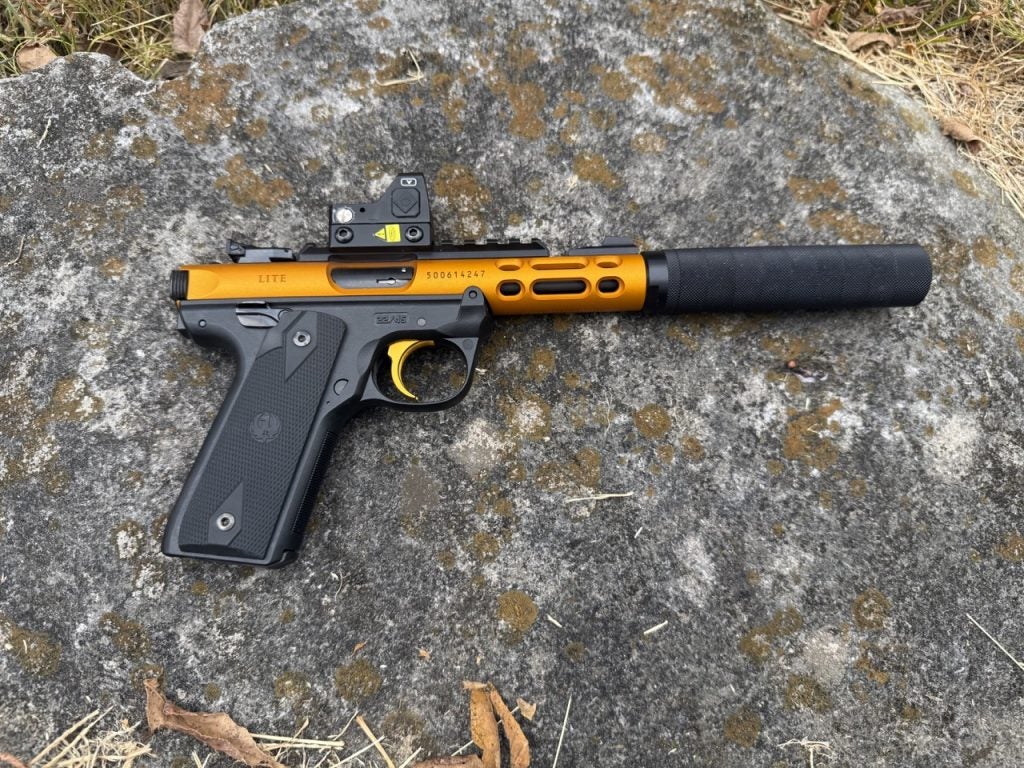
Rimfire suppressors with subsonic ammo are about as close to Hollywood quiet as this hobby gets, and the Skarv earns that reputation. It’s also dead simple to service. The knurled exterior gives you a firm grip for install and removal, and it comes with a spanner wrench so taking it apart for cleaning isn’t a fight. For the price, I haven’t found much to complain about.
The Paradox DT: Lightweight and Built for Hunters
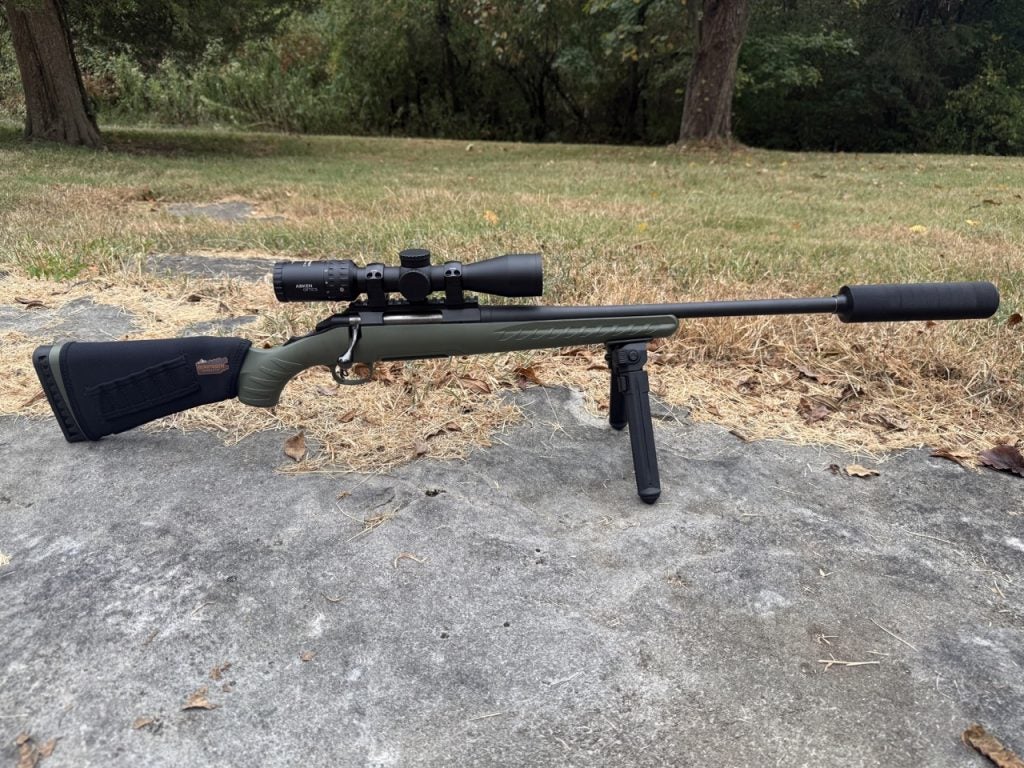
The Paradox DT (direct thread) is the other suppressor I’ve been testing, and it’s worked great on several of my hunting rifles. At only $279.95, it’s available in 5.56/.223 and a .30 caliber bore option, and Lyman specifically built it with affordability and versatility in mind. The lightweight aluminum baffle modules paired with the stainless steel core give you a can that doesn’t feel like a boat anchor strapped to the end of your barrel during a long stalk.
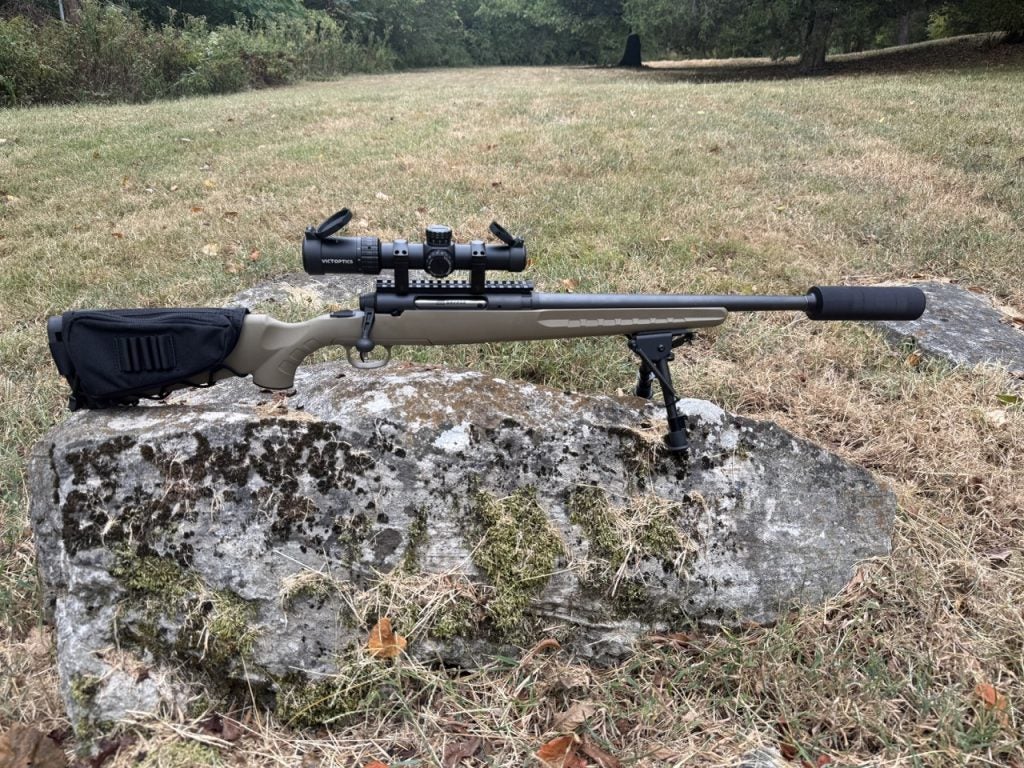
What I’ve come to appreciate most about the Paradox DT is that modularity isn’t just a marketing bullet point. I run mine short on .300 Blackout subsonic loads, where the reduced length keeps the rifle handy and lightweight without giving up much on the suppression side since subsonic ammo is already doing most of the work. Then I stack the extra modules back on and run it full length on my .308 and 7mm PRC rifles, where the added baffle volume matters more with those higher pressure, faster rounds. Being able to reconfigure the same can for two very different jobs instead of buying two suppressors is exactly the kind of practical value this whole lineup is built around. The minimum barrel length recommendations run from 8.5 inches on .300 Blackout up to 20 inches on .300 Winchester Magnum, which covers a lot of ground.
Rounding Out the Lineup
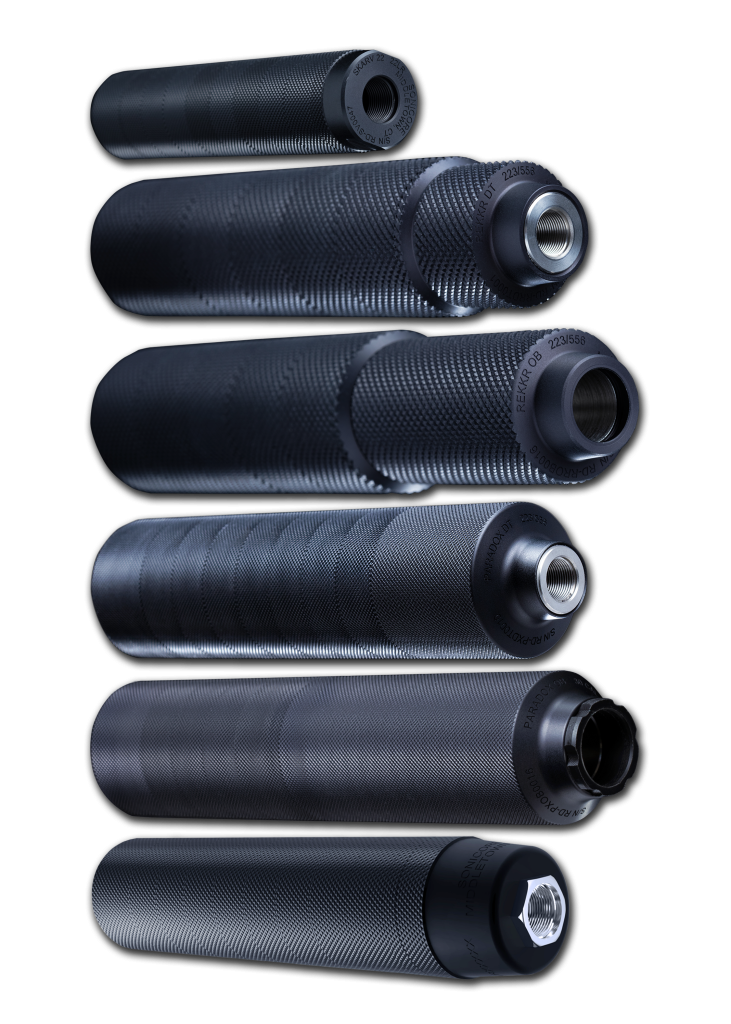
Beyond the two I’ve tested so far, Sonicore offers four more variants to cover the needs of even more shooters and hunters. The Valor 9 handles pistol caliber suppression for the 9mm crowd. The Rekkr DT and Rekkr OB are built with thicker walls than the Paradox, designed specifically for higher volume semi-auto shooting, and the Rekkr DT allows up to 60 rounds of rapid fire in 5.56/.223 before a cool down is needed. The Paradox OB gives hunters an option that slides over the barrel rather than threading at the muzzle tip, which shortens the overall length added to the rifle and improves the balance on a hunting setup.
Final Thoughts
Sonicore isn’t trying to reinvent the suppressor. It’s taking a design that already works and making it available at an affordable sub-$300 price point that gets more shooters into the suppressor game, especially with the $200 tax stamp being a thing of the past. From testing the Skarv 22 on my rimfire rigs and the Paradox DT on my hunting rifles, I’ve come away impressed with the design, the modularity, and the noise reduction for how little these cost. If you’ve been sitting on the suppressor fence because of price, this lineup is worth a look at Silencer Shop’s website or your local Silencer Shop dealer.