Images by the author
We are seeing a spate of rifles being released by companies that you would never have associated with rimfire guns… here is a shot of two of them:
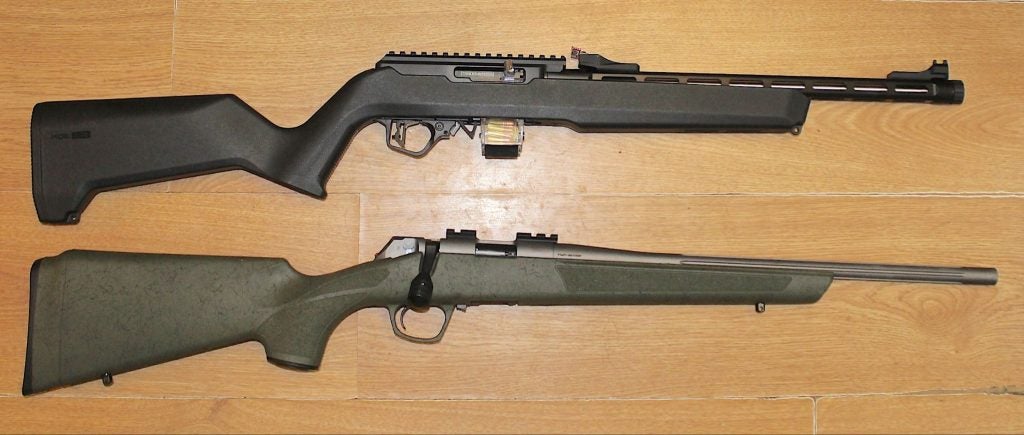
On top, we have the Tandemkross rifle that we’re looking at today, and below it, the new CVA Cascade. CVA is known mostly for its muzzleloaders, but the Cascade may change that… look for a review soon.
This seems to be a recurring trend, and I doubt it will end with just these two samples, but that’s an article for another day.
Back to Tandemkross. Tandemkross (TK) is a well-known company among shooters. Making everything from competition firearm parts to complete guns, they run the gamut in terms of quality aftermarket parts.
My son and I have had a lot of experience with the company. He is a maintenance engineer at a local plant on weekdays and a Steel Challenge competitor on Saturdays when the contest is held locally. He has some fairly specialized equipment, most of which came from TK.
As a matter of fact, we just did an article on how muzzle brakes affect rimfire recoil — look for that soon here. We are also looking at how the standard Ruger Mk IV pistol lower frame fares against a TK Cthulhu lower when shot both with and without a brake. That one is in the works.
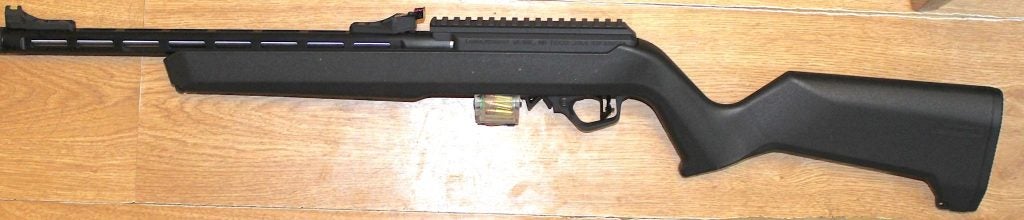
So it was with more than a little enthusiasm that we made straight for the TK tent on Range Day at the recent GunCon in Ohio. We talked with the guys there, explaining the recoil articles we wanted to do, and got to shoot some pretty nifty handguns … and a new TK-built rifle. Huh? TK is known for its pistol mods and aftermarket rimfire rifle parts, but not so much for complete rifle builds. They have a new .22 out called the TKX22 Light Rifle.
Before we analyze the rifle, let’s go in a slightly different direction and address the 800-pound gorilla in the room… how does this rifle compare with a 10/22?
Comparison
I can hear Steel Challenge competitors out there now, saying, “How does it compare to my Ruger 10/22?” That is a very fair question, as Ruger all but owns the competition rimfire rifle market for Steel Challenge.
My son, an engineer/shooter/reloader/competitor, was curious about that, so he took the TK rifle apart. He compared it to his Model 32014 carbon-fiber 10/22. Here’s what he found…
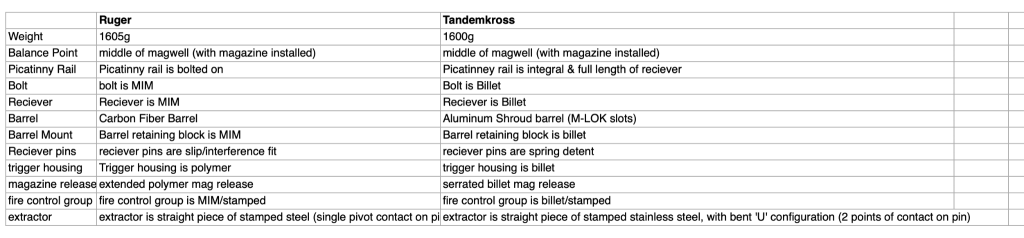
From a practical, dollar-based standpoint, it’s obvious that the MSRPs of these two guns are pretty far apart. The 10/22 is meant to be a rifle that many shooters can buy and compete with. The TK model uses a different construction dynamic… parts machined from billet aluminum, roll pins, a full-length Pic rail, etc. This rifle is for serious competitors who won’t shy away from paying at least $1,200 — that’s the lowest online price I saw — for a gun with a full list price of $1,450. You have to be serious about your sport to do that.
If we look at the table above, we see that the rifles differ primarily in the use of MIM or billet-machined parts, with additional touches such as receiver pins with spring detents to hold them in place, along with the points I mentioned above. Does that mean I’m putting down the ol’ 10/22? Of course not! More than 7 million of those rifles have been sold since they came out in my seventh-grade year of 1964. The 10/22 is one of the all-time best-selling firearms. They are not built to compete with a fifteen-hundred-dollar gun made by a company that specializes in aftermarket parts for that rifle.
In terms of similarities, the weights of the two rifles are almost identical… 3 lbs., 6 oz. for the TK and 3 lbs., 8 oz. for the Ruger, if my gram-to-ounce conversions are close.
Let’s look at the TK Light Rifle specifications.
- Barrel length: 16.5″
- Overall length: 34.75″
- Unloaded weight: 3lbs., 6oz
- Length of pull: 13.75″
- Front sight width: 0.155″
- Rear sight notch width: 0.175″
- Sight adjustment: Windage and elevation
- Sight radius: 14″
- Trigger pull weight adjustment range: 2.5lb – 5.5lb
- Muzzle thread pitch: 1/2″x28
- Barrel twist rate: 1:16″
- Chambering: Sporting
- Barrel material: Stainless steel
- Barrel sleeve material: Anodized aluminum
- Magazines: 1x Assembled DoubleKross Magazine
- MSRP: $1499.99
I think the most important spec among those listed, in terms of accuracy, is the trigger. You can adjust the trigger from 2.5 to 5.5 pounds… that alone can really help your shooting over many other features. The sights are really interesting, too. I liken them to sights I’ve got on a Gamo air rifle… an adjustable rear with two red fiber-optic rods and a front sight with a green F.O. rod. The sights gather a great amount of light and are very easy to see. I could see competitors ringing steel, foregoing a red dot and using the built-in sights; they’re that good. But, of course, you have the means to install a red dot — and a suppressor, for that matter.
The review gun is black, but other finishes are available…
- Olive Drab Green with Black & Black Barrel;
- FDE w/ Black & Black Barrel;
- Stealth Grey w/ Black & Black Barrel
The $1499.99 price is the same for all.
Photos
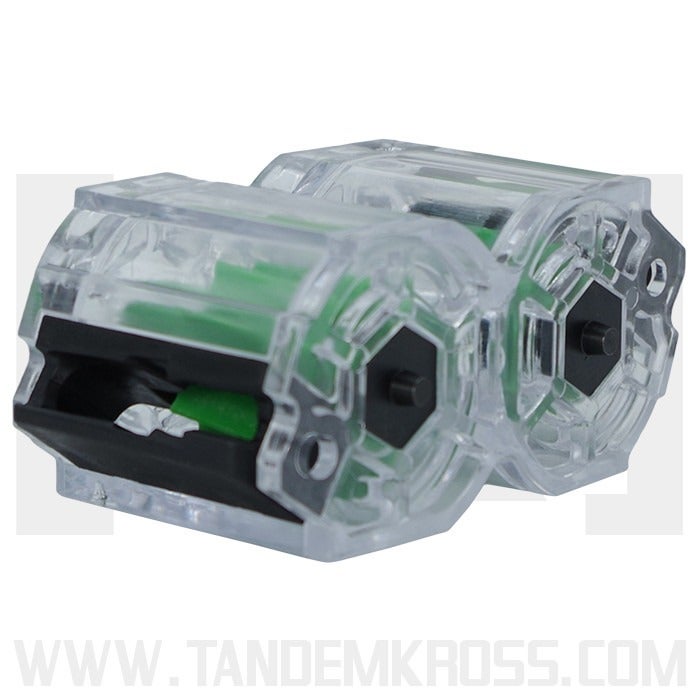
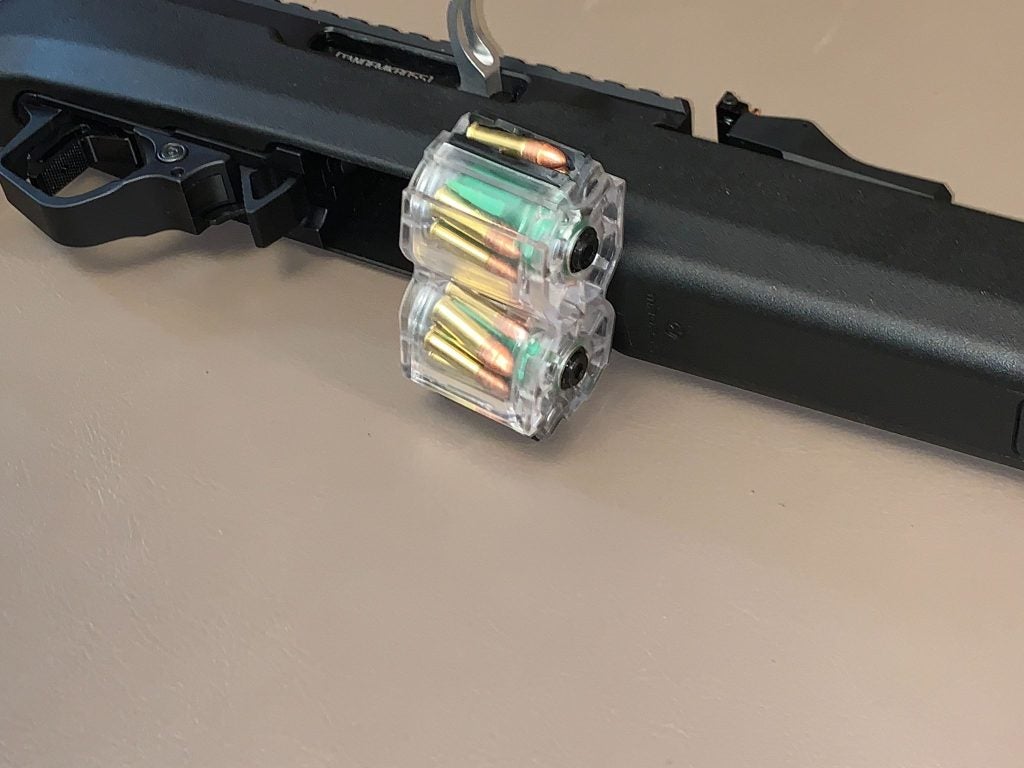
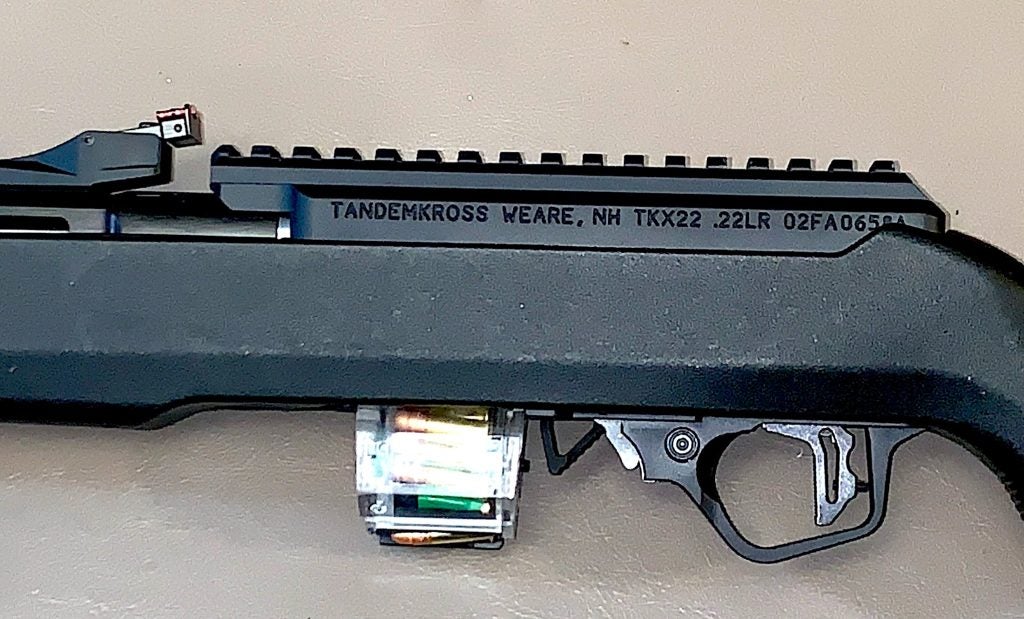
Above, we have an image from Tandemkross.com and one from me that shows their Assembled DoubleKross magazine for Ruger. They’ve basically taken two 10-round Ruger magazines and joined them at the hip…when you run dry, flip it over.
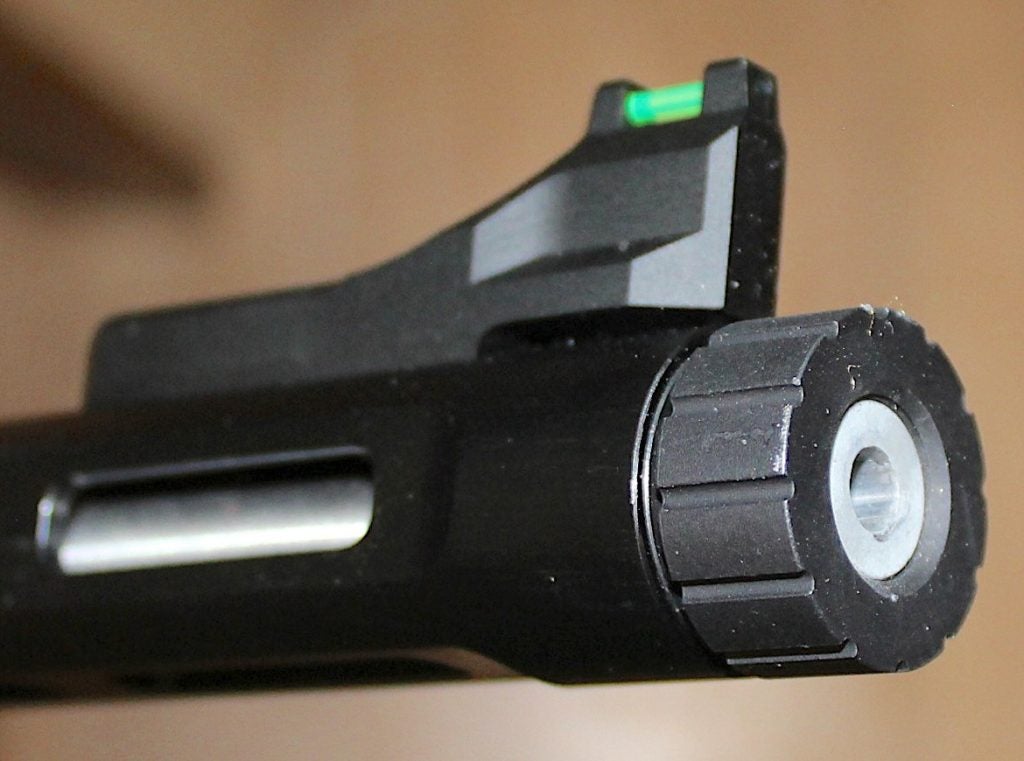
The front sight and threaded muzzle. I stuck a compensator on when I shot it.
The rear sight is elevated, and we see where this was made…
The barrel is surrounded by slots that allow you to use accessories made for M-LOK, thereby making it very lightweight and versatile.
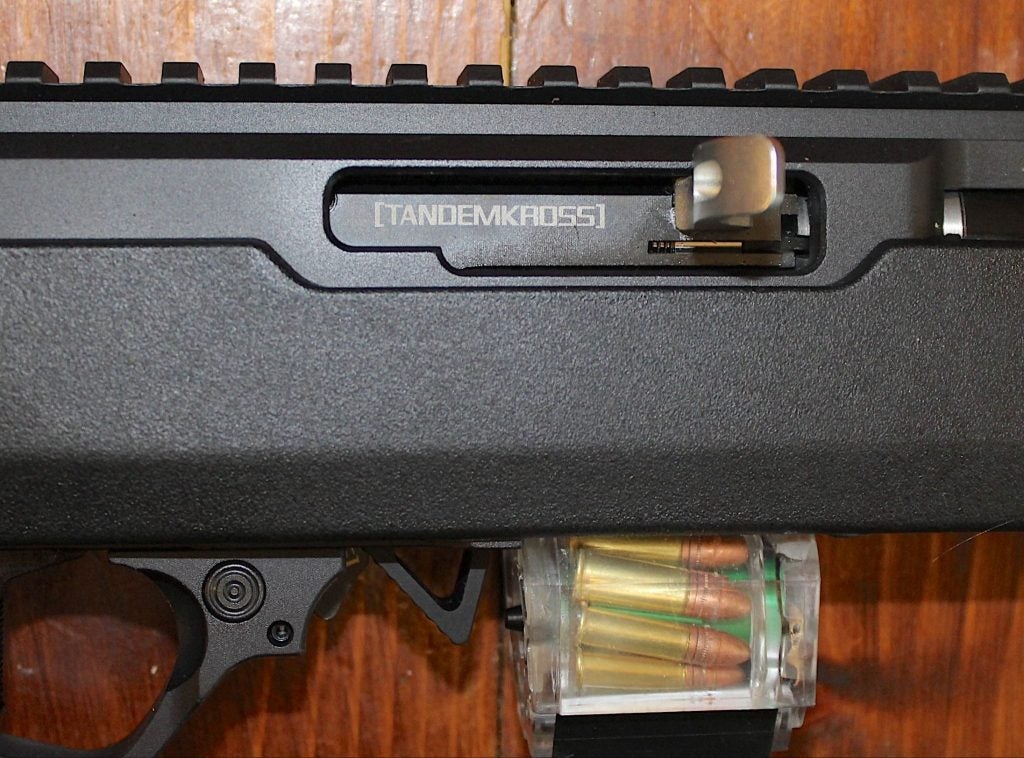
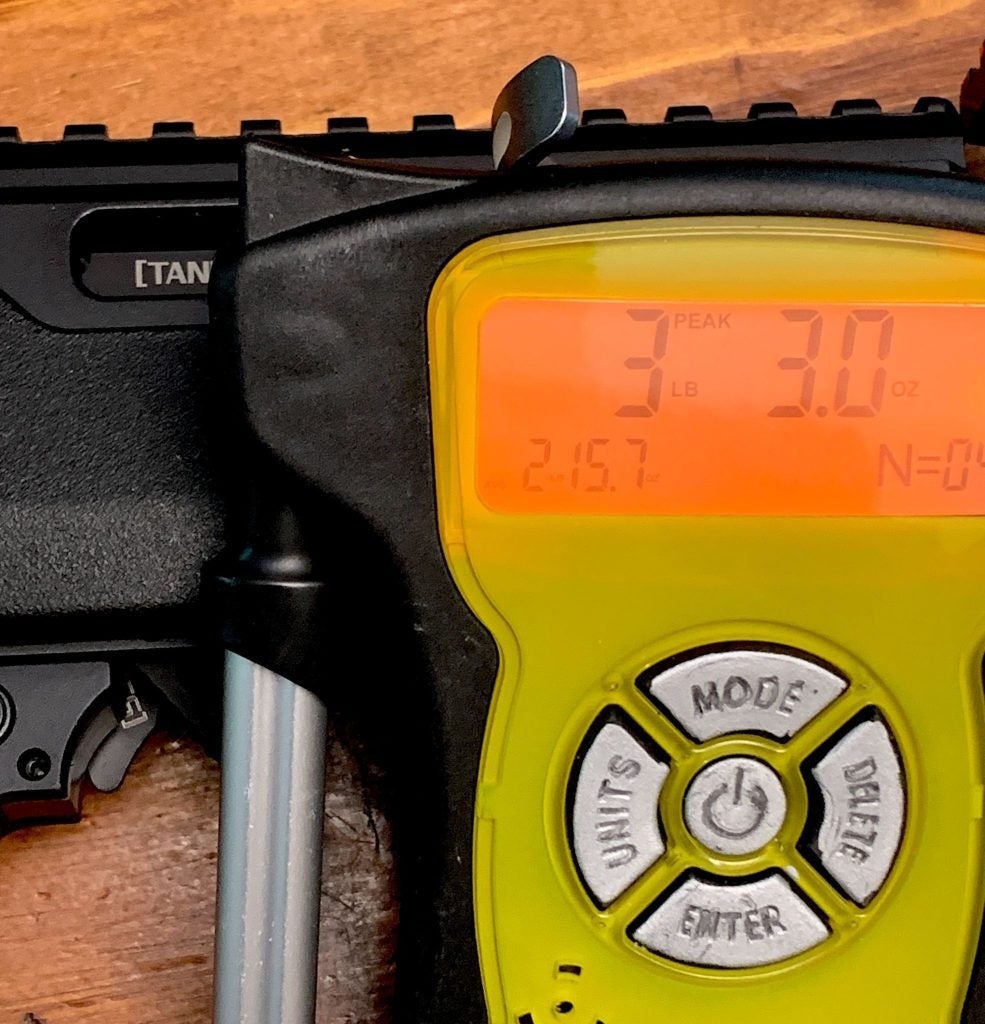
I averaged a trigger pull weight of just under three pounds… amazing!
Range Time
I gathered up the rifle, some CCI Mini-Mag ammo, and a Griffin Armament Checkmate HD 22 suppressor and headed to my backyard range.
We have had monsoons for several days, so I took advantage of a break in the clouds… it didn’t last long. I am recovering from a broken kneecap, so I had to be careful not to trip as I placed my target stand. I stuck it a bit closer than normal, at 35 yards, and then went through most of a box of Mini-Mags. Those are my go-to ammo for .22 LR reviews; my buddy Duane says they are the most popular brand of .22 ammo he sells in his gun shop.
So, I shot several targets using the sights that came on the gun… I always try to use whatever comes out of the box, as many folks will use the factory sights for backyard plinking.
This one is fairly typical of the others. We have basically two groups, although all these shots were made in one go. Considering the extremely wet, humid conditions, the targets weren’t bad.
Bear in mind that the furthest distance this rifle will be shot in the Steel Challenge competition is 25 yards, and I think we have a winner. Competitors will put a red dot or prism scope on it and further tighten their groups.
Some Thoughts
As I was looking this rifle over and shooting it, a couple of things occurred to me.
My first thought is probably the one that most of you are having… is it worth $1,400? That’s a lot for a rimfire rifle. As I replied to myself (I’m not quite to the talking-to-myself stage yet, but sometimes I wonder), the rifle is worth it if you want to have your best chance of shaving time off your Steel Challenge scores using a rifle purpose-built for that endeavor.
This rifle was conceived with one thought in mind… competition. Could you use it in the squirrel woods? Of course. You could also use a Ferrari to haul sacks of chicken feed, but that’s not what it was built for. The rifle is best used for competition. If you are really into Steel Challenge or similar sports, then the price tag isn’t much of a hurdle.
Another thing I looked at was its sights.
(Somehow, the flash makes red fiber optics look almost yellow. They are bright red, make no mistake.)
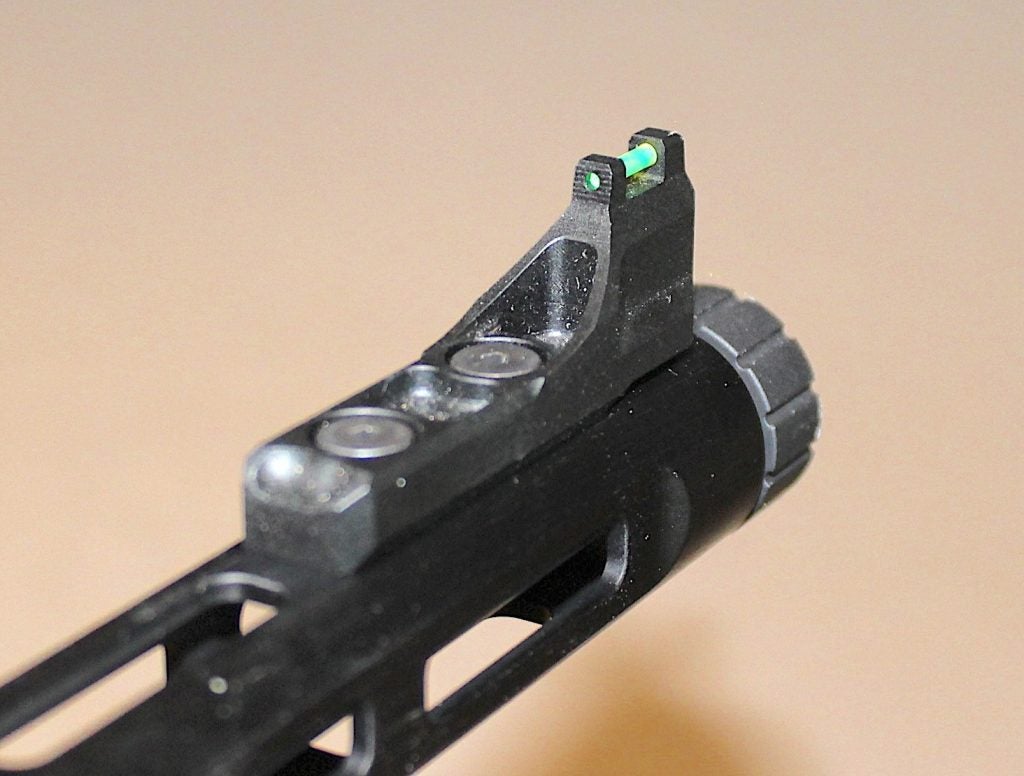
Many rifles today come with either no sights or very rudimentary front and rear sights. This rifle’s sights are useful out of the box. Those fiber-optic rods all but gleam and allow you to acquire the target very quickly. I alluded to seeing similar sights on an air rifle above… I don’t think that’s a mistake. Those Gamo sights are excellent and really help you dial in your aim point. They used the same school of thought here. I would imagine most folks who buy this rifle will mount an optic of some sort, but if that has to wait for a while, you can do some impressive shooting with it as issued.
Lastly, the rifle’s weight, or rather, lack of it, means it will swing onto targets quickly and won’t wear you out as it does. After all, the thing weighs not quite three and a half pounds… that’s heavy-handgun territory. TK has really engineered the stock well and has cut out all material that didn’t need to be there. For a full day of shooting, that low weight is appreciated.
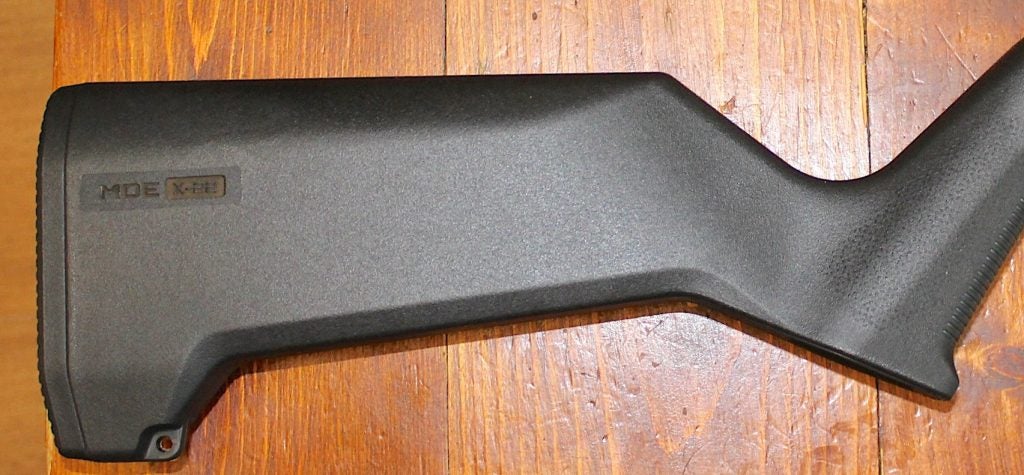
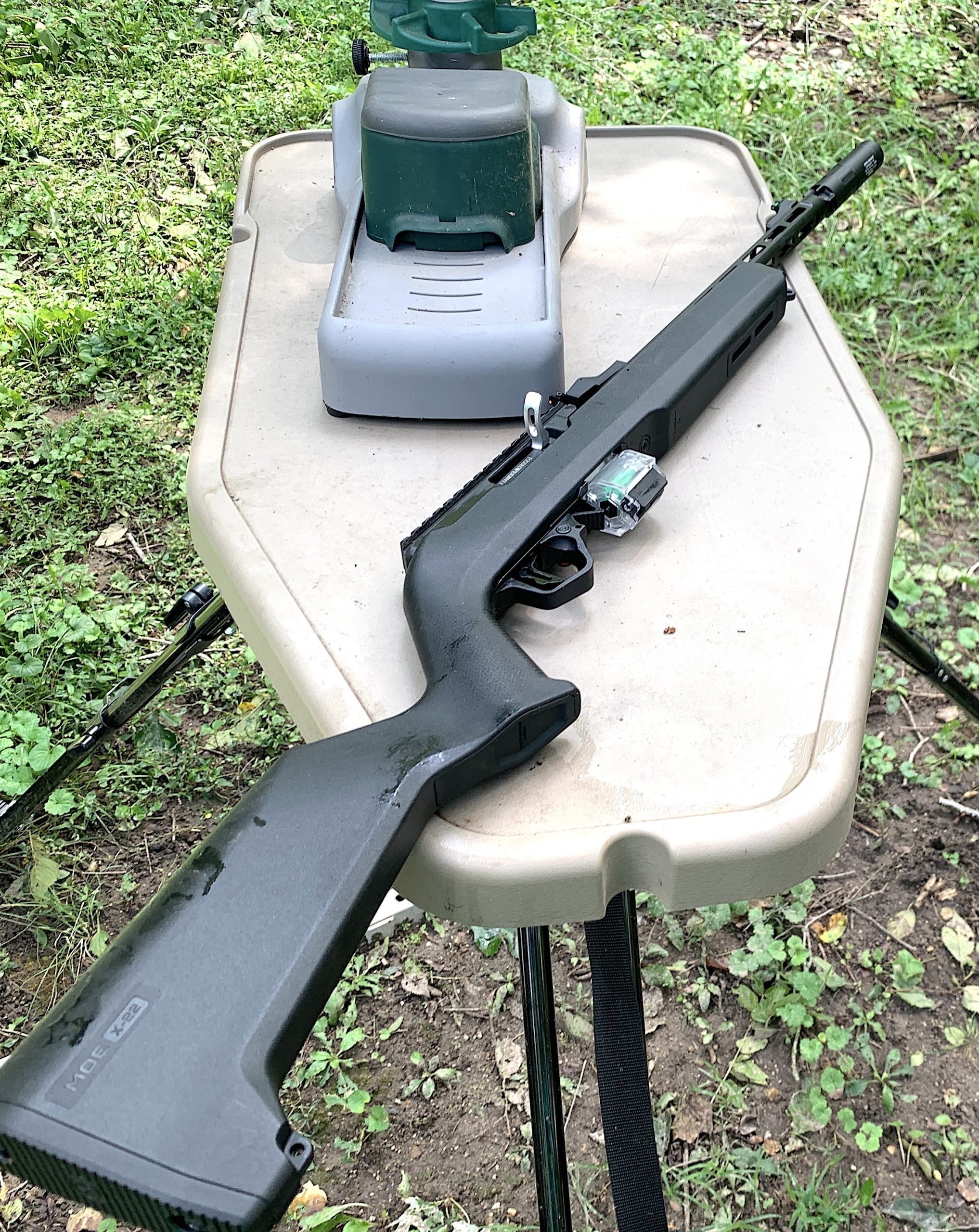
A shot of the weight-saving MOE X-22 stock
Conclusion
If you are looking to add a competition rifle to your collection, the TK could be a game-changer, literally. The rifle’s lineage speaks to a top-quality competition heritage, and it was designed with winning in mind. Its featherweight trigger pull, coupled with other design elements, means you get every advantage you can when the timer is presented and you hear the words “Shooter Ready?” From its extremely light weight to its quick magazine changes to its ability to swing on target in a heartbeat, the TKX22 is a rifle that should be on every competitor’s radar when the time comes to up your game. And that’s the name of that tune, eh?
Links To Items Used In This Review
- Birchwood Casey Tango Front Mount Rifle/Pistol Shooting Rest, $43
- Birchwood Casey Range Cleaning Kit, $60
- Caldwell 66% AR500 Steel Silhouette Target, $127
- Caldwell Ultimate Target Stand, $33
- GPS Medium Range Bag, $150
- MTM Case-Gard High-Low Shooting Table, $160