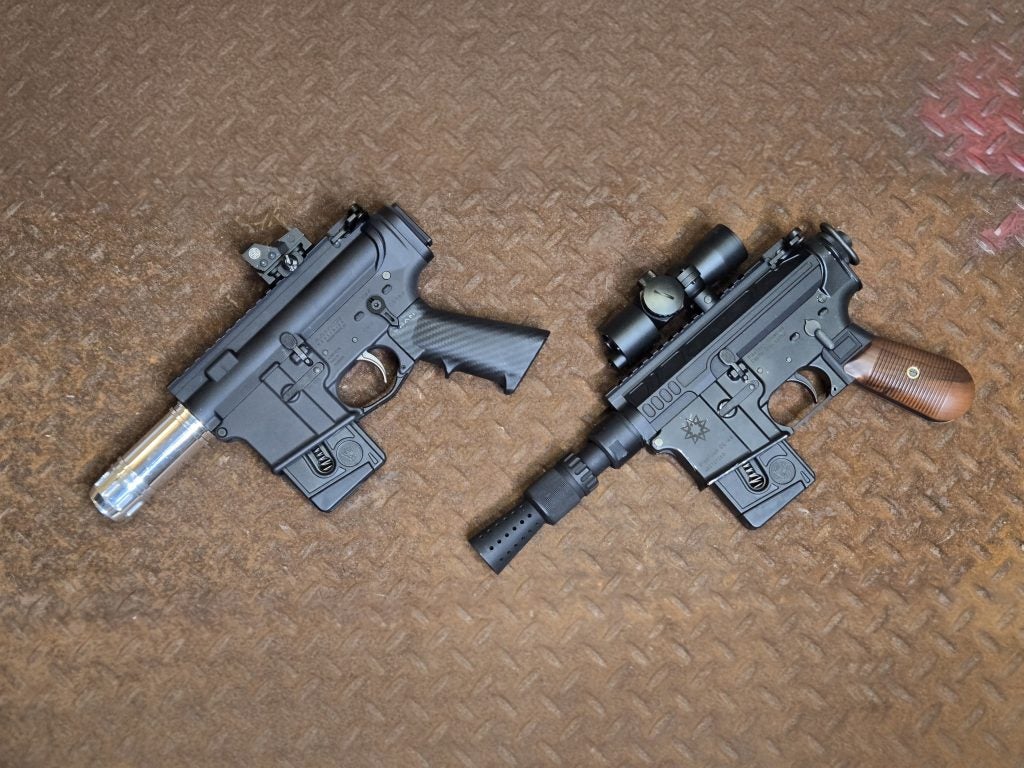
I’ve always had a soft spot for science fiction guns, and Star Wars provides plenty of material to work with. A few years ago, I started down that road with an AR-based version of Han Solo’s DL-44. I built it using parts from Canto Arms.
The DL-44 seemed like the obvious place to start. It’s pretty much the quintessential Star Wars blaster. It’s also one of the most recognizable science fiction weapons ever put on screen. My build wasn’t an exact prop replica, but it captured the look while still being a functional firearm. You can check out that original DL-44 build here. Once I had the DL-44, though, apparently one blaster wasn’t enough.
Moving on to the A280
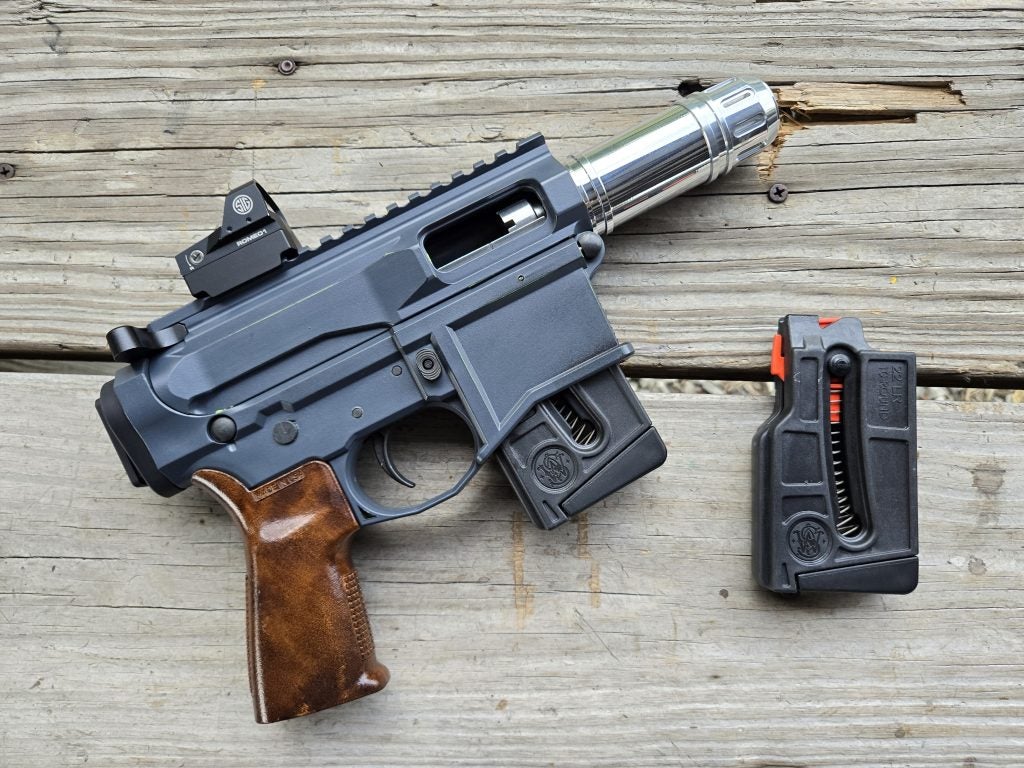
My next project used Canto Arms’ A280 CFE parts. The A280 CFE is based on the blaster carried by Cassian Andor in Rogue One: A Star Wars Story. Its AR based construction also makes it a natural candidate for conversion into a functioning .22 LR firearm.
I put together my original A280 build in 2024. At the time, I mostly raided my parts bins for the host gun. I had components sitting around, the Canto kit gave me the important A280 bits, and the resulting blaster worked just fine. I liked it, but after living with it for a couple years, I decided it deserved better.
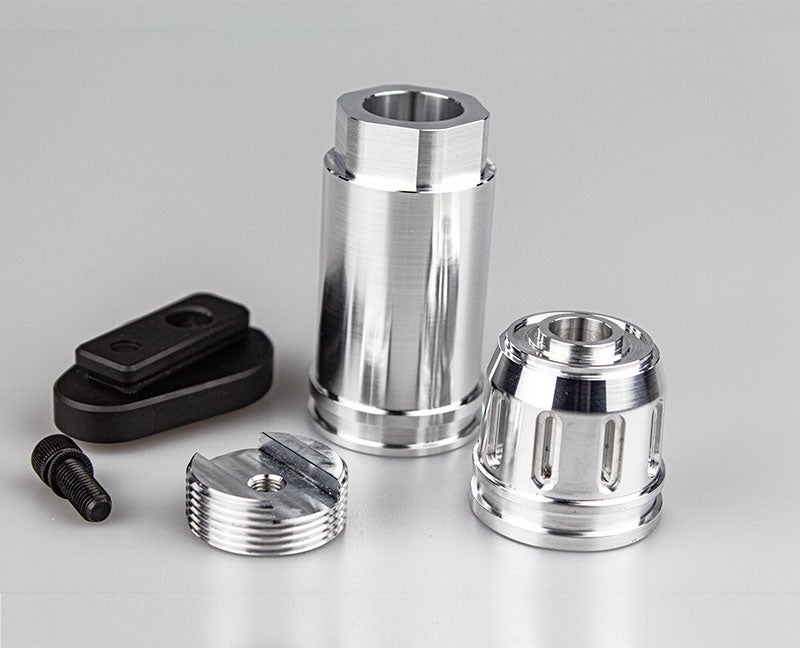
Canto Arms’ A280 parts and build kits aren’t exactly cheap. I have about $470 invested in the bolt, barrel, charging handle and cosmetic parts alone. Eventually, it seemed a little silly to hang all of that on an assortment of parts I happened to have lying around. That worked for the original build, but it was time to give the A280 a dedicated home. I also wanted to put a little more thought into the rest of the gun.
Starting With an A280 Lower
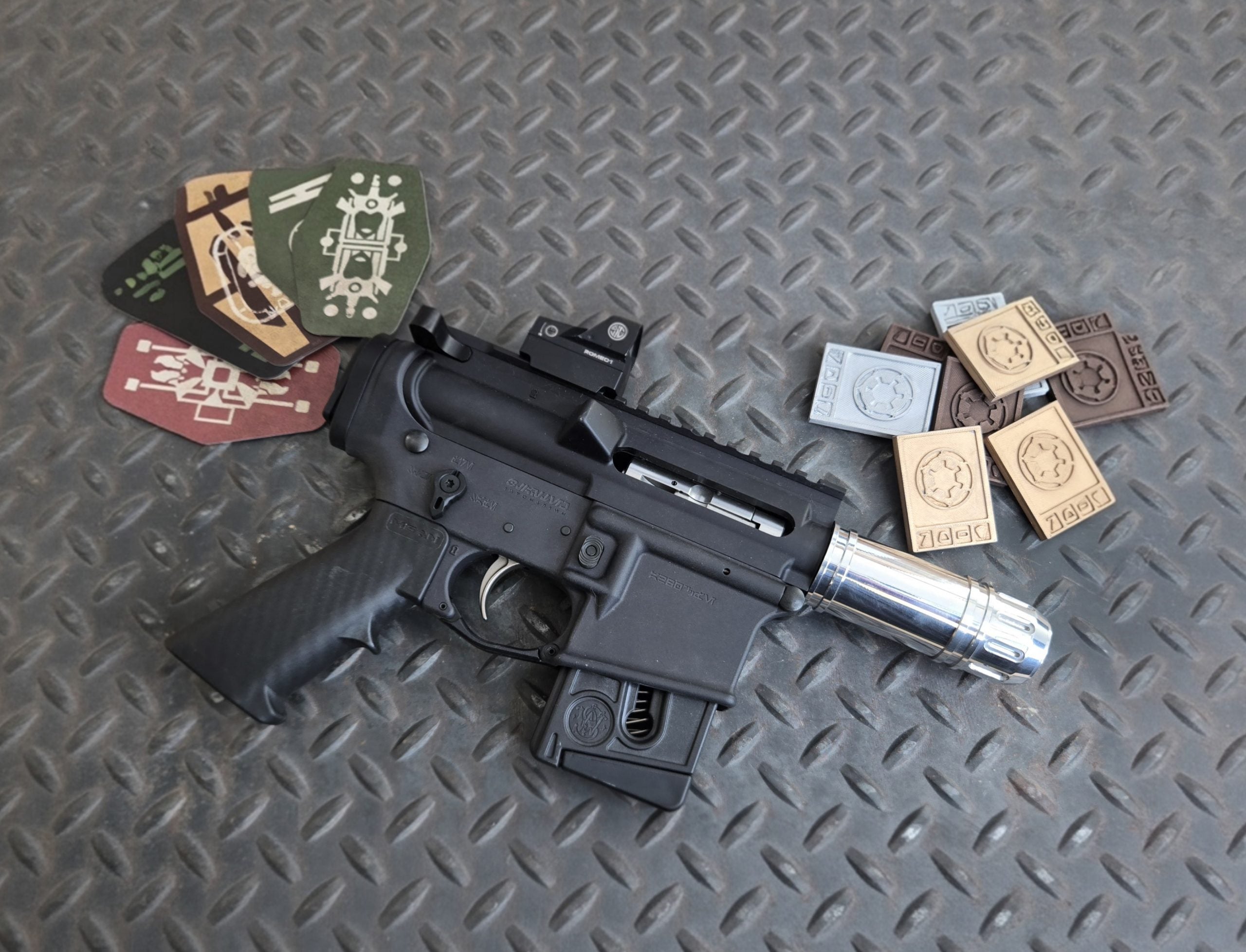
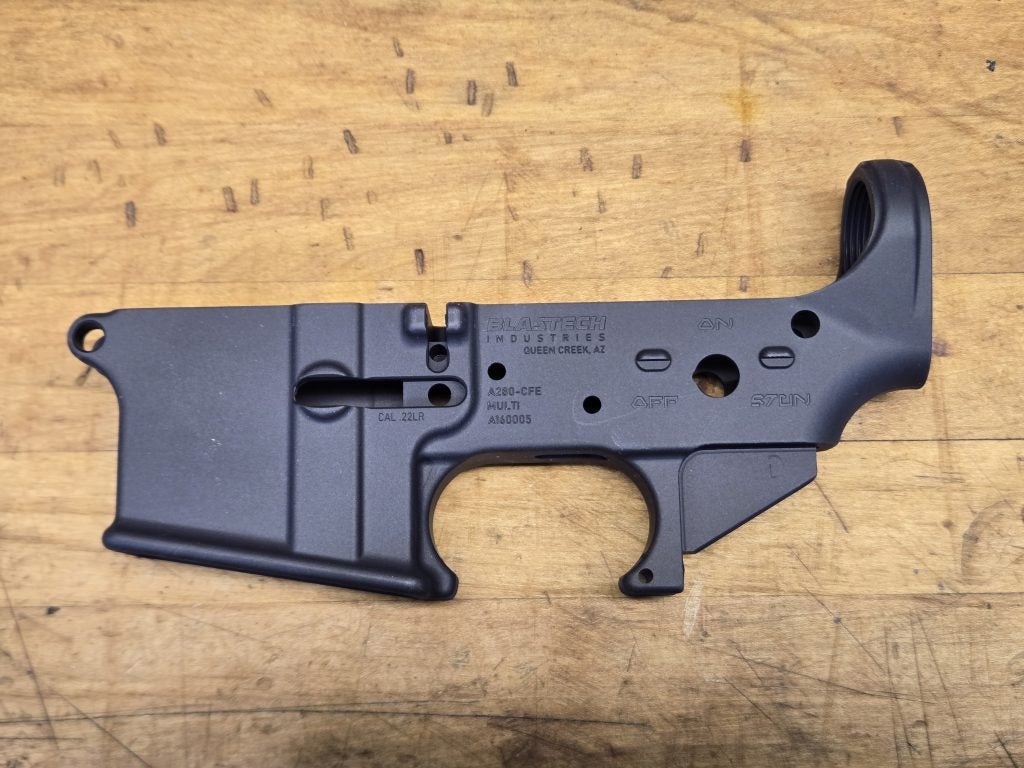
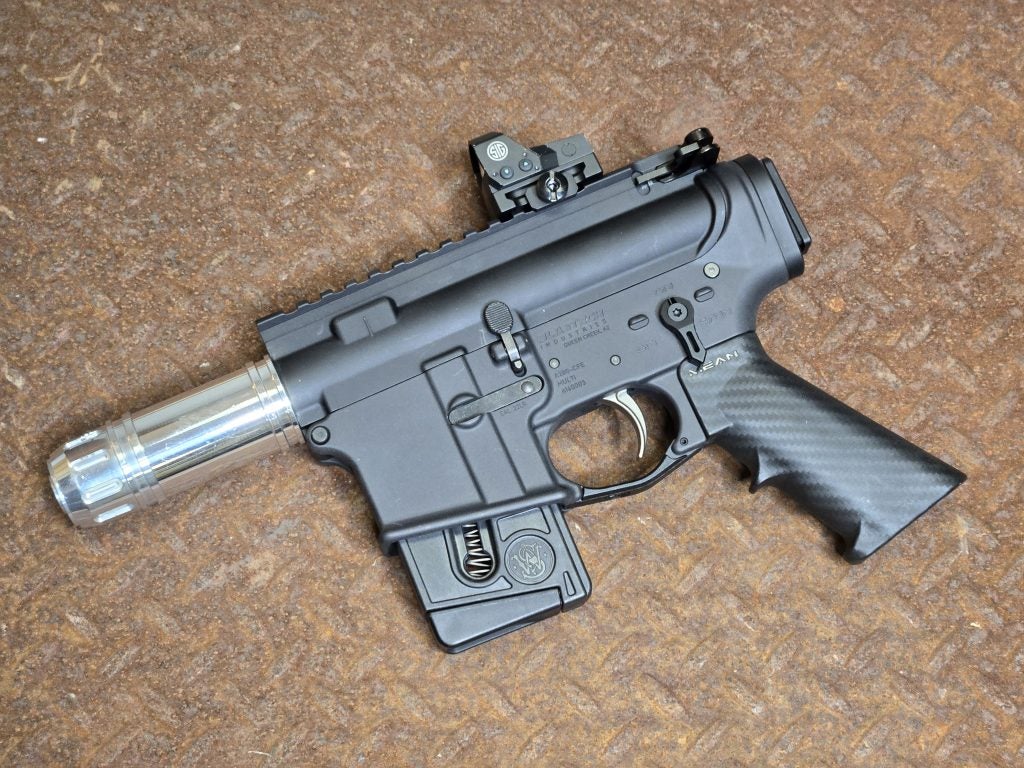
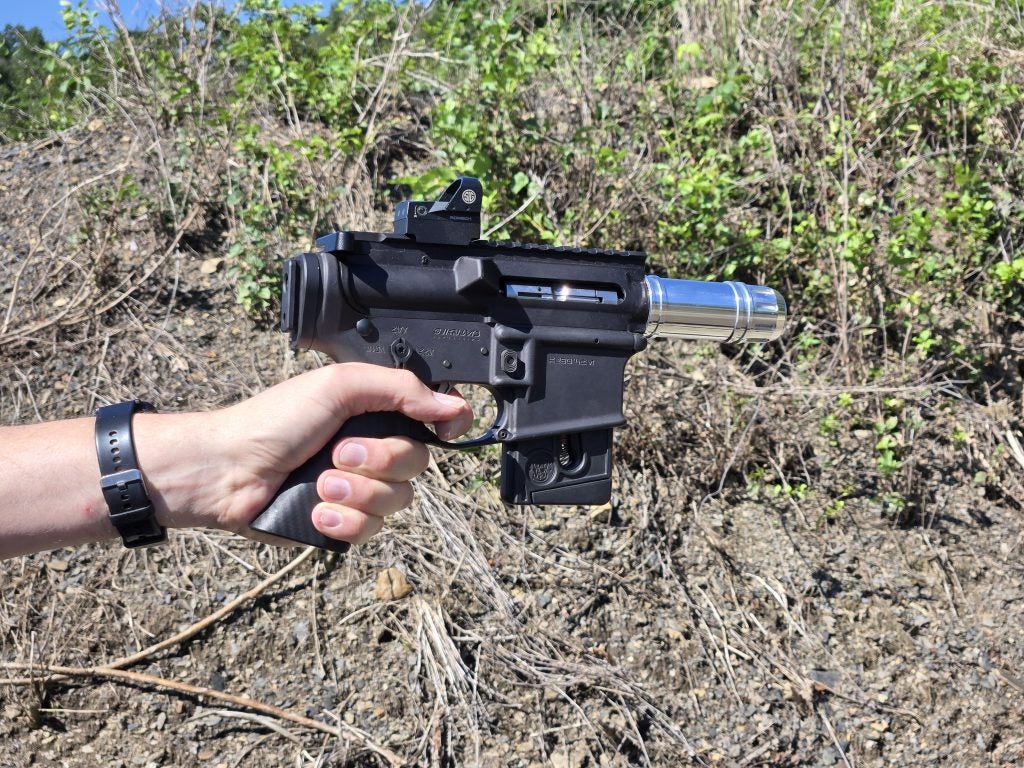
This time around I started with an A280 marked lower from Canto Arms. That immediately made the project feel more like a purpose-built blaster rather than a .22 AR. I also wanted the upper receiver to more closely capture the appearance of Cassian’s A280 from Rogue One.
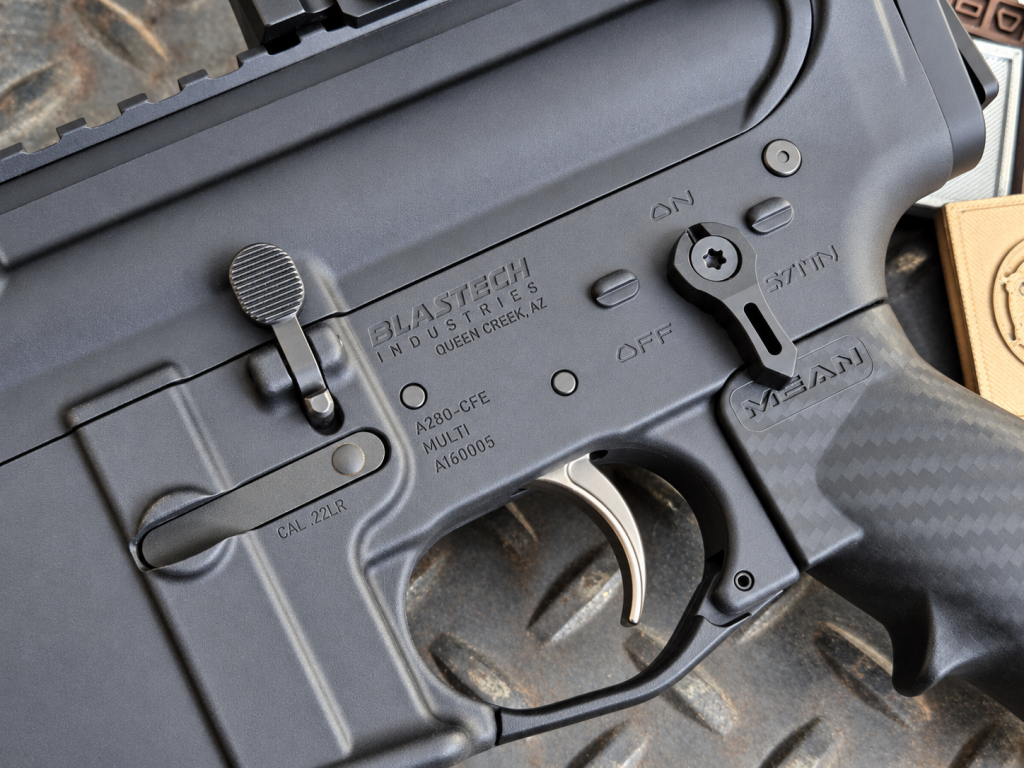
believe the upper I ended up using is an older Anderson unit that I pulled off another build. It has no forward assist. Unlike many slick-side AR uppers, it doesn’t even have provisions for an ejection port cover. Cassian’s screen used A280, which had both features. Neither serves much purpose on my dedicated .22 LR build, though, so leaving them off didn’t bother me.
What the Anderson upper does have is the Brunton bump-style brass deflector. That feature helps give the receiver the distinctive profile of the Rogue One prop. Visually, that was more important to me than duplicating features that serve no real purpose on this build.
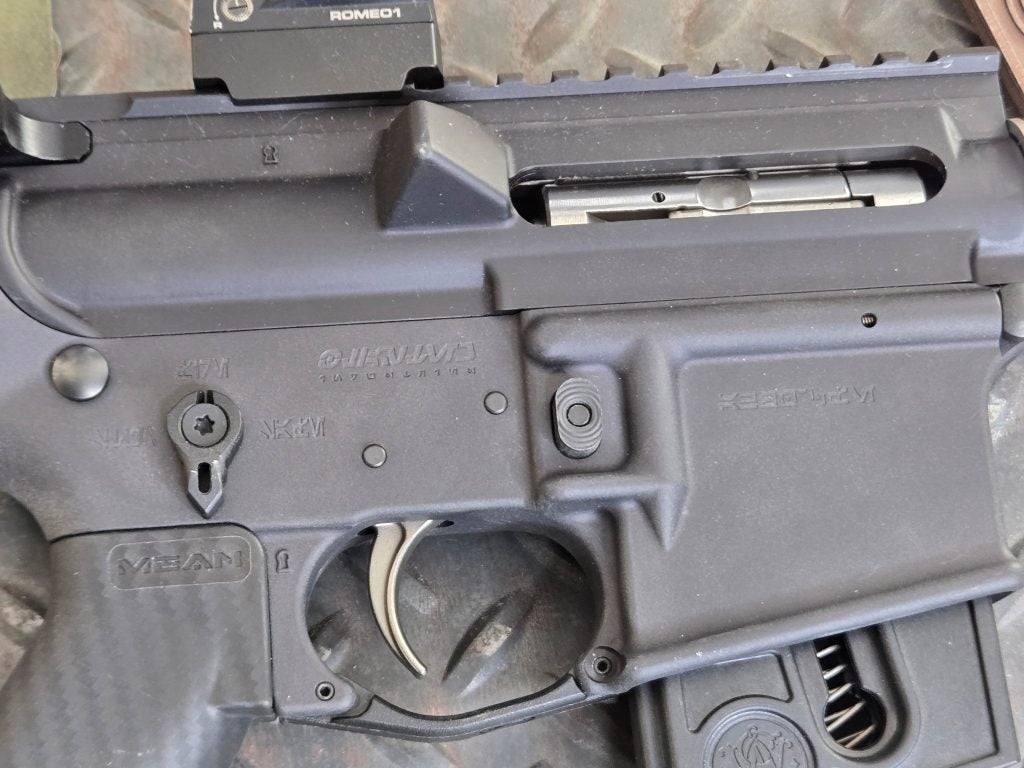
I used the CMMG .22 barrel and bolt carrier from my original build, along with the .22 LR charging handle. I also carried over the Redi-Mag Better-Mag adapter. That lets me use Smith & Wesson M&P 15-22 magazines. The Canto barrel nut and blaster-style shell went back on as well. I also reused the Canto end plate from the original build.
Canto gives you the option of going even further with the prop details. Its A280 CFE Essential Parts Kit includes downloadable STL files for 3D printing optional side greeblies. Those cosmetic bits can more closely duplicate the Rogue One prop. It’s a cool touch for builders chasing screen accuracy, but I skipped them.
They don’t add anything to the function of the gun, and a 100 percent prop match wasn’t what I was after. I’m building a functional .22 that looks like something that could exist in the Star Wars universe, not a frame-for-frame reproduction of Cassian Andor’s blaster.
What Would BlasTech Owners Do?
That brings me to my general philosophy with the build. If BlasTech Industries were a real company cranking out A280’s across the galaxy, I doubt every one would remain factory stock. Gun owners don’t work that way.
Look at the AR-15. Some people leave them exactly as they came from the factory. Others start swapping grips, stocks, and optics before they’ve even fired the thing. There’s no reason to think gun owners in a galaxy far, far away would be any different.
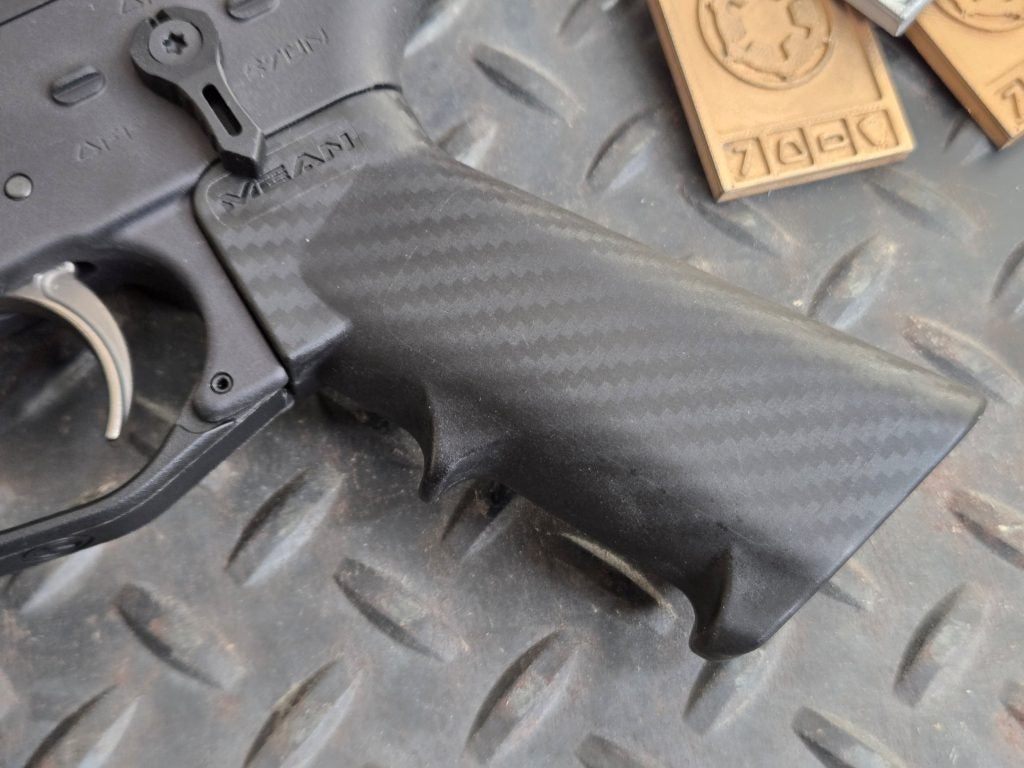
Cassian apparently liked his standard A2-style grip, but I wanted something a little different. I still wanted the basic A2 profile to preserve the prop’s look. So, I used a MEAN Arms Echo Grip. It’s essentially a futuristic take on the familiar A2. The woven carbon-fiber appearance looks right at home on a science-fiction gun. It keeps the general shape of the original while giving my A280 a little more personality.
I took the same approach with the controls and added a modern ambidextrous safety selector. I don’t remember who made the safety, but it works with the direction I was going. If BlasTech were real, I’d expect aftermarket parts for the A280 to be just as common as they are for ARs today. Grips, controls, and optics would all be fair game.
Cassian Doesn’t Need Sights. I Do.
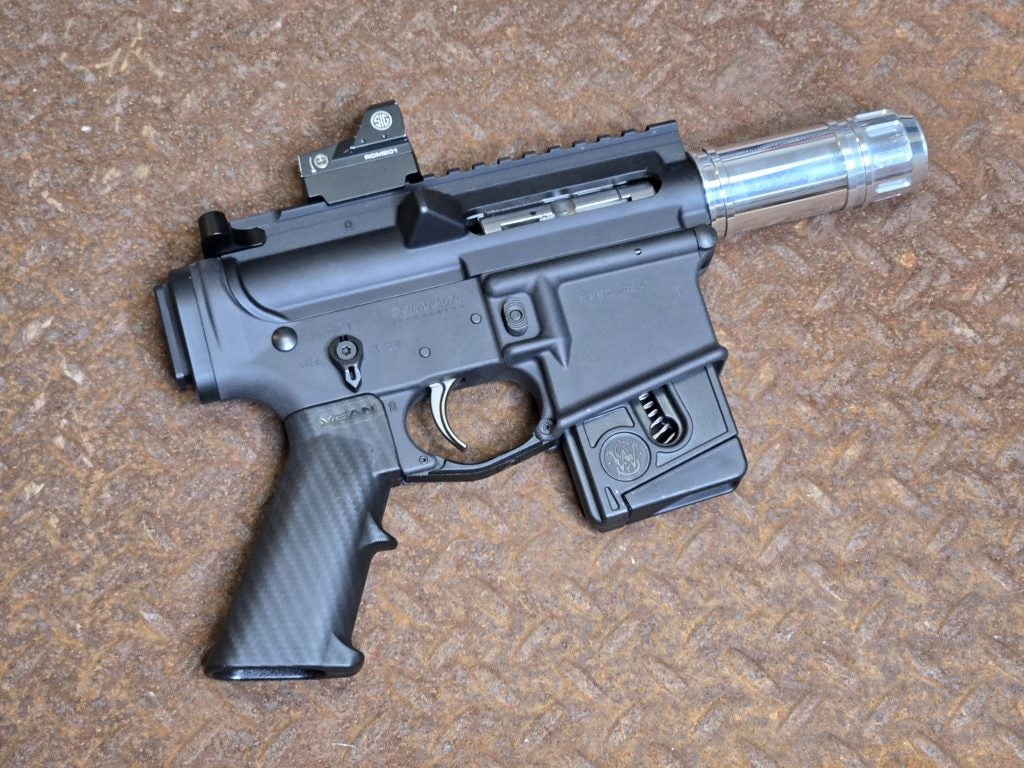
There’s another fairly obvious departure from Cassian’s Rogue One A280 sitting on top of my receiver. Cassian apparently is badass enough that he doesn’t need sights when running his A280 in pistol configuration. Unfortunately, I’m not the hero of a Star Wars movie. So, I mounted a red dot.
Right now that’s a SIG ROMEO1. The SIG is a good sight, and aesthetically it isn’t a terrible fit for the A280. The little reflex sight has a suitably modern appearance. It also doesn’t overwhelm the lines of the blaster. In actual use, though, I’ve found the dot a little awkward to acquire on this setup. The ROMEO1 probably isn’t the final answer.
I’m going to keep looking for an optic that’s quicker and more natural for me to pick up. It still needs to have the right sci-fi look, though. There are plenty of excellent red dots available. Finding one that works well and looks like it belongs on a Star Wars blaster narrows the field considerably. Half the fun of an AR project is that it never really has to be finished anyway.
A Better A280
The original A280 wasn’t a bad build. In fact, if I hadn’t liked it, I wouldn’t have bothered revisiting it two years later. The parts bin version showed me that the Canto concept worked. The resulting .22 was a lot of fun, but kind of slapdash. The new version is closer to the gun I probably should have built the first time.
The dedicated Canto lower gives the project a more finished appearance. The Anderson upper gets me closer to Cassian’s Rogue One prop. It also leaves off AR features that serve no purpose on a dedicated .22. The MEAN Arms grip and ambidextrous safety modernize the gun a little. Skipping the cosmetic greeblies keeps it focused on functionality rather than an exact prop replica.
Even the optic reflects the fact that I’m building this gun for myself. I’m not trying to duplicate every detail of Cassian’s A280. I may not have found the perfect sight yet, but that just gives me something else to tinker with.
That’s really the appeal of the Canto Arms blaster components in the first place. You can chase screen accuracy as far as you want. You can also use the movie guns as a starting point and build something of your own. I already did the DL-44, and then I built an A280. Two years later, I’ve gone back and built the A280 I actually wanted. I’m pretty sure that’s how BlasTech would have intended it.