If there’s one thing certain about anti-gun tactics, it’s that gun-ban advocates are always trying to blame gun manufacturers for the criminal use of their lawfully made, legally sold products and hold them liable for that criminal use.
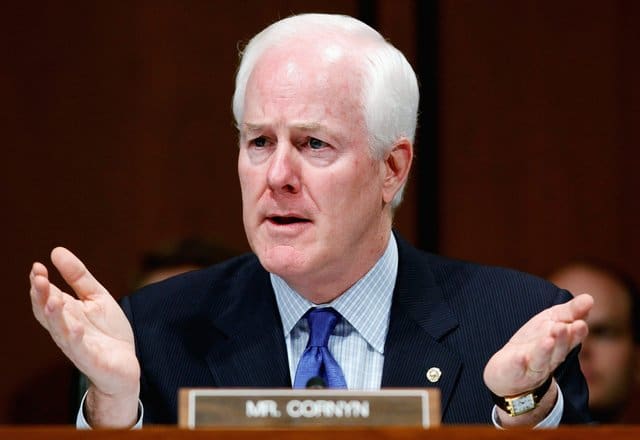
Outgoing U.S. Sen. John Cornyn has now introduced legislation to curb such anti-gun antics. On June 12, Cornyn filed S. 4775, the Stopping Harmful and Outrageous Torts (SHOT) Act, which would strengthen the Protection of Lawful Commerce in Arms Act (PLCAA). The legislation is crafted to protect gunmakers and sellers against frivolous public nuisance lawsuits that have been allowed by 11 states relying on unspecified “reasonable” liability standards.
Cornyn isn’t pulling punches on what he calls the anti-gun lawfare campaign
“I am a proud supporter of the PLCAA, which protects our firearms industry from the constant onslaught of frivolous attacks by the Radical Left, progressive officials and rogue activist judges,” Sen. Cornyn said in a news release announcing the measure. “This legislation would strengthen the PLCAA to ensure it can continue to defend law-abiding Americans’ Second Amendment rights against anti-gun groups’ evolving tactics, and I urge the Senate to bring it to the floor for a vote as soon as possible.”
The PLCAA was signed into law over 20 years ago following overwhelming bipartisan support by Congress. The law prohibits frivolous lawsuits against manufacturers of firearms, ammunition and component parts for the criminal or unlawful misuse of legally made and sold products. The law was enacted after years of politically motivated lawsuits that attempted “regulation-through-litigation” to force policy from the courts that was expressly rejected by Congress.
The SHOT Act would strengthen PLCAA protections to ensure that responsible and law-abiding manufacturers and retailers of firearms, ammunition and component parts are no longer unjustly blamed in federal and state civil actions for “the harm caused by those who criminally or unlawfully misuse” these products that function as designed and intended.
NSSF: This bill closes manufactured gaps in PLCAA
The measure was quickly embraced by many in the gun-rights community, including the National Shooting Sports Foundation, the firearm industry trade association.
“NSSF applauds Sen. John Cornyn’s leadership in introducing the SHOT Act to strengthen the PLCAA to close manufactured gaps created over time by misguided court decisions that have permitted frivolous lawsuits against members of the firearm industry that a bipartisan Congress intended to prohibit over 20 years ago,” Lawrence G. Keane, NSSF senior vice president and general counsel, said in a news release. “This lawfare is supported chiefly by gun control activists, antigun politicians and large ‘white shoe’ law firms seeking to blame industry members for the criminal and unlawful misuse of legal, well-designed and lawfully sold products. These lawsuits are intended to bankrupt the firearm industry and impose gun control measures through litigation.”
FPC says the bill misses the mark
Interestingly, not all gun-rights organizations favor the measure. One such is the Firearms Policy Coalition.
“FPC has spent months engaging with congressional offices — including Senator Cornyn’s — various stakeholders, and leading legal experts, including our Supreme Court counsel, to help inform and shape reforms that would provide badly needed protections for the Second Amendment community,” FPC said in a news release. “To that end, FPC developed a proposed PLCAA amendment that advances the real mission: protecting the People’s rights and ensuring that frivolous litigation cannot be used to redline the Second Amendment out of existence.
“Unfortunately, Senator John Cornyn’s SHOT Act (S. 4775) — in the form presented to FPC — badly misses the mark.”