
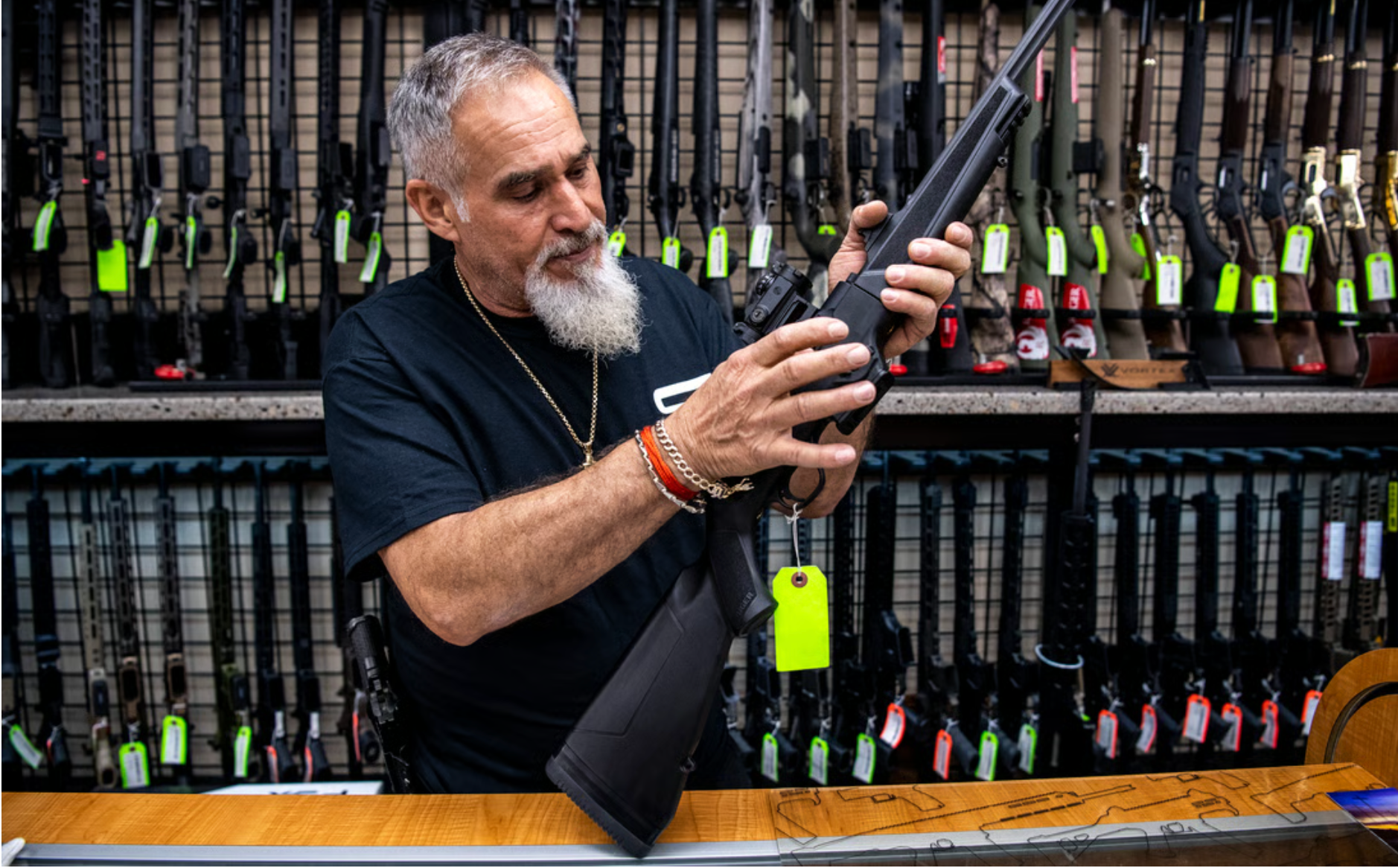
Are convicted felons part of “the people” with a Second Amendment right that shall not be infringed? The Virginia Supreme Court just said the state can’t simply assume the answer is no.
In a unanimous decision handed down Wednesday in Ginevan v. Commonwealth, all seven justices found Virginia’s lifetime ban on gun possession by convicted felons unconstitutional as applied to Derek Wade Ginevan.
The state couldn’t show that disarming him for life matched the way the country has historically regulated firearms.
Virginia Supreme Court Challenges Lifetime Felon Gun Ban
The ruling matters on two fronts. First, the court refused to accept that a felony conviction by itself wipes out someone’s Second Amendment protection. Second, it required the government to justify disarmament under the Bruen test rooted in text, history, and tradition. A legislature slapping the “violent” label on an offense isn’t enough, by itself, to erase someone’s gun rights.
Writing for the court, Justice Wesley G. Russell Jr. explained that courts review the substance of laws restricting core constitutional rights and aren’t blocked from doing so “because of the label attached to the restriction by the legislature.” Lawmakers can’t brand every felon dangerous and count on that designation to clear constitutional scrutiny.
Virginia Court: A Felony Doesn’t Automatically Erase Gun Rights
Police responded to a domestic incident in January 2023 and arrested Ginevan. The woman involved said he pointed a shotgun at her, an accusation he rejected. His record includes drug distribution, obtaining money by false pretenses, probation violations, and ammunition possession by a convicted felon. None of those sound violent, yet state law classifies that ammunition charge as a violent felony.
He challenged his prosecution under Virginia Code § 18.2-308.2. The trial court and the Court of Appeals rejected him. The Supreme Court reversed, threw out his conviction, and ruled for him outright instead of sending the case back down.
Virginia’s Felon Gun Ban Fails Constitutional Scrutiny
When asked at oral argument for supporting history, Virginia “could not identify a single American statute that banned all convicted felons from possessing firearms that predated the federal effort in the 1960s.”
The ruling leaves the rest of the statute standing, but it clears a path for more as-applied challenges. “A case dealing with different offenses, a defendant with a different criminal history, or a different evidentiary record may well lead to a different conclusion,” Russell wrote.





The VASC got it right.
But this is (at least) a two-part problem and it won’t help anything if judges and parole boards continue to let truly violent people back out onto the streets before their sentence has been fully served. And it won’t help anything if judges continue to give slap-on-the-wrist milquetoast sentences for truly violent criminals. And it won’t help if governors continue to let violent criminals out of prison with the stroke of a pen.
Violent crimes need to be responded to with harsh sentences and hard limits on getting out early. Only then will humans adapt their behaviors.
But VA is blue now, right? Yeah, that won’t change then. The violent crime chaos is a feature of the blue.
Fail to see how this matters as hgd Virginia law is basically a mirror laws of the federal felony gun gan law.
Yes, a federal felony gun ban exists under 18 U.S.C. § 922(g)(1), which generally prohibits people convicted of crimes punishable by more than one year in prison from possessing firearms.
thefederalcriminalattorneys.com