
| Image | Product | Price |
|---|---|---|
 | Check Price |
SOCOM recently announced that Sons of Liberty Gun Works was awarded the contract for its Combat Assault Rifle (CAR) program. If you’ve been a fan of AR-15 development for any length of time, you’ve probably heard the term CAR before. Originally, CAR stood for Colt Automatic Rifle.
In simple terms, the CAR-15 line was Colt’s attempt to rebrand the Armalite Rifle (AR-15) after acquiring the design from ArmaLite. Marketing intent aside, the rifles developed under that banner shaped the way specialized AR variants evolved. The lineage starts with the Model 605, widely considered the genesis of the AR “carbine.”
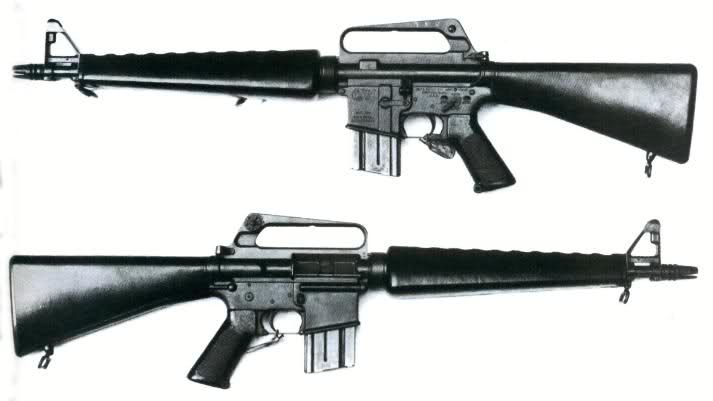
The Model 605 was one of Colt’s first serious attempts at shortening the AR-15 to make it more maneuverable. The changes were minimal: delete the forward assist, remove the bayonet lug, and cut and rethread the barrel directly in front of the gas block.
As with any first attempt at shrinking an operating system, the 605 came with its share of headaches. While shorter than its full-size counterparts, reliability was inconsistent and downright frustrating. The modern analog to the 605 is the Dissipator. Early Dissipators used a carbine-length gas system hidden under full-length handguards with a pinned faux front sight to preserve sight radius.
Some tinkerers have tried to run true rifle-length gas on shortened barrels and reported the same reliability gremlins Colt ran into. It didn’t take long for Colt to realize the platform needed deeper changes to function at scale. Enter the Model 607.
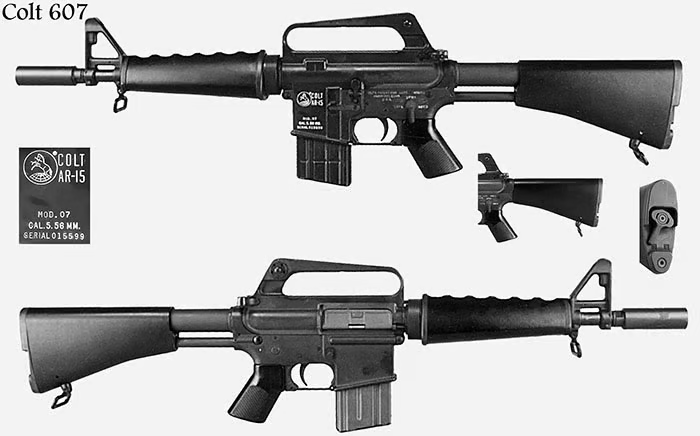
Arguably inspired by the Soviet AKS-74U, the 607 was a more comprehensive attempt at shrinking a full-size service rifle into an SMG-profile package. An SMG-sized rifle that shares ammunition, magazines, and many parts with the standard service rifle is far easier to support logistically than a purpose-built subgun.
The 607 improved on the 605 with a shortened gas system and a collapsing stock. Reliability, however, was still a ghost in the machine. Like the 605, the barrel was chopped right in front of the gas block and suffered similar issues. Colt added a muzzle device—referred to as a moderator—to boost back pressure and coax the system into running.
The 607 saw limited use, but the lessons it generated fed directly into the XM177.
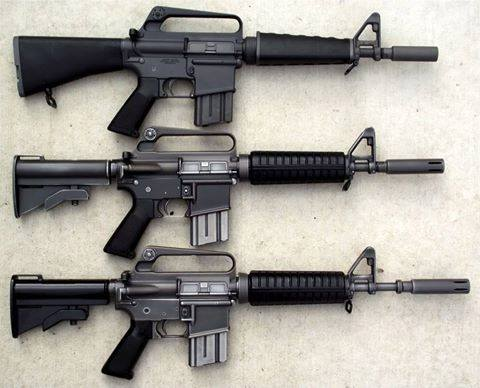
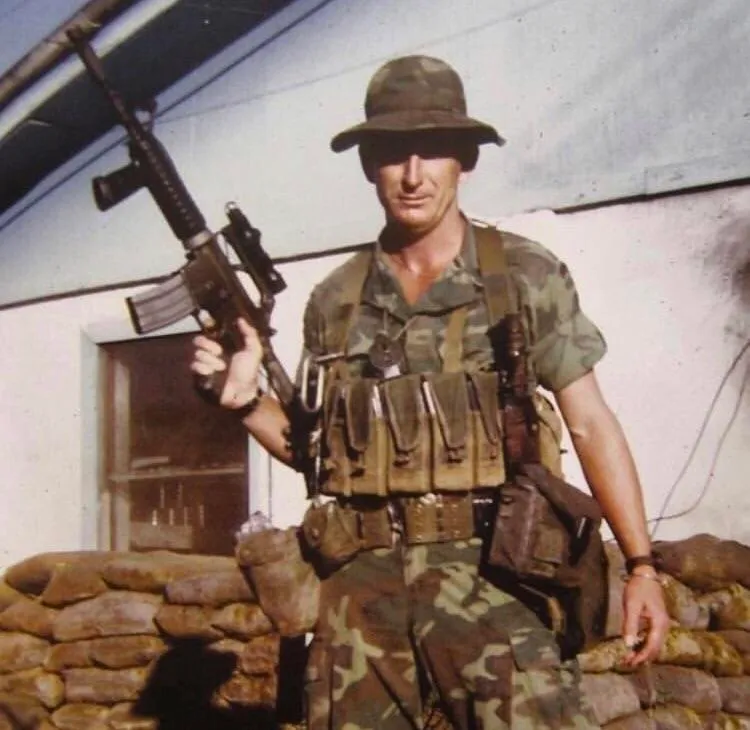
The XM177 was the first major leap toward what most people think of as the classic CAR-15. The biggest changes were the simplified two-position collapsing stock, an updated moderator, and refined handguards replacing the tool-room parts of the 607.
Early XM177s ran a 10-inch barrel with a moderator; later variants stretched to 11.5 inches to increase dwell time and support rifle grenades. This basic profile carried forward largely unchanged until the widespread adoption of the M4.
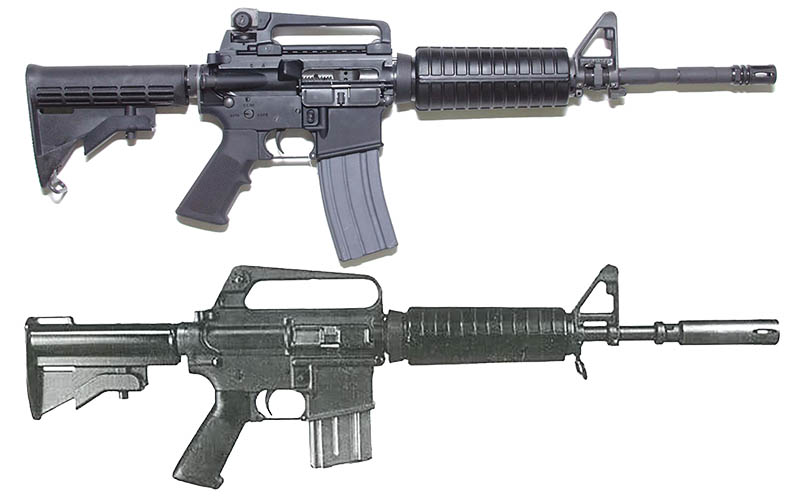
Aside from the removable carry handle and a 14.5-inch barrel, the M4 isn’t a radical departure from the XM177. They share the same gas system and shortened recoil components. Considering nearly thirty years separate the designs, the actual mechanical changes are surprisingly minor.
The CAR-15 lineage went from a niche special-operations tool to standard-issue service rifle. And even though the M4 is dramatically shorter than the 20-inch fixed-stock rifles of the past, special operations units have always chased an even more compact fighting gun.
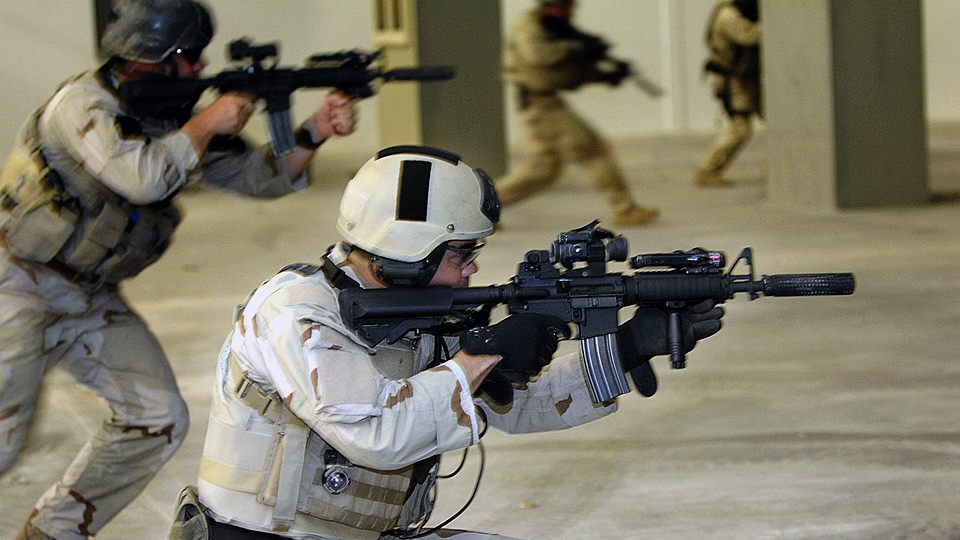
The CQBR—later known as the Mk18—was never adopted as a complete rifle but as a receiver group, much like the SPR program. The CQBR/Mk18 is the most ubiquitous short-barreled AR variant ever fielded. Like the 607, the Mk18 aimed to deliver SMG-level handling while keeping everything else in the established supply chain. It uses a 10.3-inch barrel, with modern examples wearing the Daniel Defense RIS II.
One side effect of the design is the enlarged gas port needed to ensure reliability with and without a suppressor. That, in turn, makes the gun run noticeably harder—especially once you add a traditional baffled can such as the SureFire or KAC models in military inventory. After the Mk18, the “recipe” for a short specialized AR stayed remarkably static for years. Like everything in this lineage, the Mk18 is shaped as much by logistics as by performance.

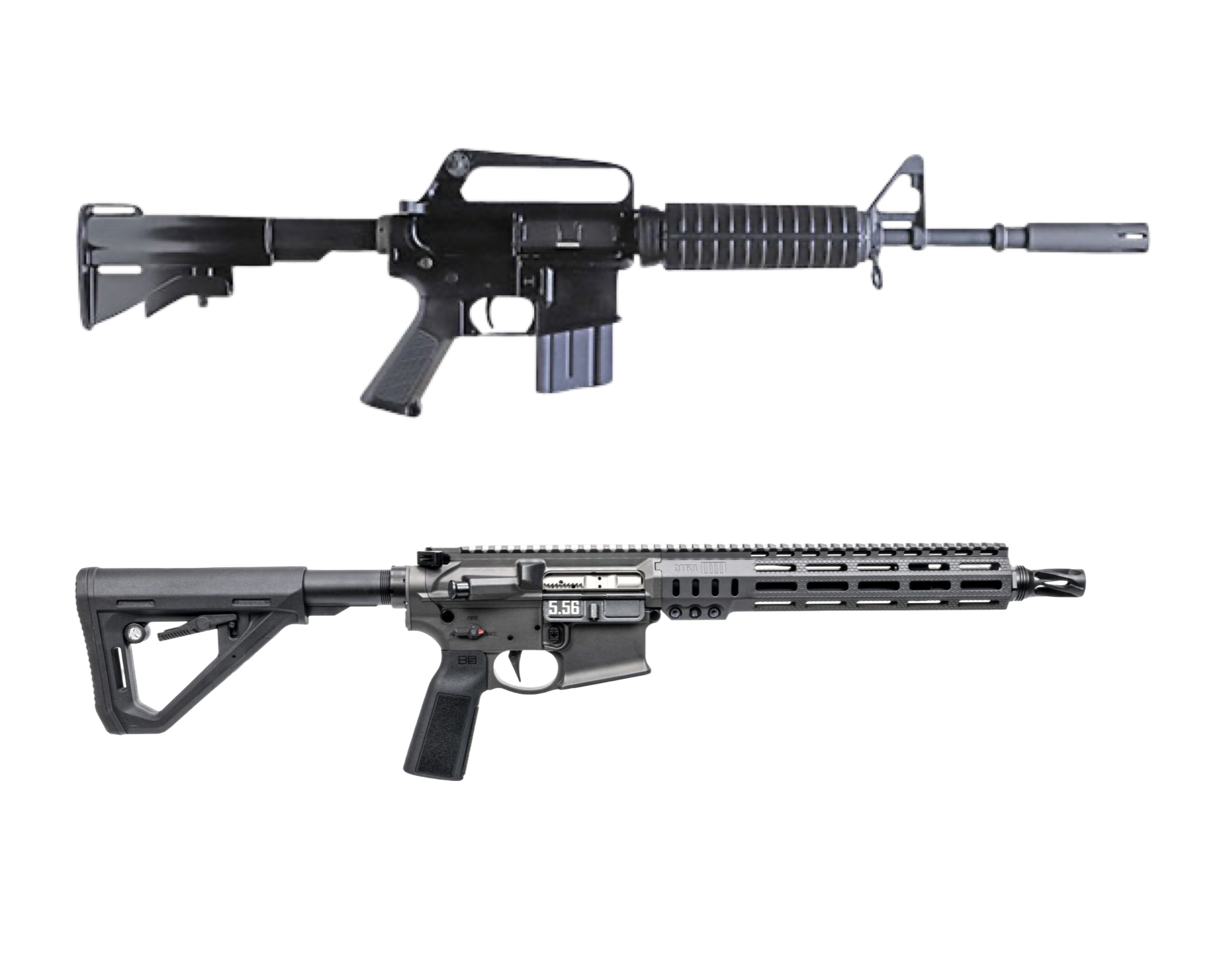
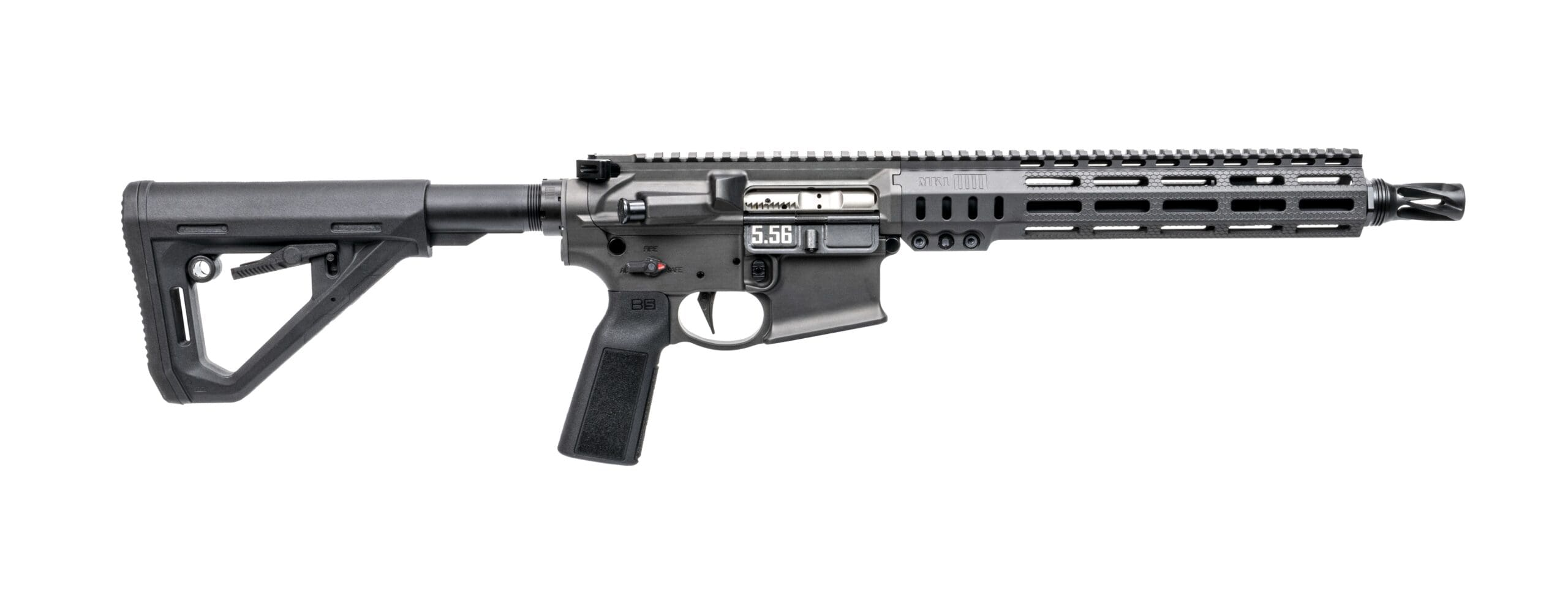
At first glance, the new CAR (Combat Assault Rifle) or MK1 from Sons of Liberty Gun Works looks like just another shortened AR. But once you dig into the technical details, you start to see the end result of decades of lessons learned. Like the XM177E2, the adopted MK1 runs an 11.5-inch barrel. Unlike the XM177, the MK1 is built from the ground up to live its entire life suppressed.
Everything—from the gas port to the titanium barrel nut—is engineered for sustained fire and hard use. The rail is relieved around the barrel nut to improve cooling. Stack all those quality-of-life refinements together and the MK1 becomes far more than a tool-room workaround.
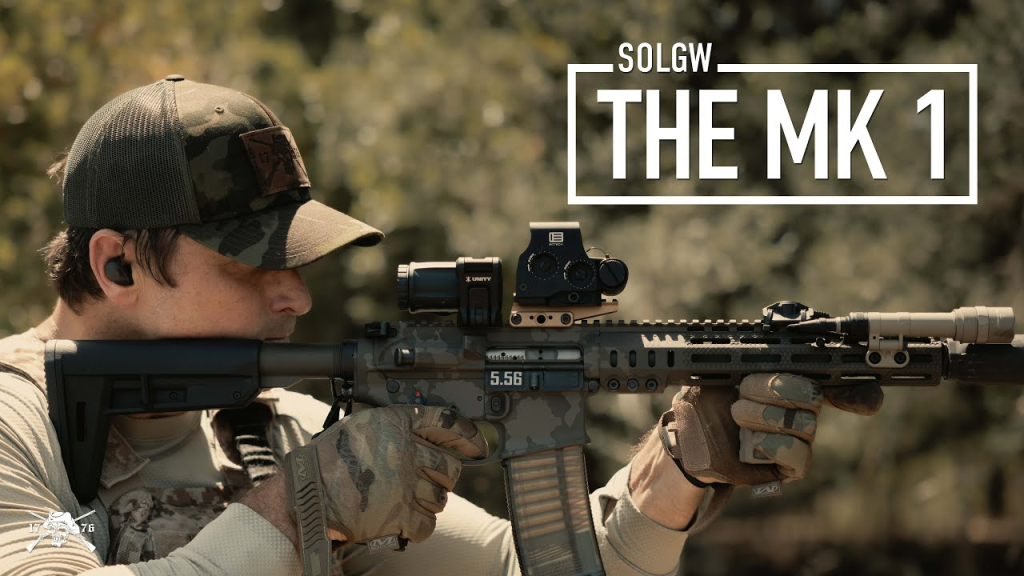
If the Mk18 is a golf cart, the Mk1 is a G-Wagen. The golf cart will get you where you’re going—but the G-Wagen does it better in every possible way.






The CAR-15 predated the fielding of the AKS-74U by over 10 years. Don’t even mention the “AKMSU.” That thing is a fictional movie prop and the only “real” one is based off a Muj-modified Chicom Type 56.
Also, the Canadian C8 CQB uses a 10″ barrel, and while I can’t vouch for its reliability, Specialized Armament sells a 10″ barrel designed only for use with a suppressor. It would be pretty cool if Brent did an article on that.
Thank you for the info!
Congratulations to Sons of Liberty!
The 607 short stock needs to come back…and why is this suppressor only weapon shown without a suppressor? Why is it not integral if it is suppressed only? How about lighter and shorter reflex cans?
The GD SURG upper had an integral muzzle and reflex can, 11.5″ barrel, a vacuum jacket in the forend and a SEG monocore…going on ten years ago. You would have had to try to burn yourself and it tamed the hot original 556 A1. Even with all that splendor, they bought a SiG that was based off the M4 incompatible Rattler and a muzzle can with a plastic shield on it.
No surprise nobody was satisfied with that “revolutionary weapon”…or any of the other ‘revolutionary” SiG weapons. You know, machine guns poorly copied from GD designs that shoot 20 foot dispersion at 600, rifles that burn out in 1,500 rounds and kick like plow horses, great pistols like the French 1935A derived 320 and that super good 250?
But SiG does have plenty short pants, pony tail, bushy beard, Teva sandals, earring wearing dudes in Engineering and that’s what really counts in fan boy firearms…
Why is it not integral if it is suppressed only?
“…built… to live its entire life suppressed” doesn’t mean it has to run suppressed, just that it’s built to survive doing so without excessive wear and tear from doing it.
There are times you don’t want a muffler on the gun so they’re giving you the option to remove it in those situations.
I usually just assume most groups like that shoot suppressed most of the time unless they are using sims. However I defiantly see where you are coming from.
…especially once you add a traditional baffled can such as the SureFire or KAC models in military inventory…
The muzzle device looks like it’s meant to accept something like a Huxwrx Flow, helical baffle design. I’m curious how that shoots in comparison to traditional style baffles.
I believe the MK1 was “tunned” specifically for one of the Hux cans so I would hope it would be at least some improvement behind the gun.
I think the 605 and 607 proved you needed either a minimum length of barrel ahead of the gas block or a way of boosting the gas pressure (such as a suppressor) to ensure reliable operation.
I was just saying that to a buddy!