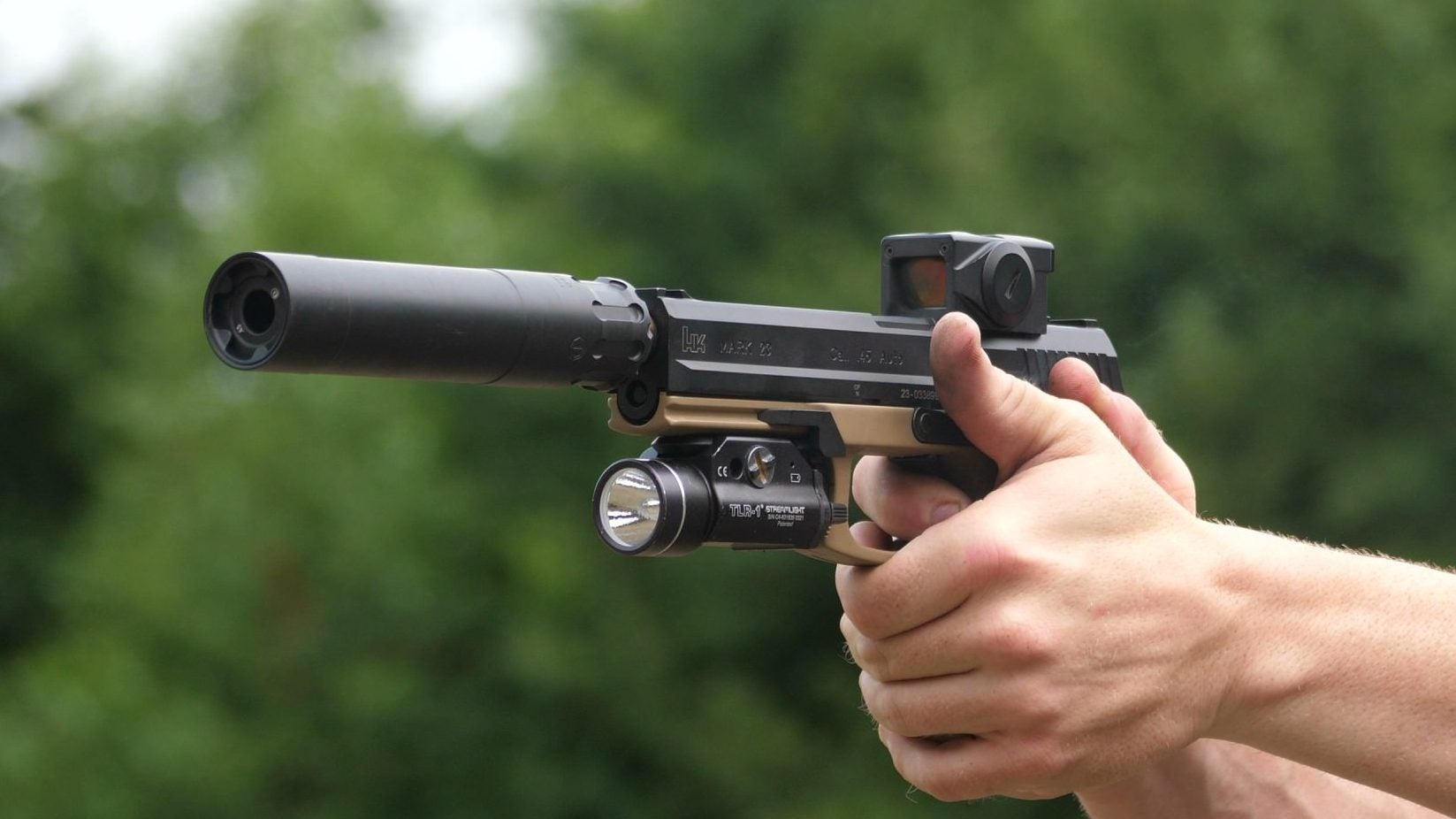
The .45 ACP round has served in the US Military for over a century at this point, and along with the equally legendary 1911 and M9 service pistols, the Mark 23 and its special contract pistol cousins are almost equally as legendary, though far fewer in number. I’ve shot a Mark 23 plenty of times, but I’ve never owned one.
Despite still being in production today, they’re surprisingly hard to come by, and when I last checked, the HK Mark 23 was on backorder. When you do get one in your hands, what you have is a comically large .45 ACP pistol with a match-grade threaded barrel and a long, interesting history. Part of that history is one of the most important pistol suppressors ever built. Knight’s Armament Company (KAC) developed the Mk 23 suppressor for U.S. Special Operations Command in the 1990s. It outperformed the best commercial .45 cans of its day by a wide margin, and the system set the pattern for the suppressed duty pistols that followed.
Who Actually Owns Them
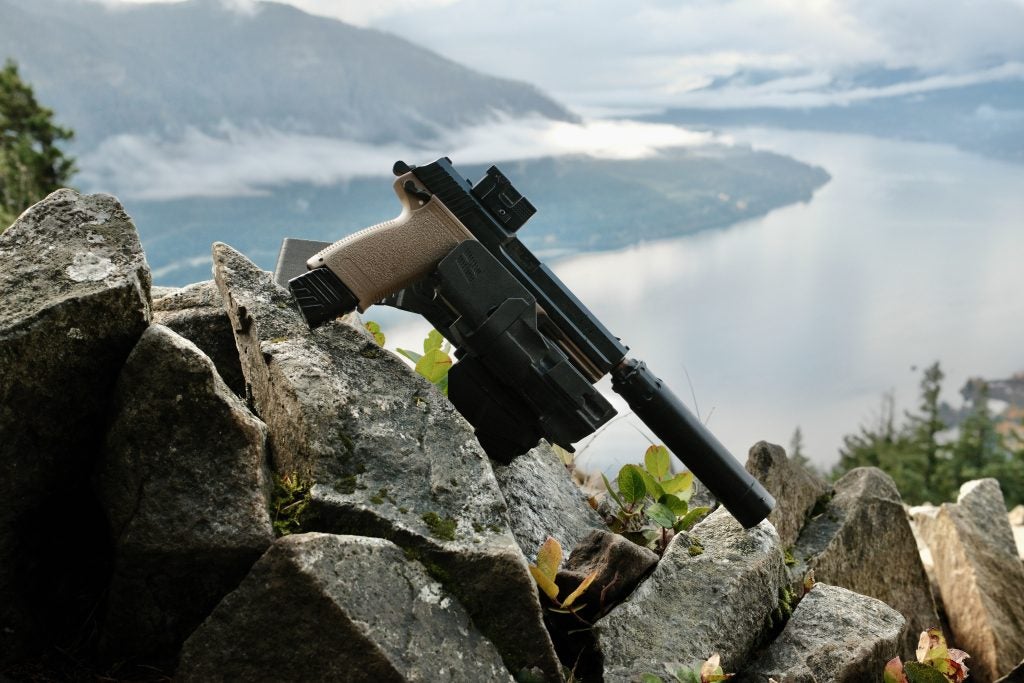
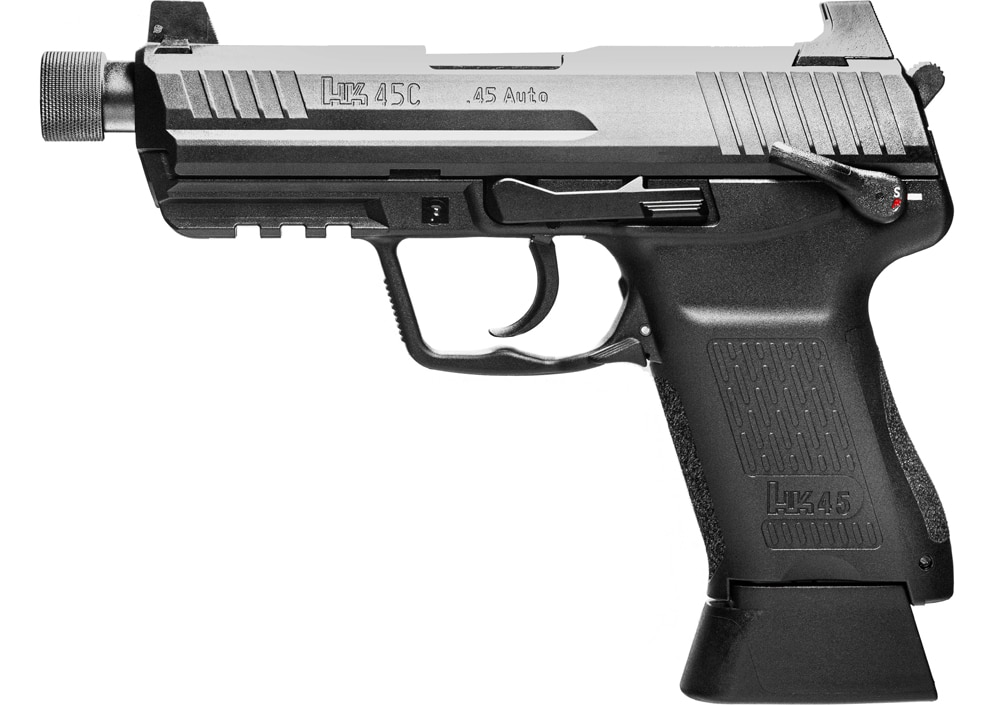
The Mk 23 has a reputation as an operator’s pistol, and that’s where it started. SOCOM ordered 1,950 Mk 23 Mod 0 systems, and the first pistol was delivered on May 1, 1996, back when I was still plinking around with my Dad’s 10/22 in the garbage woods of Oregon. In a 1998 Small Arms Review article, Charles Cutshaw wrote that only the Navy used the Mk 23 in quantity, and he named its size and price as the likely reasons. In 2011, the Navy chose the HK45 Compact Tactical to replace it, under the designation Mk 24 Mod 0. (Pictured below)
The commercial Mark 23 has outlasted all of that. HK has sold the Mark 23 to civilians and law enforcement since the 1990s and still does. For as much grief as we give them for not getting the MKP and G36 to us fast enough, they at least did give us the Mark 23. HK hasn’t published commercial sales figures. Still, three decades of civilian production against a single military order of 1,950 systems suggests most Mark 23s have ended up in civilian safes and on public ranges. The commercial pistol differs from the military one mainly in its slide markings.
Snake, Rainbow Six, and Alejandro
A lot of those buyers saw the pistol on a screen first. Metal Gear Solid (1998) gave Solid Snake a suppressed SOCOM pistol with a laser module, modeled on the Phase II prototype. The gun came back in Metal Gear Solid 2: Sons of Liberty (2001) and Metal Gear Solid 4 (2008). Rainbow Six put a Mark 23 in its armory in 1998. Later games, including Splinter Cell: Chaos Theory (2005) and SOCOM: U.S. Navy SEALs Fireteam Bravo 3 (2010), handed it to another round of gamers.
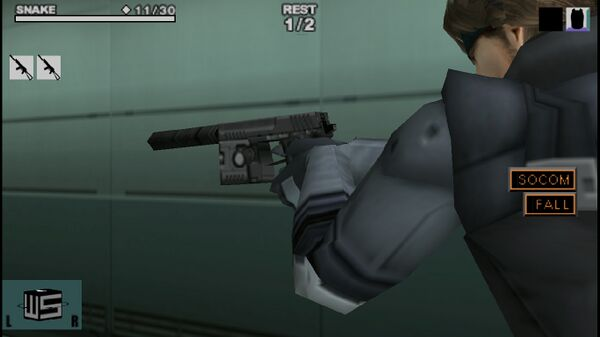
Movies did the same for people who didn’t game. Kurt Russell carried one in Soldier (1998), and the SEALs in Tears of the Sun (2003) used them suppressed. Will Smith carried a Flat Dark Earth Mark 23 as Robert Neville in I Am Legend (2007). Benicio del Toro used a suppressed one as Alejandro in Sicario (2015). Over nearly two decades, the pistol had a pretty consistent presence in both traditional media and the rapidly growing video game market, and 30 years on, most of those people who grew up in the 80s and 90s and played video games or were a fan of the legacy breed of “gun guy” movies are probably most of the customer base for the Mk 23 now.
The Requirement
The program goes back to 1987, when Naval Special Warfare grew dissatisfied with the M9. According to Cutshaw, SOCOM issued its Joint Service Operational Requirement for an offensive handgun in February 1990. The requirement called for a .45 ACP pistol that could serve as a primary weapon for close-quarters fighting and sentry removal.
It covered four components: a pistol, a laser aiming module, a suppressor, and a new +P+ rated .45 cartridge. The cartridge was dropped when no ammunition maker would produce it.
The pistol had to:
- last 30,000 rounds of +P
- average 2,000 rounds between stoppages
- hold 2.5-inch groups at 25 meters
- function after two hours submerged in 66 feet of seawater
The suppressor had to:
- deliver 24 dB of reduction dry and 33 dB wet with M1911 ball
- cut flash by 75 percent
- shift point of impact by less than two inches at 25 meters
- last 5,000 rounds
Colt vs. HK
SOCOM awarded development contracts to Colt and HK in 1991. Colt partnered with KAC on its suppressor, while HK submitted a boxy can of its own design. Doug Olson, KAC’s chief engineer on the project, wrote in Small Arms Review that the best commercial .45 suppressor available in 1991 delivered about 18 dB of reduction wet.
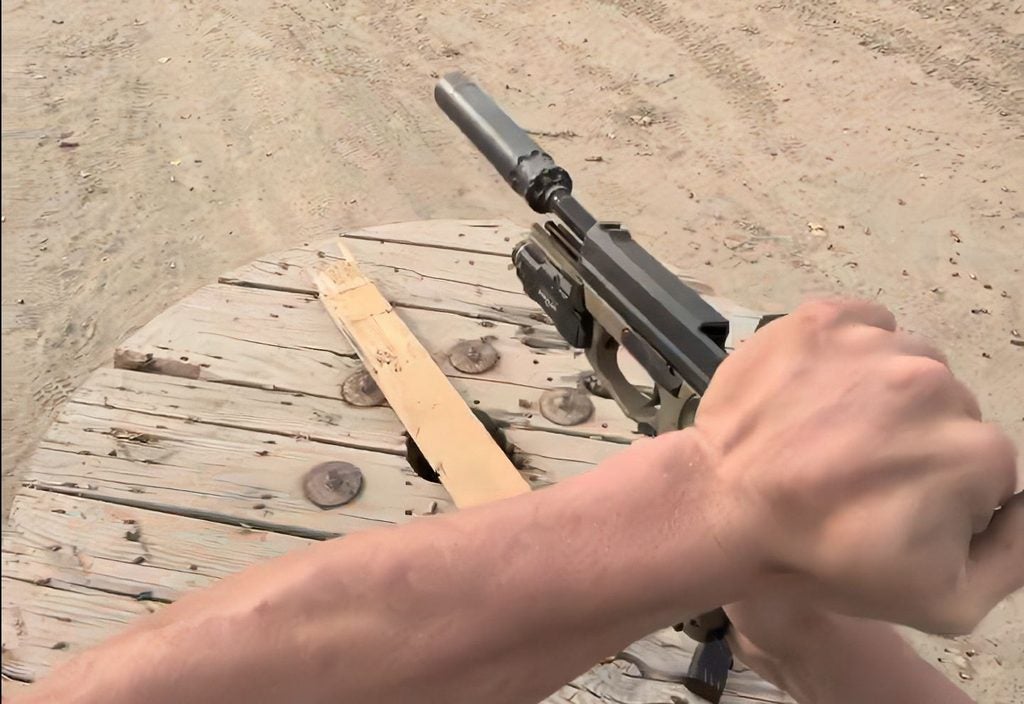
The two cans in government testing:
- KAC on the Colt pistol: averaged 28.8 dB with ball and 26.6 dB with +P, and reached 36 dB with water added.
- HK’s own design: averaged 22.2 dB with ball and 15.2 dB with +P.
HK’s pistol won Phase I, and Colt was eliminated. For Phase II, HK and KAC teamed up to deliver 30 more pistols and suppressors before the system was type-classified. Cutshaw reported that the tested pistols averaged 1.56-inch groups and showed no loss of accuracy after 30,000 rounds of +P.
HK got that consistency from a high-temperature O-ring at the front of the barrel, which seals the barrel to the slide until the action unlocks. Cutshaw put the O-ring’s tested life at more than 20,000 rounds, and it can be replaced by hand in seconds.
The Booster
Moving KAC’s design from the Colt to the HK took more work than the government expected. In his 1998 Small Arms Review account, Doug Olson wrote that KAC wasn’t contracted to adapt the can until late 1994. The Colt suppressor mounted to the frame, so it added no weight to the moving parts, and we’ve seen other designs similar to this in other suppressed firearms like SilencerCo’s unobtanium Maxim9 integrally suppressed pistol. The HK version threaded onto a tilting barrel, so it needed a recoil booster, also called a Nielsen device, which most of you probably already know by now.
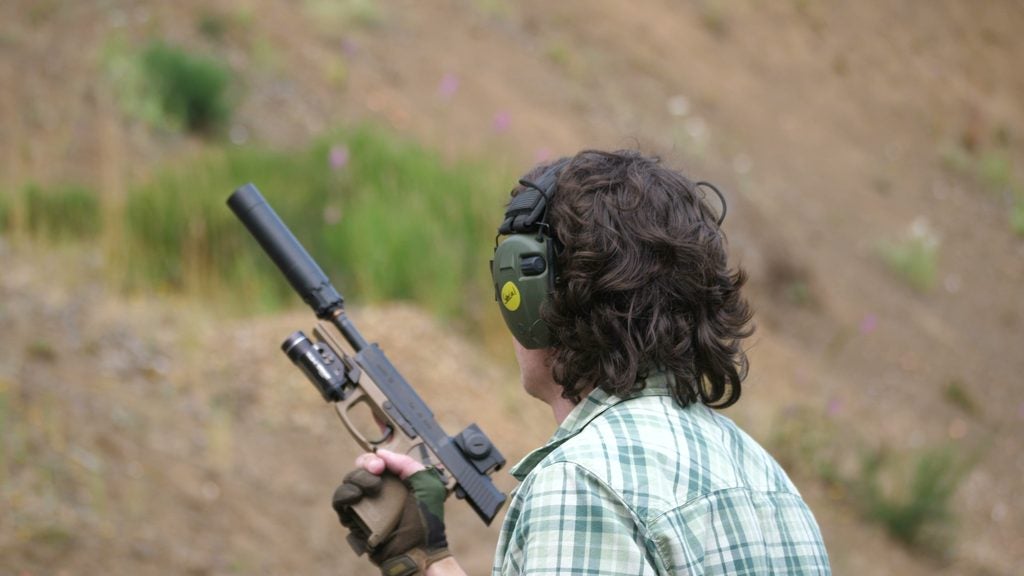
To recap for those who might not know, typically, a heavy can on a short-recoil pistol’s barrel keeps the gun from cycling. A booster simply puts a spring-loaded piston between the barrel and the suppressor. Gas entering the can drives the suppressor body forward against the spring while the barrel and slide move rearward. The barrel unlocks before the suppressor reaches the end of its stroke.
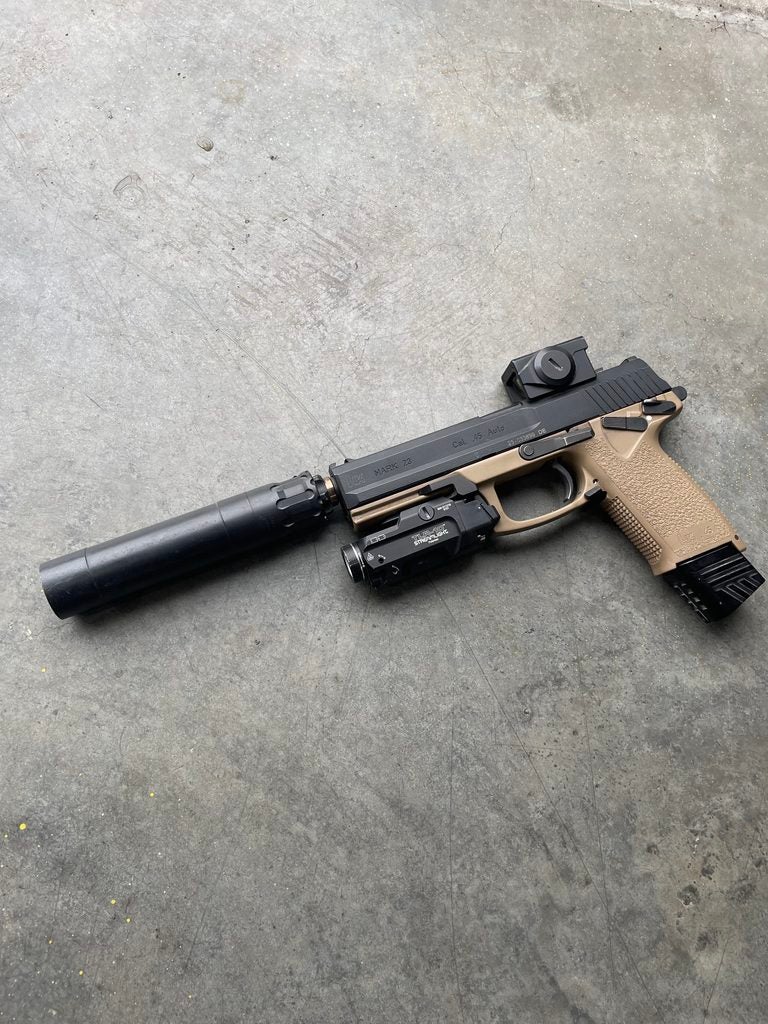
Christopher R. Bartocci’s history of the Mk 23 Mod 0 in Small Arms Defense Journal describes the production piston as hollow, with a heavy captive spring held in place by a threaded retaining ring. The rear of the can has 10 squared teeth for adjusting the point of impact. To set it, the operator rotates the body one tooth at a time, records the position with the smallest difference between suppressed and unsuppressed impact, and leaves it there. HK hosts a PDF of the same article on its own site.
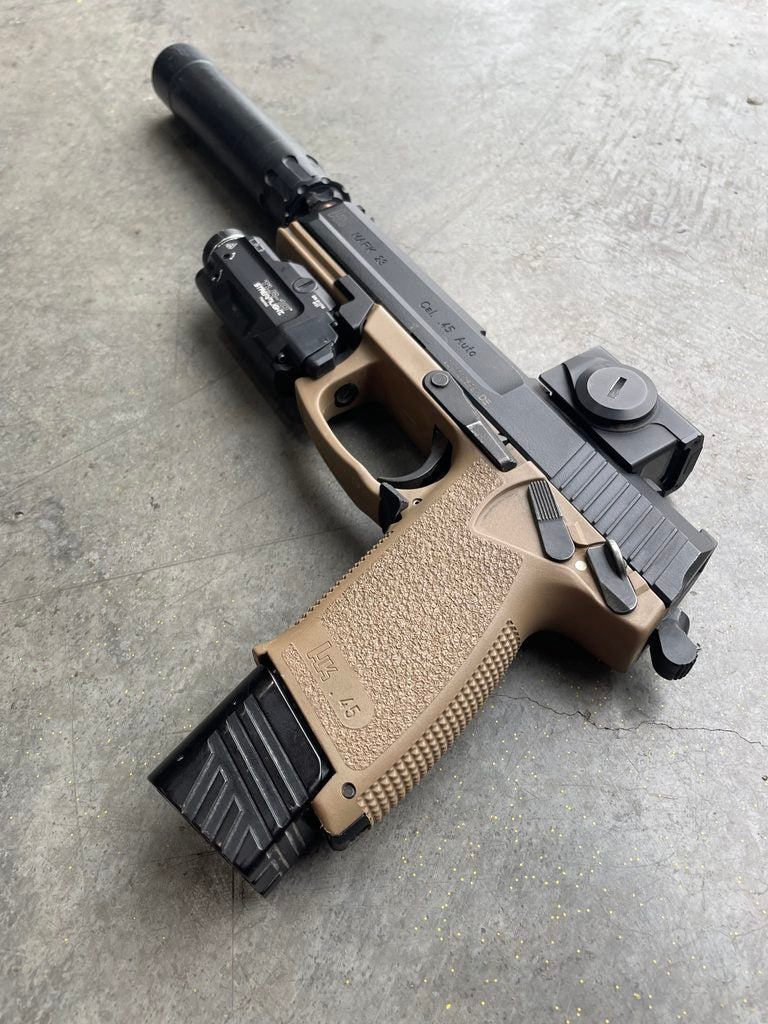
According to Olson’s article, the first-generation HK can loosen on the barrel and would often cause baffle strikes. KAC apparently fixed it by moving the alignment surface to two bearing flats held to plus or minus .0005 inch, one on each side of the threads. In another test, the suppressor tapped the end of the recoil spring guide rod on its return stroke and broke a slide. At the 1997 Knob Creek suppressor trials, Olson’s report stated that the production Mk 23 suppressor measured 42 dB of reduction with a little water inside. Water is a great way to get a few extra dB of noise reduction from virtually any suppressor (if you don’t have a better ablative medium on hand).
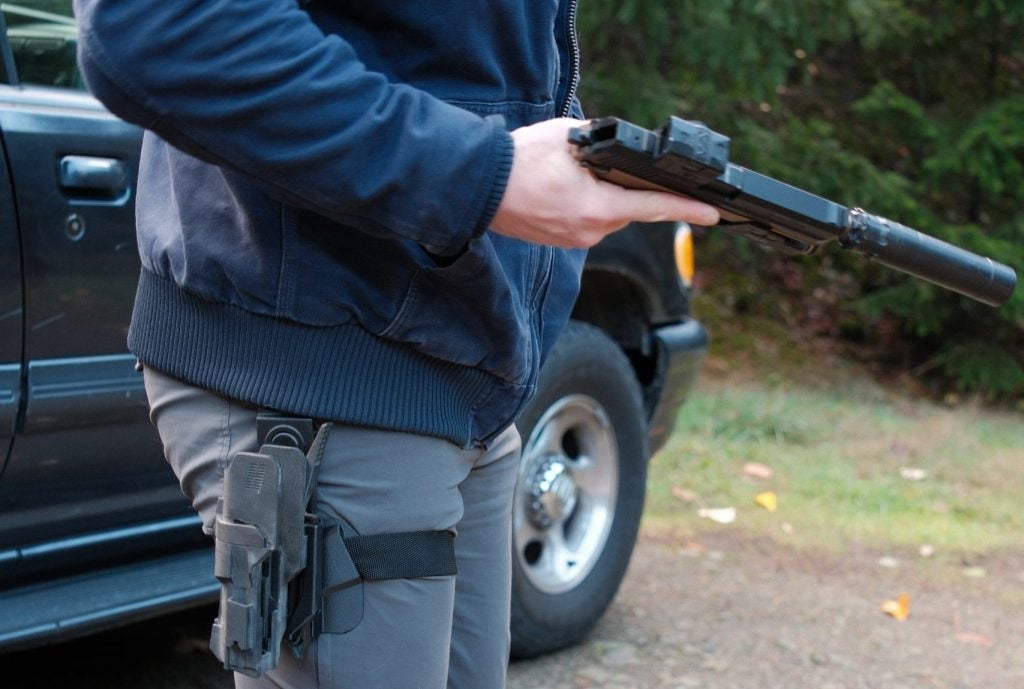
HK took the Mk 23’s lessons into the smaller USP45 Tactical, and that pistol produced the program’s most practical compatibility revelation. When KAC first tested the Mk 23 suppressor on the lighter Tactical, the slide failed after about 300 rounds because the booster wasn’t tuned for that gun’s slide and barrel mass. Olson wrote that HK gave the Tactical left-hand threads so the can couldn’t be mounted on it by mistake. The Mark 23 kept right-hand threads.
Holstering It
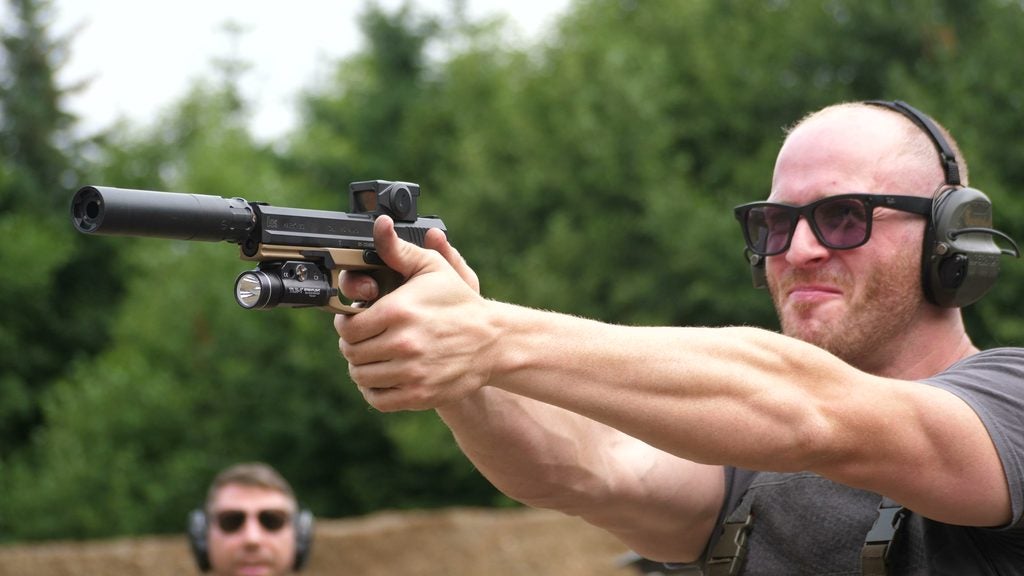
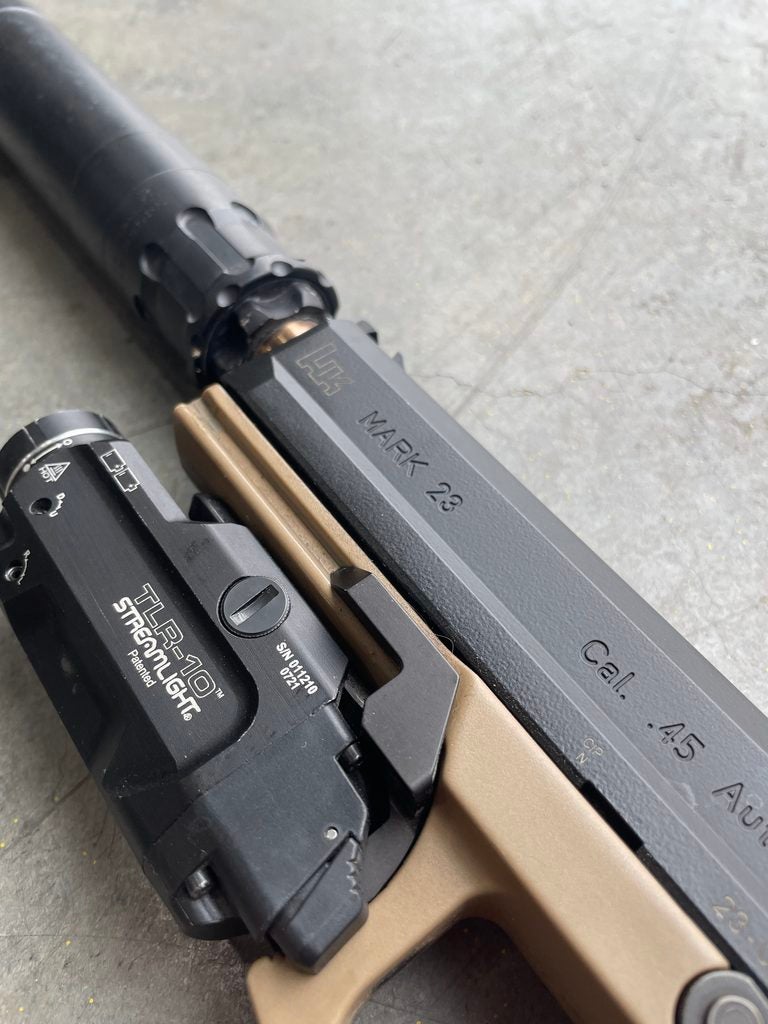
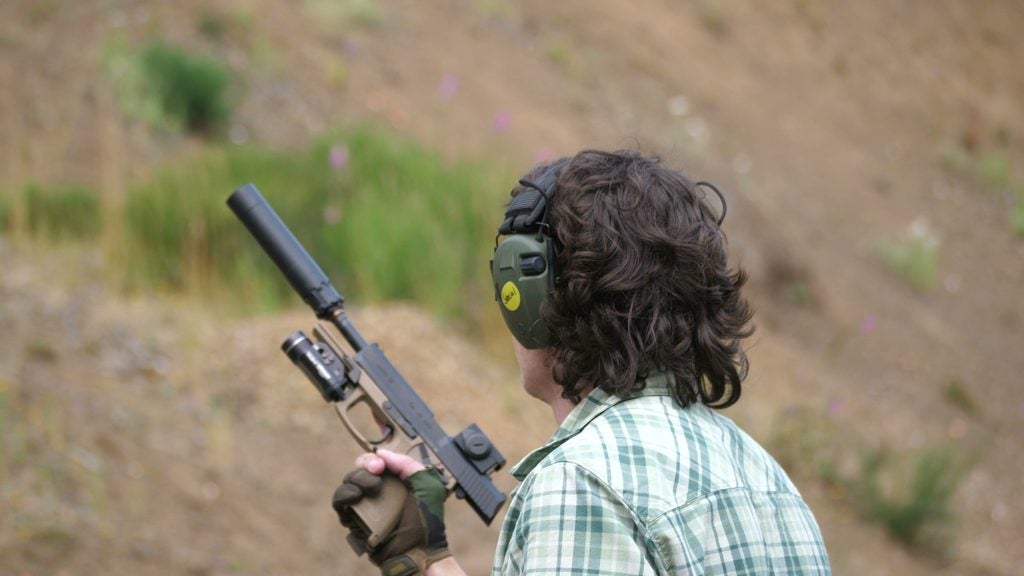
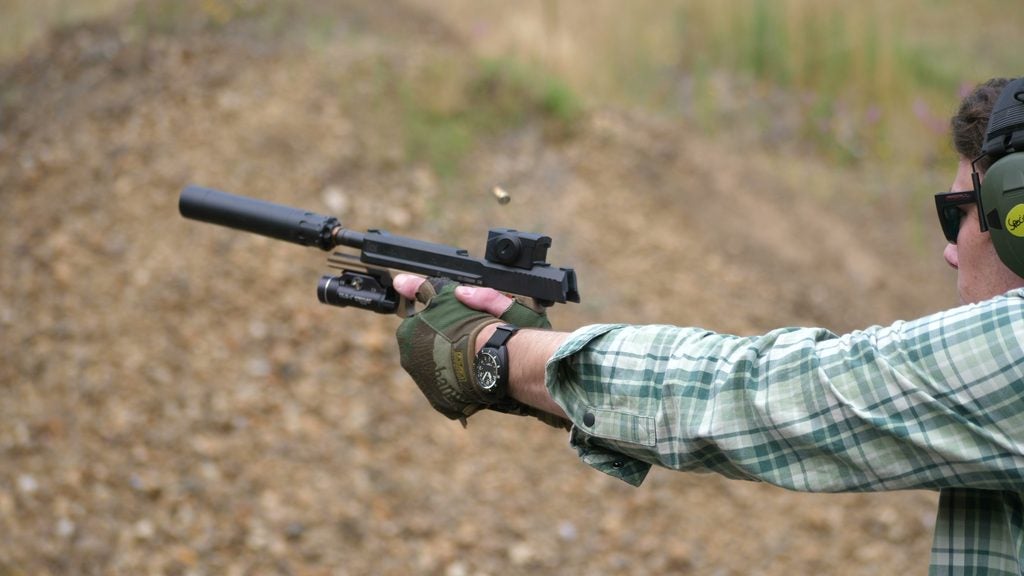
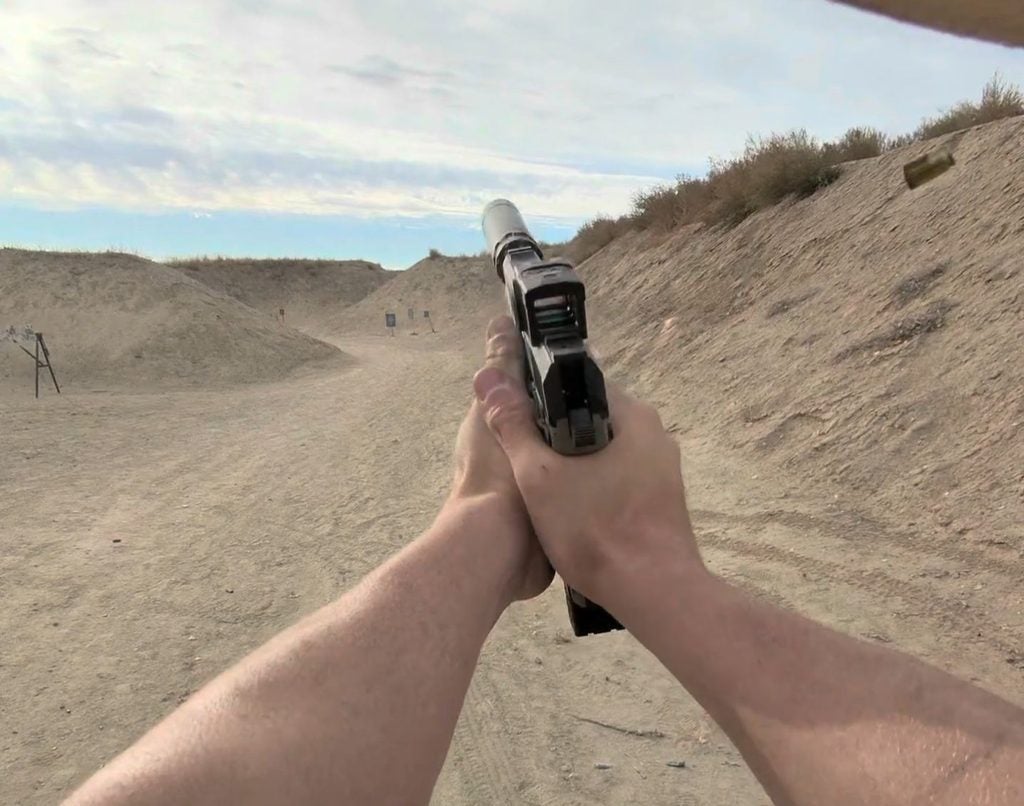
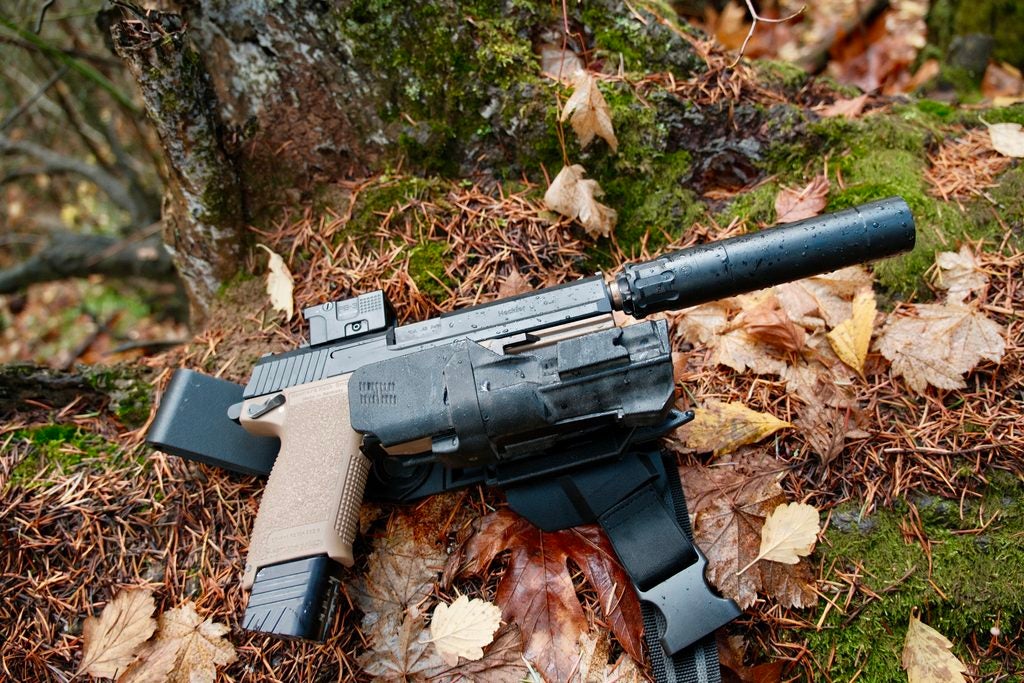
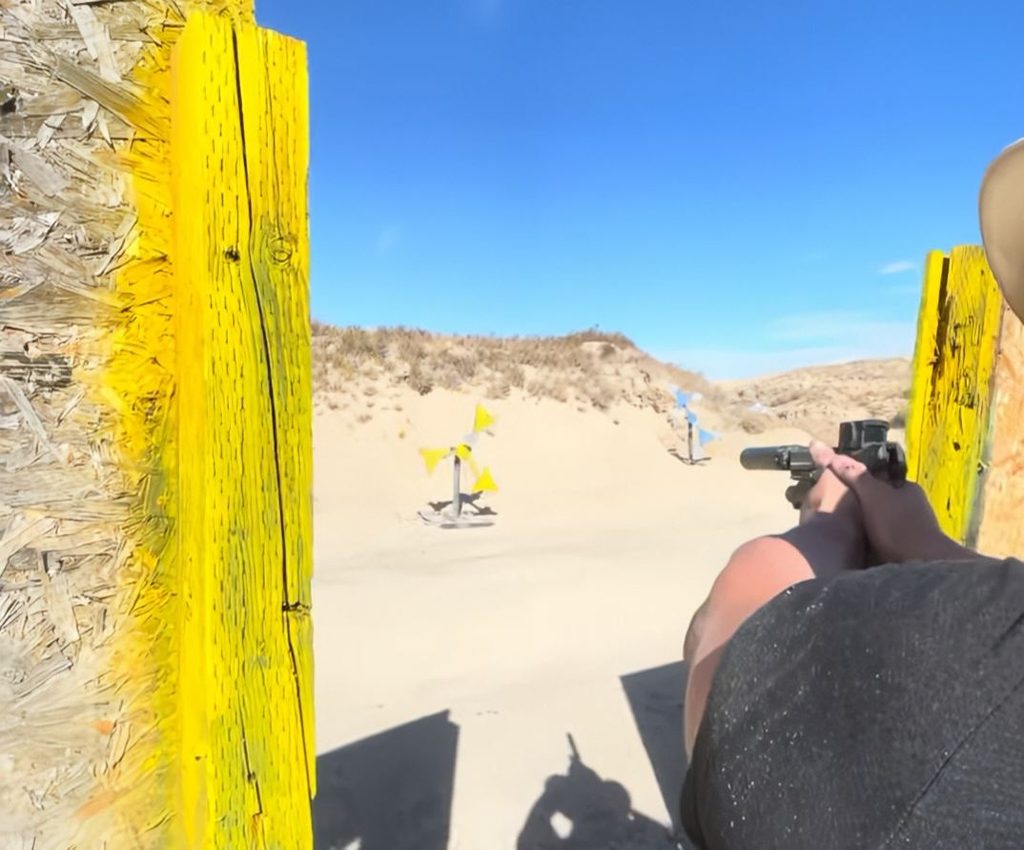
My good friend Spencer Gottlieb, one of the founders of HUSH Holsters, is a huge Mk 23 fan, and most of the Mark 23 photos in this article are of his personally owned Mk 23. That gun has done a lot of work, including serving as a development pistol for HUSH’s suppressor-compatible holsters, and most recently being used as a Competition pistol at the FAST Idao two-gun match.

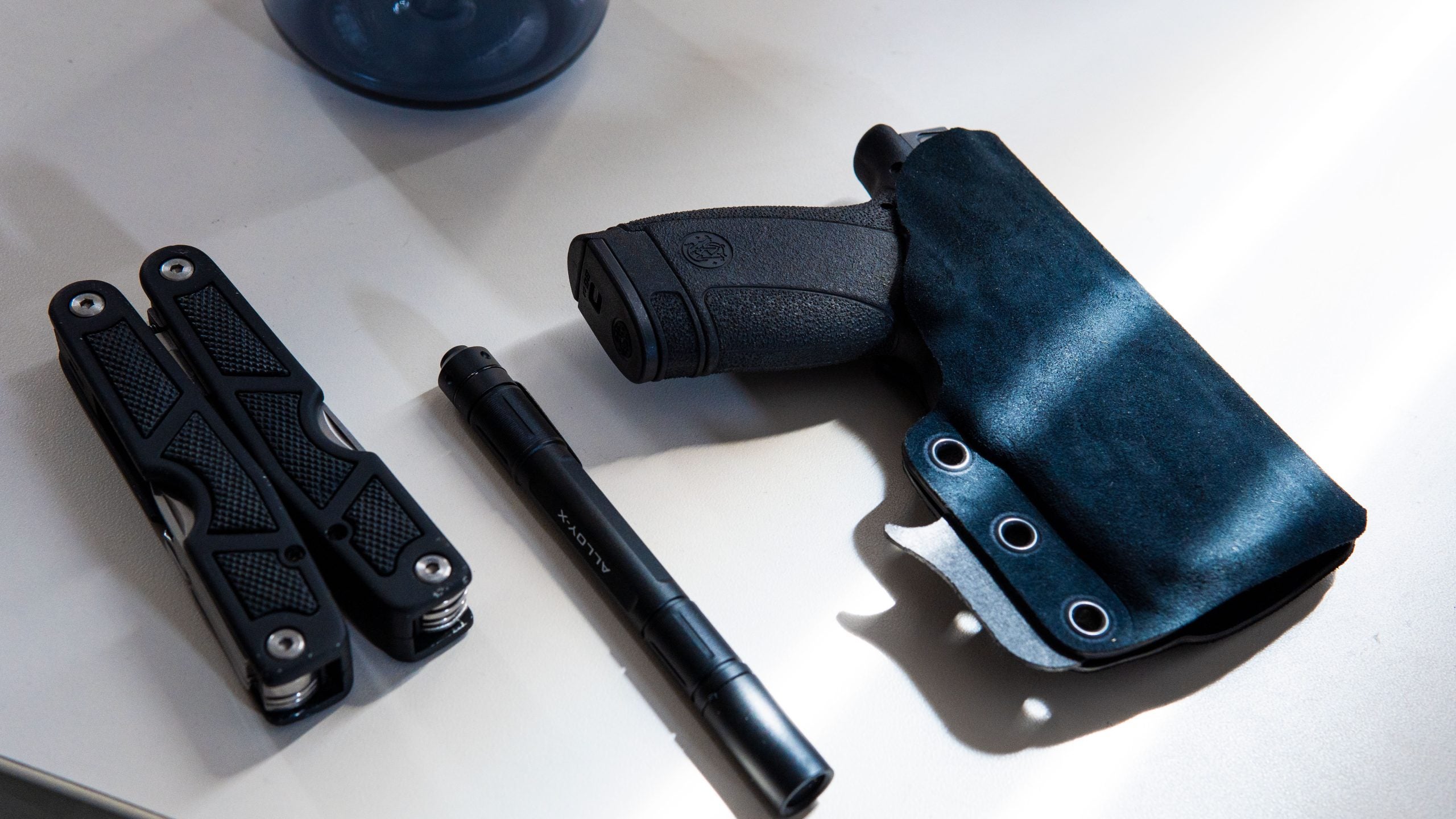
A suppressed Mark 23 with a weapon light won’t fit a conventional holster. There are a few options out there, but most of them typically require a specific light or limit the type or size of suppressor you can mount to the gun. HUSH’s Universal Suppressor Compatible Holster (USCH) uses a locking retention system that engages on the weapon light and releases with a thumb push from a standard shooting grip. Instead of a simple gravity holster, retention is accomplished by locking on the light instead of the slide or the can, so the design takes virtually any combination of handgun, light, and suppressor, with the Mark 23 included. They’re also obviously available through Silencer Shop as well.
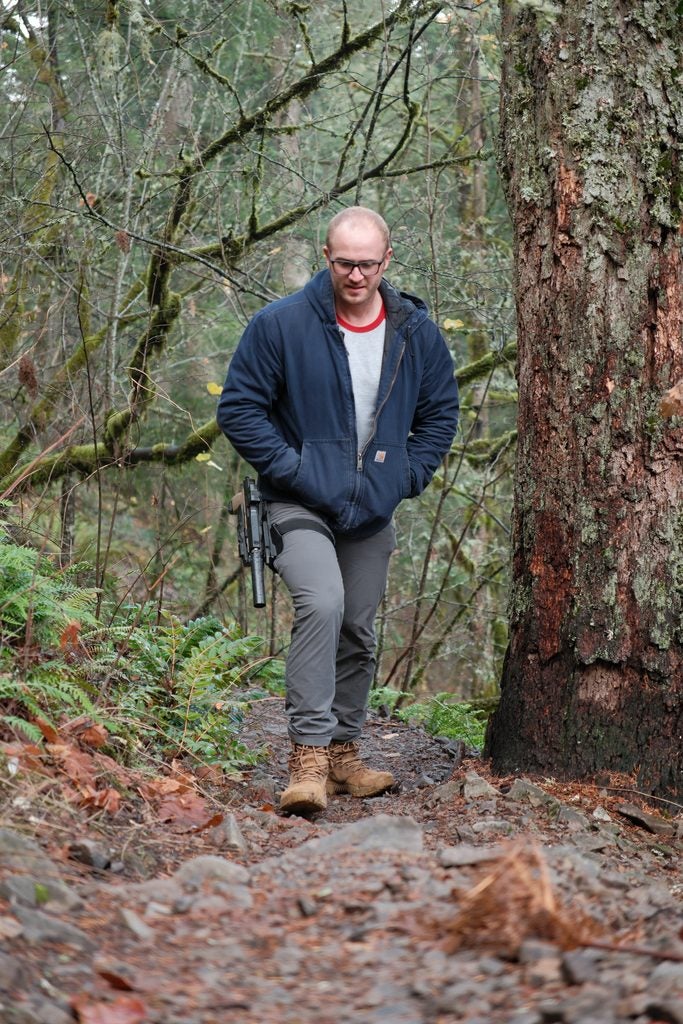
It’s built from carbon-fiber-infused Nylon 612 and machined carbon fiber, with drop-leg and mid-ride options and QLS and GCODE compatibility. Mark 23 owners can finally carry the pistol in a holster at the range with the can attached. If you’re putting together a suppressed setup, the rest of the HUSH lineup and the company’s YouTube channel are worth a look, where you can see Spencer testing this holster with a wide variety of handguns in some pretty wild environments even most special operations guys won’t ever find themselves in.
Suppressing One Today
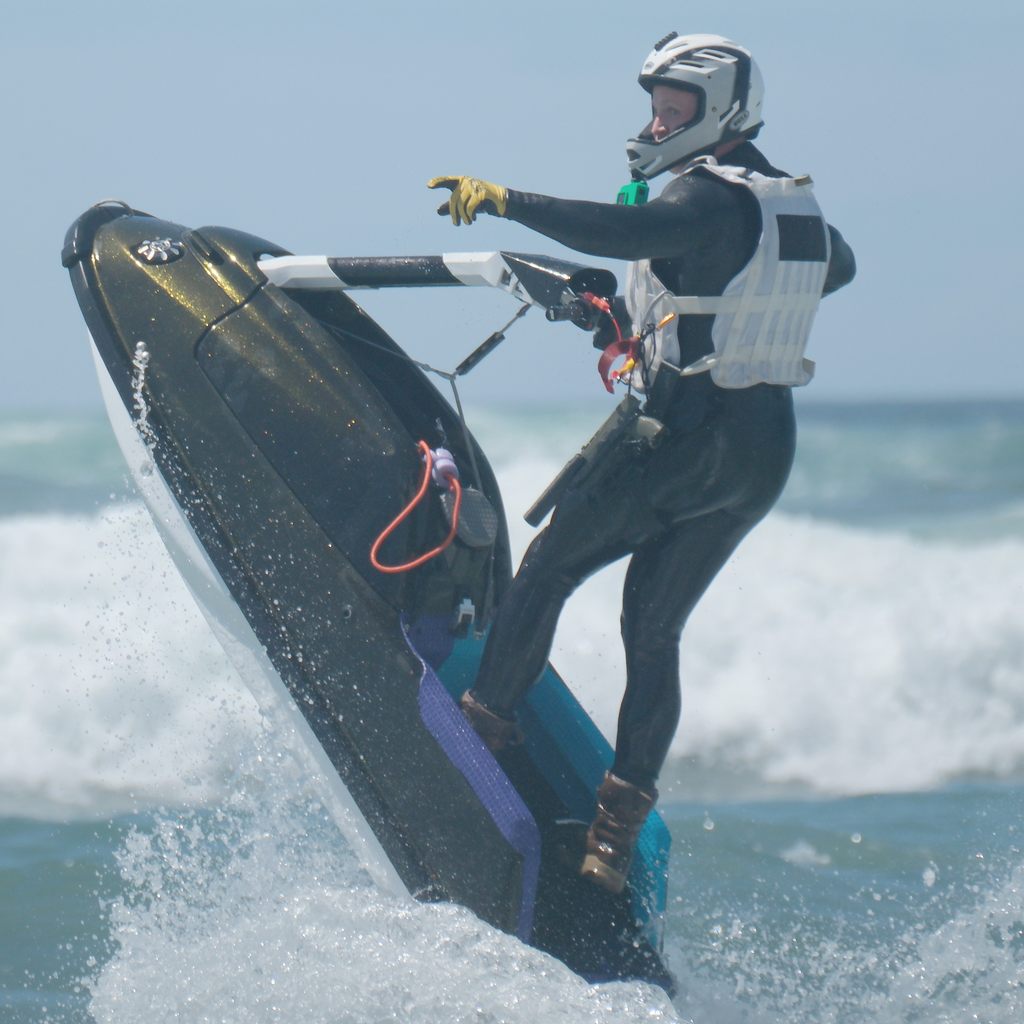
I could beat you over the head again about how easy it is to get a suppressor these days, but you probably know by now that for a majority of states, getting a suppressor is now as easy as buying any other firearm. So since the HK Mk 23 is still in production today, if you happen to find yourself in the mood to buy one, you can get it built into a “proper” configuration pretty easily these days.
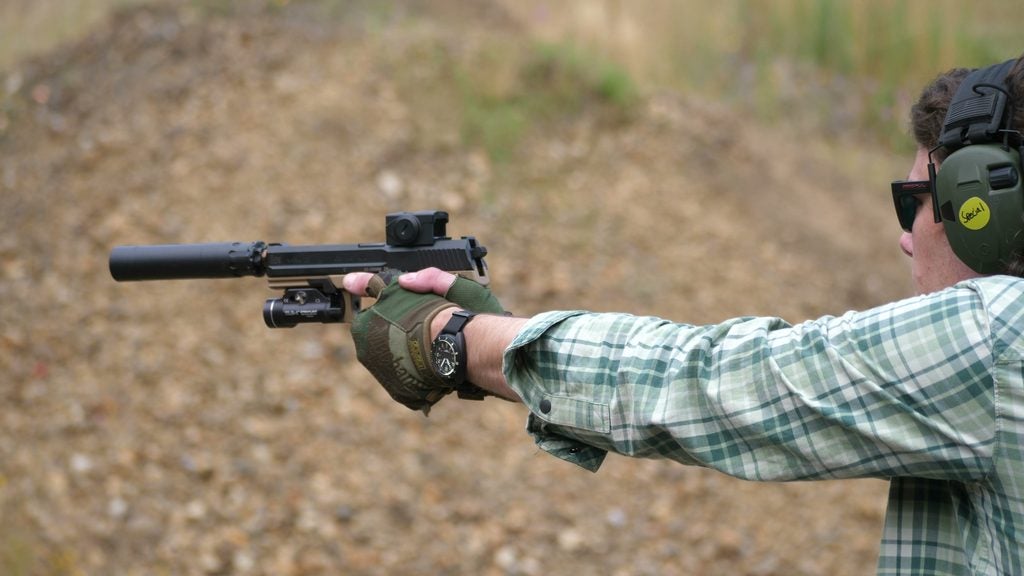
The Mark 23 typically comes with a 12-round magazine, adjustable high-profile sights for seeing over a can, and an M16x1 right-hand barrel thread. The B&T MK23 Suppressor is a direct-thread design made for that factory thread. It measures 8.78 inches overall, adds 7.2 inches past the muzzle, weighs 12.6 ounces, and is built from steel and aluminum. A few companies make magazine extensions for the Mk 23, and Specner over at HUSH ran some prototype extensions of his own at the match. No telling if he’ll make those a purchasable product or not yet.
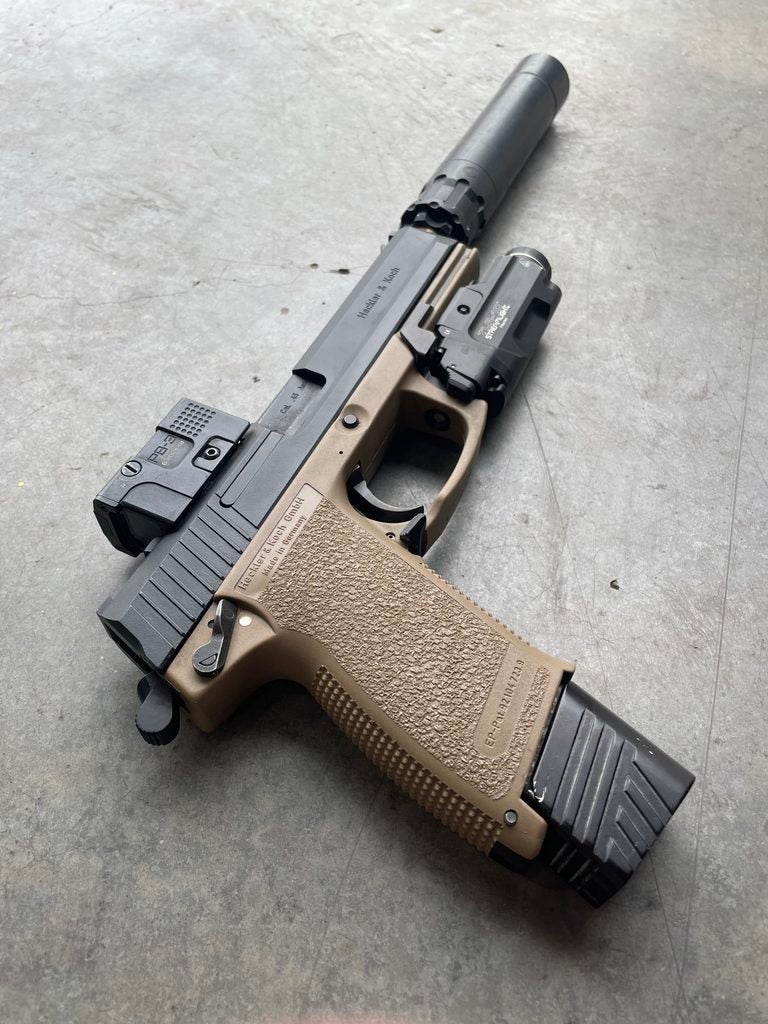
Beyond that, really only two things matter when mounting anything else. USP Tactical .45 barrels use left-hand threads, and you’ll 100% need a booster. Silencer Shop obviously has the tools to compare other .45 options; There are a lot of them out there, so my best recommendation would be to use a suppressor finder or browse .45 ACP pistol suppressors to find what fancies you best. Most .45 ACP loads are already subsonic, so virtually any booster-compatible .45 caliber suppressor should do fine.
Final Thoughts
The Mk 23 program set the pattern for the suppressed duty pistol: an O-ring sealed barrel, a threaded muzzle, sights tall enough to clear a can, and a booster tuned to the host. Many suppressed pistols have followed it, including HK’s own USP Tactical and HK45 Compact Tactical, and some of them do the job in a smaller, lighter package. The Mark 23 may still be the best execution of that idea so far, and whether any of its successors have earned the same legendary status is open to debate.
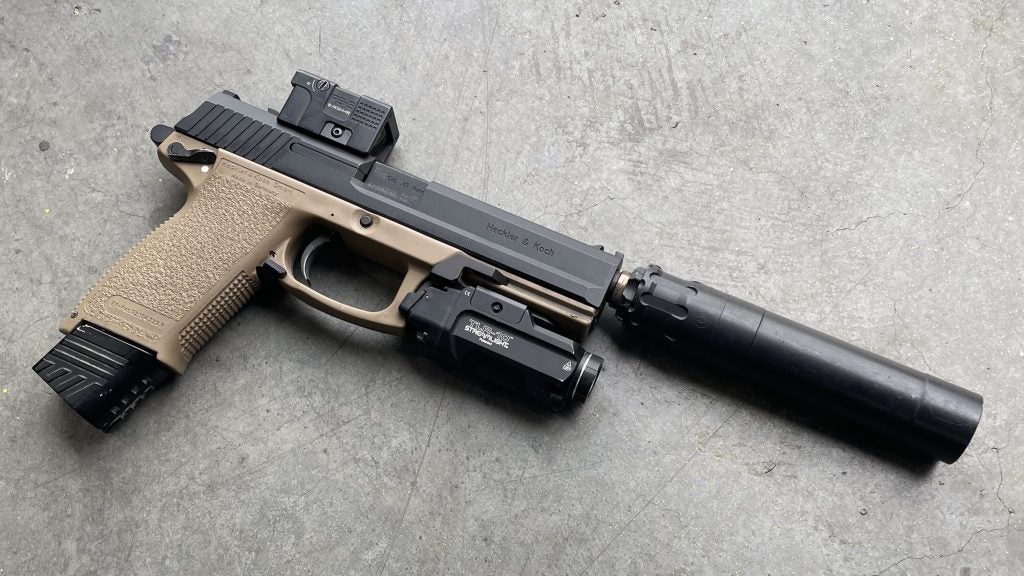
I will say that the pistol definitely “yearns” for a suppressor to be added to it. While it’s a bit more maneuverable and less of a hassle to carry it without one, I don’t think it’s the optimal configuration for the pistol, and it’s original intention. At the very minimum, at least in my experience, it has lived up to its legendary status, asd well as its contract promises, but tactics, gear, and preferences have obviously changed, leaving the Mark 23 as more of a curiosity than anything used for any current practical purpose. They’re wicked fun regardless.