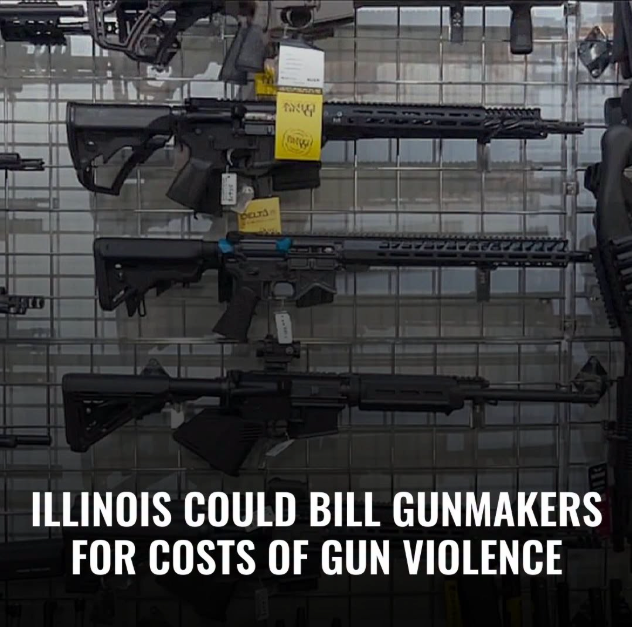
Illinois lawmakers want firearm manufacturers to pay the tab for crime the state can’t seem to prosecute. And they’ve built a licensing scheme to do it — one TTAG has been tracking since it first surfaced in the 2025 session.
What HB 3320 Actually Does
House Bill 3320, the so-called Responsibility in Firearm Legislation (RIFL) Act, would set up a state licensing program for firearm manufacturers and tie licensing fees to costs Illinois attributes to firearm injuries and deaths. The Senate companion is Senate Bill 2279. Gov. JB Pritzker has voiced his support, and the House version has racked up 35 co-sponsors while the Senate version has picked up around 20.
Here’s the catch, and it’s the whole point. Per the bill text at the Illinois General Assembly, the total licensing fees collected from manufacturers must equal what Illinois calculates as the “public health costs and financial burdens” tied to firearm injuries and deaths — no matter who criminally misused the gun, how it was obtained, or when it entered the stream of commerce. Each manufacturer’s share of that total is set by market share.
Starting January 1, 2028, manufacturers couldn’t operate in Illinois without a state license. Retailers couldn’t sell guns made by an “unlicensed” manufacturer. Violators face civil penalties up to $1 million per month for makers and up to $10,000 per violation for retailers. Aaron Dorr of the Illinois Firearms Association put the math on it in a January interview: “That’s designed to collapse the entire firearms supply chain in Illinois.”
Manufacturers don’t pick who misuses their products, and they don’t control a firearm after lawful sale. The RIFL Act makes those downstream events part of the price of doing business in Illinois anyway — a cost that lands on law-abiding residents exercising their Second Amendment rights.
The 2026 Amendment Goes Further
In March, lawmakers filed House Amendment 3, which would swap out the underlying bill for a broader structure. It creates an independent RIFL Agency and governing board tasked with licensing manufacturers and setting what each pays.
The agency would calculate fees in part by tallying up firearms tied to a manufacturer that turned up in cases involving injuries or deaths — even guns originally sold outside Illinois. The amendment also stops retailers, distributors, and importers from handling guns made by unlicensed manufacturers, with restrictions reaching private sellers and gun shows.
Money collected would fund “community violence intervention,” victim services, and “violence prevention programs.” Strict prosecution, stiff penalties, and jail time don’t make the list. Sen. Rob Peters, one of the sponsors, framed it this way: “Since the Protection of Lawful Commerce in Arms Act, firearm manufacturers have been shielded from lawsuits and the consequences of their for-profit activity, leaving taxpayers to effectively subsidize the negative effects of the firearm industry.”
Translation: because the federal PLCAA blocks the lawsuits Illinois wants to file, Illinois will instead build a licensing scheme that produces the same financial outcome without the pesky courtroom.
The Anti-PLCAA Playbook
RIFL doesn’t exist in a vacuum. It’s the next step in a strategy TTAG has tracked across multiple states — ten states have passed some version of an anti-PLCAA workaround since 2021. Illinois already has one on the books: the 2023 Firearm Industry Responsibility Act (FIRA), which lets Chicago and private plaintiffs sue manufacturers under state consumer-fraud law for the acts of criminals. Chicago and Everytown are already using it to go after Glock over criminals installing auto-sears on lawfully sold pistols.
RIFL would put a different tool in the same box. Where FIRA weaponizes lawsuits, RIFL weaponizes licensing. Where FIRA requires a plaintiff to file, RIFL runs on autopilot — an annual bill delivered by a state agency, calculated against a “public health cost” number Illinois picks, with no requirement to prove the manufacturer did anything wrong at all. As TTAG noted when analyzing the strategy earlier this year, the whole point is to “replace the judicial process with a licensing-based punishment system.” Guilt gets presumed, not proven.
Both HB 3320 and SB 2279 remain in committee — HB 3320 was re-referred to House Rules on March 27, and SB 2279 sits in Senate Assignments as of May 22. Neither has cleared its chamber. But the cosponsor list keeps growing, Pritzker’s support hasn’t wavered, and the same governor who signed cash bail elimination into law is now backing a bill that transfers the financial burden of that resulting crime from the state onto the manufacturers of legal products. That’s the trade Illinois is proposing to gun owners: your suppliers pay, criminals go home, and the licensing fees fund the intervention programs the state’s own prosecutors won’t backstop with real consequences.