Shotguns are known for their distinctive and powerful report—a thunderous boom that sounds different from that of centerfire rifles. This intense sound signature is part of what makes shotguns both intimidating and problematic for sustained use.
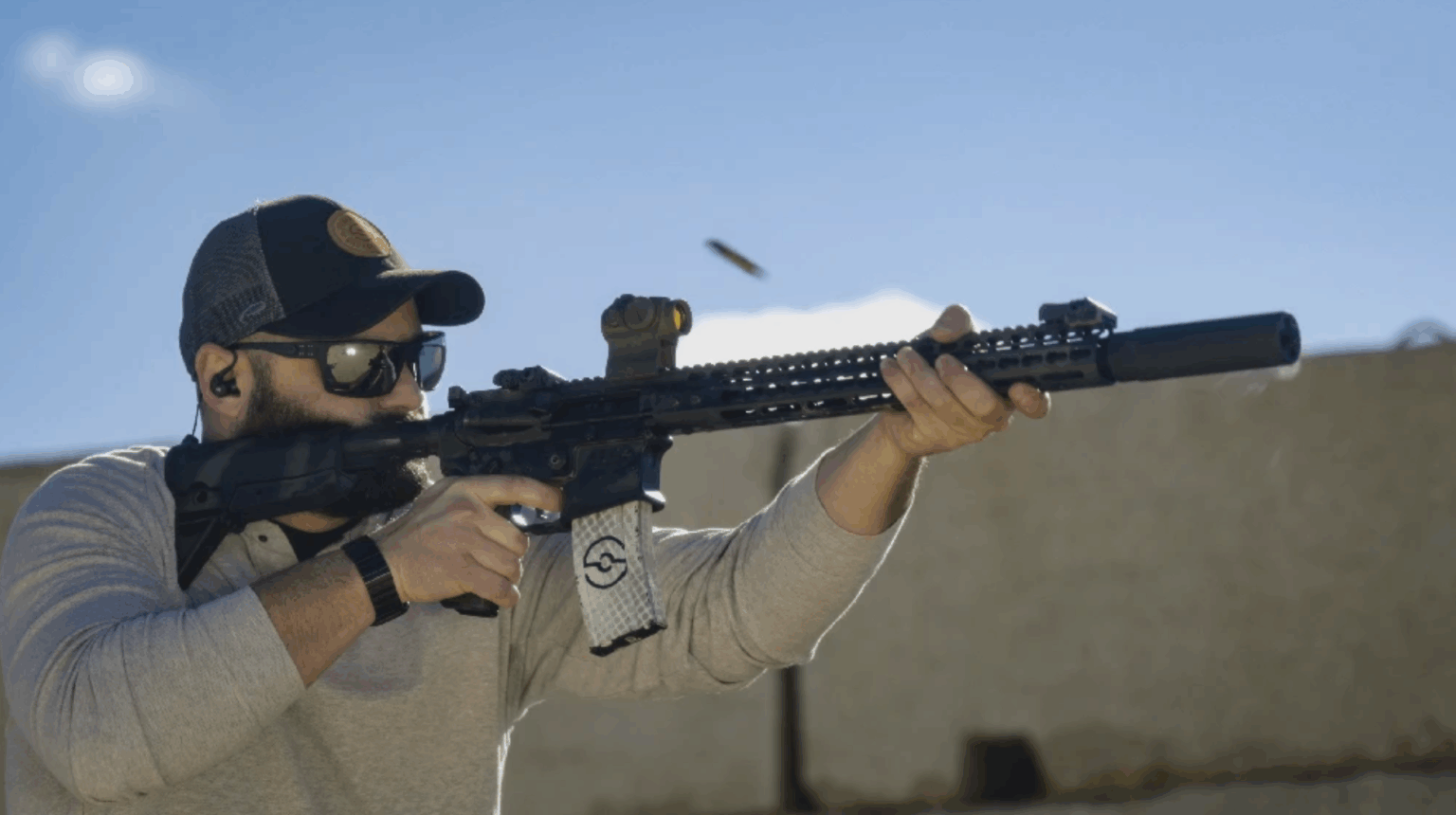
Enter the shotgun suppressor, a sophisticated device engineered to tame this acoustic beast. Unlike their portrayal in films as “silencers” that reduce gunfire to a whisper, real suppressors work on principles of gas management and sound wave disruption to bring noise levels down to more manageable ranges.
The technology behind these suppression devices represents an intersection of physics, materials science, and practical engineering, offering shooters significant benefits beyond mere noise reduction.
The Physics of Shotgun Sound
When a shotgun fires, the sound you hear comes from multiple sources. The primary contributor is the explosive release of high-pressure gases that propel the shot pellets or slug forward. Initially contained within the shell, these gases suddenly expand at supersonic speeds when the primer ignites the powder.
As they exit the barrel, they create a pressure wave that translates to the characteristic boom. Secondary noise sources include the mechanical action of the shotgun itself and, in some cases, the sound of the projectile breaking the sound barrier.
Shotguns present unique suppression challenges compared to rifles or handguns. The larger bore diameter means more gas volume to manage. Additionally, many shotguns fire shot pellets rather than a single bullet, creating more complex gas dynamics.
The diversity of shotgun ammunition—from birdshot to slugs—further complicates the suppressor design process. These factors have historically made effective shotgun suppression more difficult to achieve than for other firearms.
Shotgun Suppressor Components and Design
Shotgun suppressors use specially designed baffles that condense the shot pellets as they travel through the suppressor.
Generally, shotgun suppressor internals use a guiding system, either rods or trumpet-shaped baffles, that keeps the shot cups and wads together to retain accuracy and shot pattern down range while also preventing baffle strikes from stray pellets. 12 gauge suppressor designs trap gas and give it room to slow and cool, reducing the volume of the gunshot.

Practical Benefits for Shooters
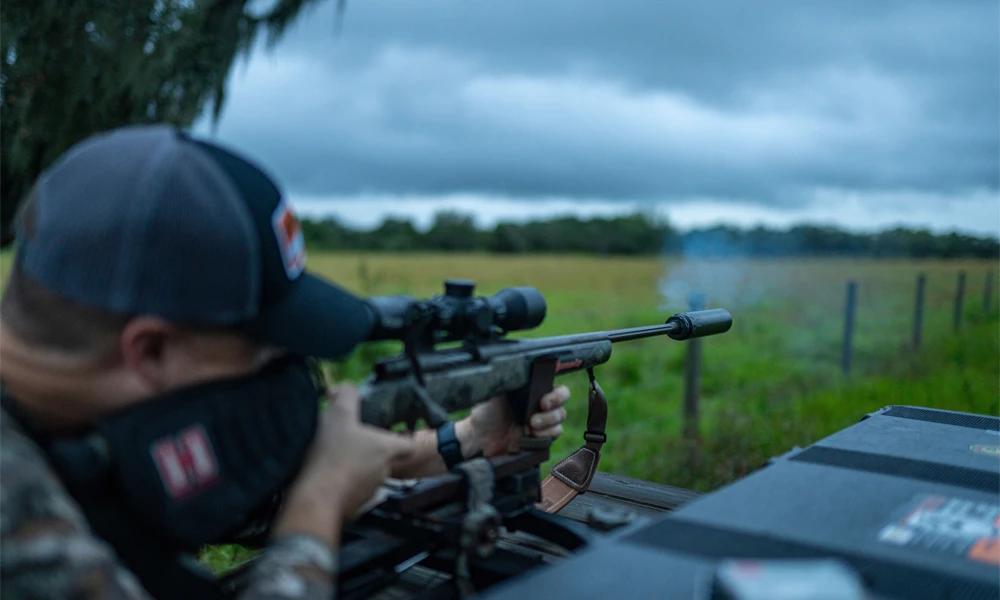
Shooting a suppressed shotgun protects your hearing, reduces felt recoil, and increases projectile velocity. Silencers also offer several benefits for hunting and training. Let’s explore each of these benefits in more detail.
Hearing Protection
Perhaps the most significant benefit of shotgun suppressors is hearing protection. Unsuppressed shotguns typically produce sound levels of 150-165 decibels, well above the 140-decibel threshold for potential immediate hearing damage. Even a single unsuppressed shotgun blast can cause permanent hearing loss.
Quality suppressors can reduce this to the 130-140 decibel range—still loud, but much less likely to cause immediate damage. For regular shooters, this reduction can prevent the cumulative hearing loss that has traditionally been considered an occupational hazard of shooting sports. Hearing protection is also an advantage for home defense.
Recoil Management
A lesser-known advantage of shotgun suppressors is recoil reduction. The same mechanisms that trap and slow expanding gases also redirect some of the rearward energy that contributes to felt recoil.
Many shooters report a 10-20% reduction in perceived recoil when using a shotgun suppressor. This benefit is particularly valuable with shotguns, which can produce substantial recoil even in experienced hands. Reduced recoil means more comfortable shooting, better follow-up shot capability, and less fatigue during extended sessions.
Increased Velocity
Unique to shotgun silencers is the increased velocity. Jake Kunsky of JK Armament Suppressors stated that in their testing “velocity increased 10-15% for most loads.” This means that you’ll be able to take down a turkey a little further away than usual, and your slugs will be more effective down range.
Noise Reduction
Suppressors also offer environmental benefits in both recreational and hunting contexts. At shooting ranges, they reduce noise pollution that might otherwise impact neighboring communities.
For hunters, suppressors minimize disturbance to wildlife in the surrounding area, potentially allowing multiple shots without scaring away game. This advantage extends to farming and ranch applications, where shotguns might be used for pest control without alarming livestock or neighboring properties.
Training Advantages
For instructors and new shooters, suppressors create a more conducive learning environment. The reduced noise allows for clearer communication during training sessions without the need to shout over ear protection.
New shooters, often intimidated by the loud report of firearms, typically find suppressed shotguns less startling and therefore easier to learn with. This psychological comfort can translate to better shooting fundamentals and more rapid skill development.
Practical Considerations
From a maintenance perspective, shotgun suppressors require special consideration. The combustion byproducts from shotgun ammunition tend to be particularly dirty, requiring more frequent cleaning of suppressor components.
Additionally, the length and weight added to the end of the barrel can affect handling characteristics, requiring some adjustment to shooting technique. Modern designs increasingly address these practical concerns with user-serviceable components and lightweight materials. Shotguns with shorter barrels are also becoming more popular for use with suppressors.
Will a Suppressor Work on My Shotgun?
As long as your barrel is threaded for removable chokes, or can be threaded to accept them, your shotgun can be equipped with a silencer. You’re probably wondering how to install a shotgun suppressor with a choke; 12 gauge silencers use a threaded choke, simply screw the choke into your barrel, then screw the suppressor onto the choke.
Shotgun manufacturers use different chokes, so make sure to get the correct choke for your specific model. What are the differences in chokes? Shotgun chokes vary in length and thread pattern, using the incorrect choke can result in damage to your shotgun and the suppressor.
Popular Shotgun Suppressors
The quietest 12 gauge suppressors on the market currently are the SilencerCo Salvo 12 and the JK Armament 195 SGX 12 and 195 VersaX 12. All these models are modular, meaning they can change lengths to better suit the application, longer will be quieter, while shorter configurations save weight and make the firearm more maneuverable.
The Salvo 12 can be arranged from 6” to 12” and weighs 21oz-34.5oz, it uses aluminum and stainless steel construction. The SGX 1212 is configurable from 3.75” to 11.75” and weighs 4.3oz-16oz. The VersaX 12 is a smaller version of the SGX 12 and can be arranged from 3.75” to 8” and 4.3oz-9.3oz.
The JK Armament shotgun suppressors are made of high-strength aluminum. Each of these bring the suppressed shotgun sound down to a much more comfortable level, which will aid in protecting your hearing while also making the firearms easier to shoot.
The Future of Shotgun Suppression
As hearing protection awareness becomes more widespread in shooting communities and as regulatory frameworks potentially evolve, shotgun suppressors may become more mainstream accessories rather than specialized tools for enthusiasts.
Their fundamental benefits for shooter health, comfort, and performance make them valuable additions to any shotgun platform. They represent not just a modification but a significant enhancement to the shooting experience.


One of those on a Mossy Shockwave would be the cat’s ass…
Yeah Buddy.
No way.
That’s amazing.
Years ago crow hunting we made up some makeshift suppressors.
JB Welded a 4ft piece of conduit onto an extended screw in choke. Drilled holes into the conduit.
With light field loads it did quit the shotgun down but nothing like what was portrayed in the video.
I wouldn’t have thought a shotgun suppressor like that could be made.
I want one.
Now Duly hops off the Short Bus to confess to making an illegal suppressor…but I’ll save everyone some time: How do shotgun suppressors work? Tried them at SHOT. Answer? The ammo is supersonic, so “poorly”…
I confess in my state I can make and use a suppressor.
Clueless Grimm
[Enclosed],,,whoops. I dropped my crayon.
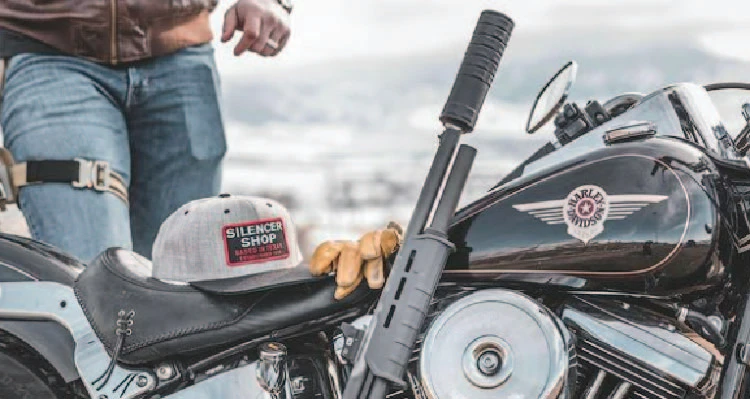
There’s some HD riders that should some kind of noise suppression. Noise does not always equal horsepressure. I like the sound of a well tuned high performance engine singing it’s song but open drag pipes designed to piss off everyone doesn’t help the MC riders image. Oh, and … GET OFF MY LAWN!!
Would you feel better seeing that shottie in the picture fall over and scratch the piss out the paint on the Harley’s tank ?
I know I would… and I still own and ride a KZ1000R ELR.
I work in the business…plenty cans, full autos, SOT, Master Armorer, NDIA, NAC, NSATC. “CLUELESS”, Duly, or are you projecting again? Now back on the short bus and never insult Roy Weatherby’s hard work.