
Disclaimer: This rifle was sent on loan for this review and was sent back when finished
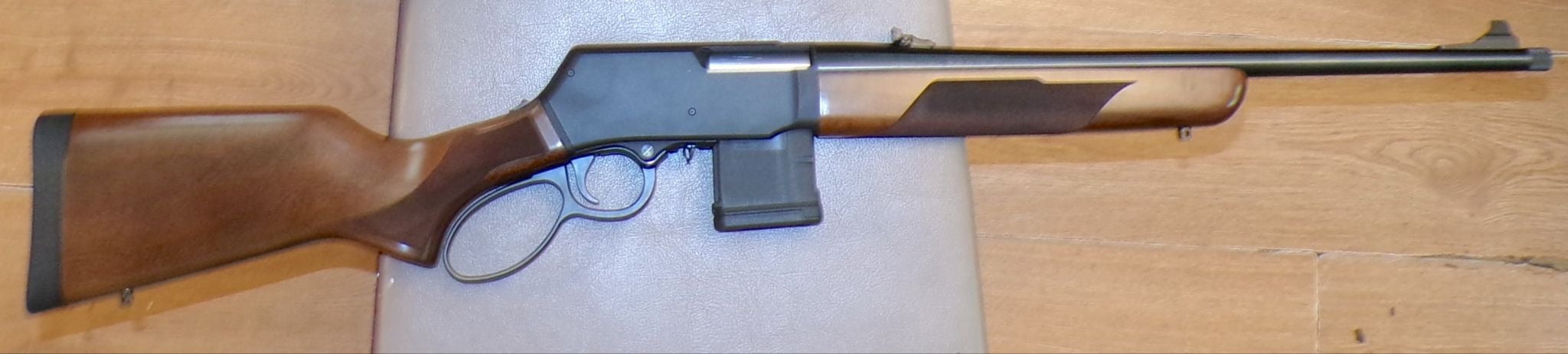
Above is a photo of this new lever rifle. Quick… just glance at it and list in your mind ways and features that are different than your daddy’s Henry. How many differences can you name?
We’ll look at those below, but before we do that, let’s examine the premise here. I see the LASR as Henry’s effort to stay current, pertinent, contemporary – whatever word you like. I think the guiding minds at Henry might have sat around one afternoon and just thrown out ideas for ways they could update one of their 19th-century-based action designs and turn it into a modern rifle.
Sure, today’s designs are for a modern lever-action rifle, but the original lever-rifle concept predated the Civil War. It is a very old and very proven design. I could see them, Starbucks in hand, throwing ideas out for someone to write on a whiteboard. “Let’s use a box magazine!” … “How about an enclosed hammer to keep the action clean?” … “No magazine tube, so we can use pointy bullets!” … “Can’t NOT use a Magpul AR Magazine!”
You get it. They wanted to break the mold here, and they pretty much did that. Before we go further, let me cut to the chase: I love this rifle. They got things right here.
Design Differences
I was joking above about the brainstorming session, but I know that Henry has departed from the norm before and has introduced products that were way out of left field for them… one example is their Big Boy revolver and its variations. I don’t know of any shooter who was expecting that. They have shown they are willing to take whatever steps necessary to remain relevant in the firearms industry.
Ruger’s takeover of Marlin has, in my opinion, all but put the onus on Henry as the “other” quality American lever-gun manufacturer to keep introducing new models and not let its guard down when it comes to making quality guns. I owned a Henry rifle, and I was totally impressed with it. Their materials and workmanship are first-rate, as is their quality control. My Big Boy in .44 Magnum was an effective deer-getter, plus the shiny brass receiver doubled as a mirror… it was some gun.
So they needed to come up with something a bit off their beaten path. How is the LASR different from their other levers? Let me count the ways…
- Box magazine. The first thing you might notice is that there’s a “lump” under the receiver. The gun uses standard STANAG AR-15 magazines and comes with one Magpul PMAG 10-rounder, which is a perfect fit with Indiana deer regulations.
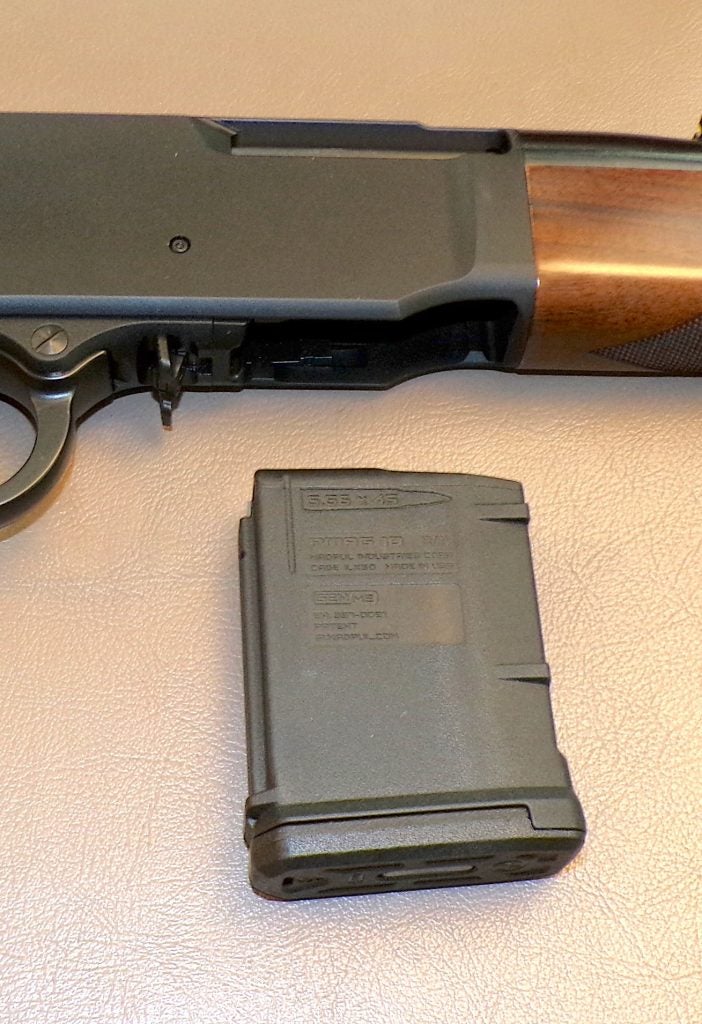
- No Magazine Tube. As a result of going with a box magazine, we have no mag tube. This allows the use of pointed bullets such as JSP and JHP… a no-no in a tubular magazine.
- No External Hammer. The hammer is internal, which eliminates an entry point for dirt and debris. The sliding safety is visible, as well.

- Free-Floated Barrel. Usually, levers have their barrel affixed to the magazine. The LASR’s barrel is free-floated.
- Threaded Barrel. That barrel is threaded, 1/2×28, for muzzle devices or suppressors. I didn’t have the right-sized thread on the cans that I have at the moment, or I would’ve stuck one on the rifle.
- Adjustable, Match-Grade Trigger. In a world where most lever-action rifle triggers hover over six or seven pounds, here we have an adjustable, match-grade trigger that you can set for three pounds or even a bit less.
- AR-Style Bolt. We have a rotating bolt with locking lugs similar to those of an AR… it looks like an AR bolt.
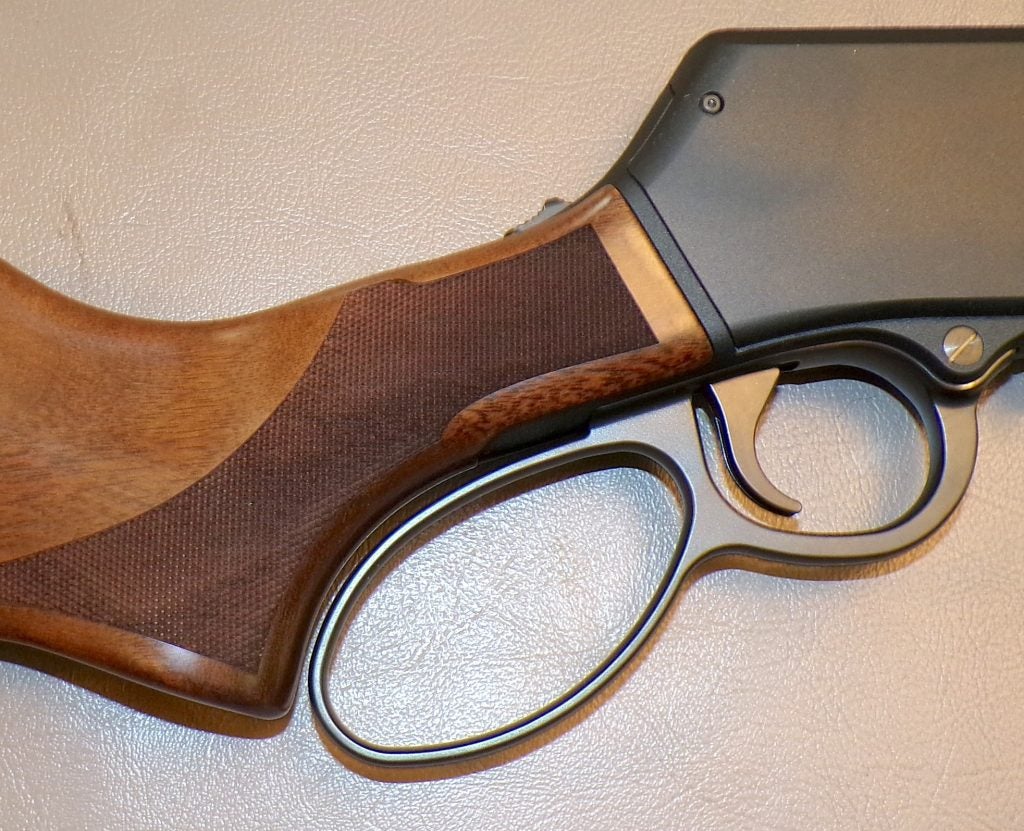
- The Safety Is Tang-Mounted. I wasn’t quite sure how to say that, but you have a sliding tang safety like many shotguns and some rifles use. You don’t have to rely on a half-cock notch. (See above photo).
There you have it… Eight obvious differences between this rifle and your daddy’s Henry. There are other, less-visible differences as well, but these are the ones that jump out at you.
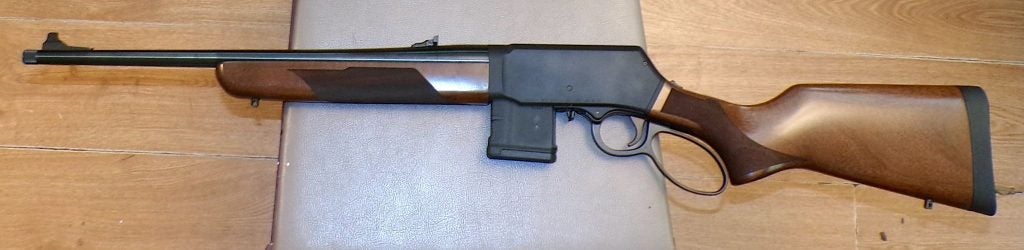
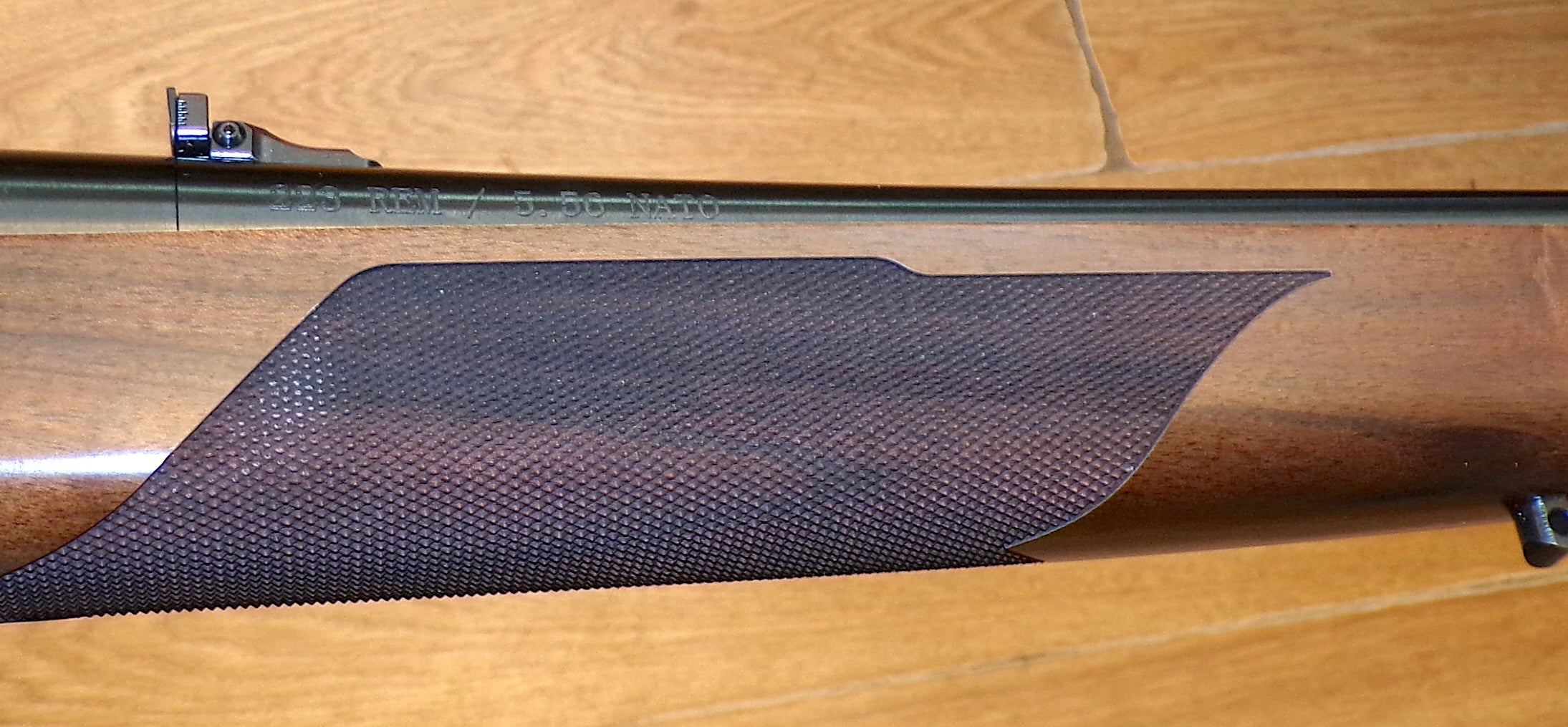
Plus, we have a very handsome walnut stock with some effective laser-engraved checkering on the fore-end and wrist, and the bluing is first-rate. This seasoned shooter appreciates these walnut and blued-steel old-school touches. It is a nice-looking rifle.
They must be doing something right to earn this:

Specifications and Features
- Caliber Tested: .223/5.56 mm (.300 Blackout, .450 Bushmaster also available)
- Barrel Length 18″
- Barrel Type Free-Floated Round Blued Steel
- Rate of Twist 1:8
- Overall Length 38.15″
- Weight 6.65 lbs.
- Receiver Finish Hard Anodized Black
- Rear Sight Fully Adj. Trapezoidal
- Front Sight Blade
- Scopeability Drilled & Tapped
- Scope Mount Type Weaver 63B
- Stock Material Genuine American Walnut
- Stock/Grip Style Checkered Pistol Grip
- Buttplate/Pad Rubber Recoil Pad
- Length of Pull 14″
- Magazine One 10-round Magpul PMAG and 5-round limiter included; compatible with
- standard AR magazines
- Safety Tang Sliding Safety
- Best Uses: Target, Hunting (Varmint/Predator)
- Embellishments/Extras Sling Swivel Studs, Threaded Barrel (1/2×28), Match-Grade Adjustable Trigger,
- Sight and Trigger Adjustment Tool Included.
- MSRP: $1360
Range Time
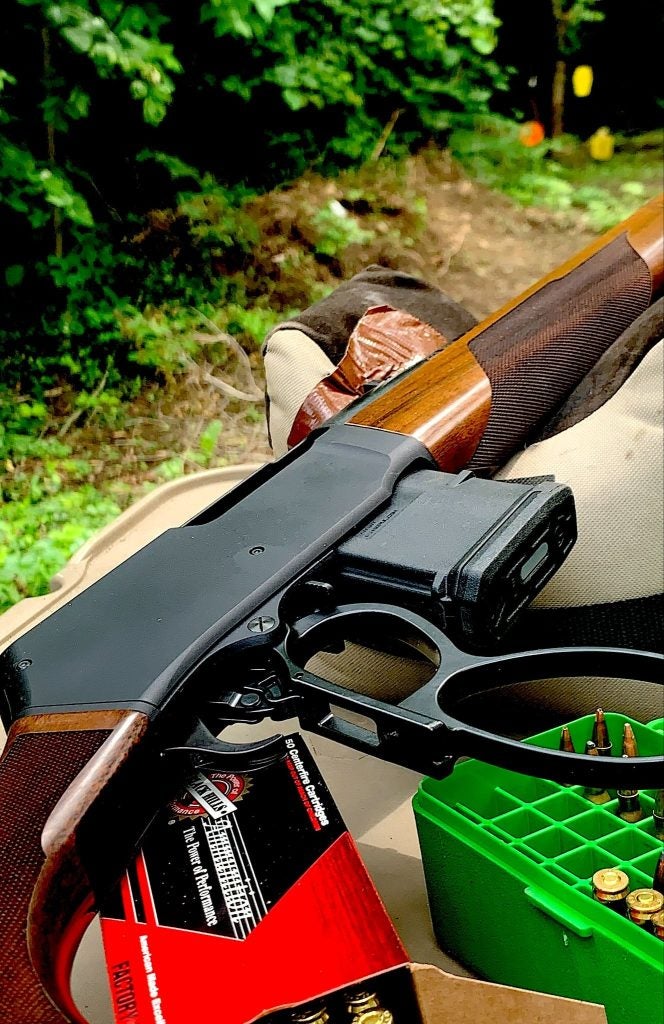
I recently moved my backyard range to the other side of our wide ditch, and I can’t stretch things out like I used to… I have about 50 yards available to me now, so I took advantage of that.
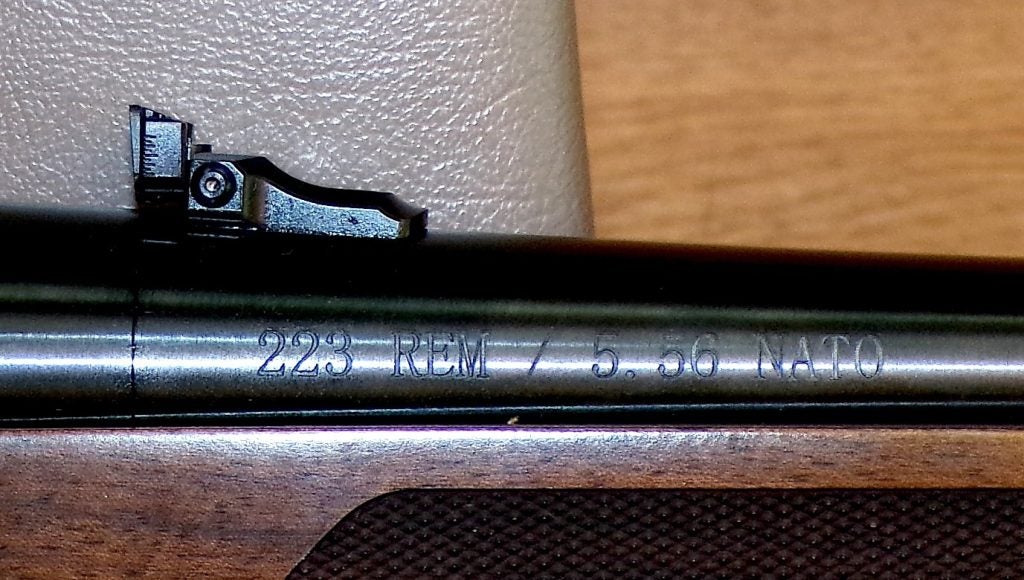
I am blessed to have my review ammo provided by Black Hills, so I grabbed a 50-round Black Hills box and one of my handloads and headed out. (It is safe to shoot either .223 or 5.56 mm in this rifle, and the barrel is so engraved. I stuck some home-made targets up at 35 yards (I have trouble with open sights, the older I get) and let fly.
Here’s what I shot, and here are some results:
Black Hills 77-gr. Match: I shot most of the box, one mag at a time. I wasn’t trying to shoot conventional 3-round groups… I just wanted to have some fun with this rifle. From other reviews I’ve read, this rifle has no trouble in the accuracy department, so just let my inner “lever-gun-lover” take over.

We see one big concentration on the target, up and a bit to the left. I did manage to put five in or around the bull.
My handload, 55-grain JSP over 24.5 grains of W860:

The story of my life. Four closer together, one out… it seems I always do that. Anyway, this was just one handload I grabbed. I have others that, if I were to keep this rifle, I would experiment with. I would also either adjust the rear sight or (more likely) buy a Pic rail to mount on the receiver. That way, I could mount whatever optic I wanted on it.
And, here’s something extra… I shot into a Clear Ballistics gel block, and here’s what I dug out:
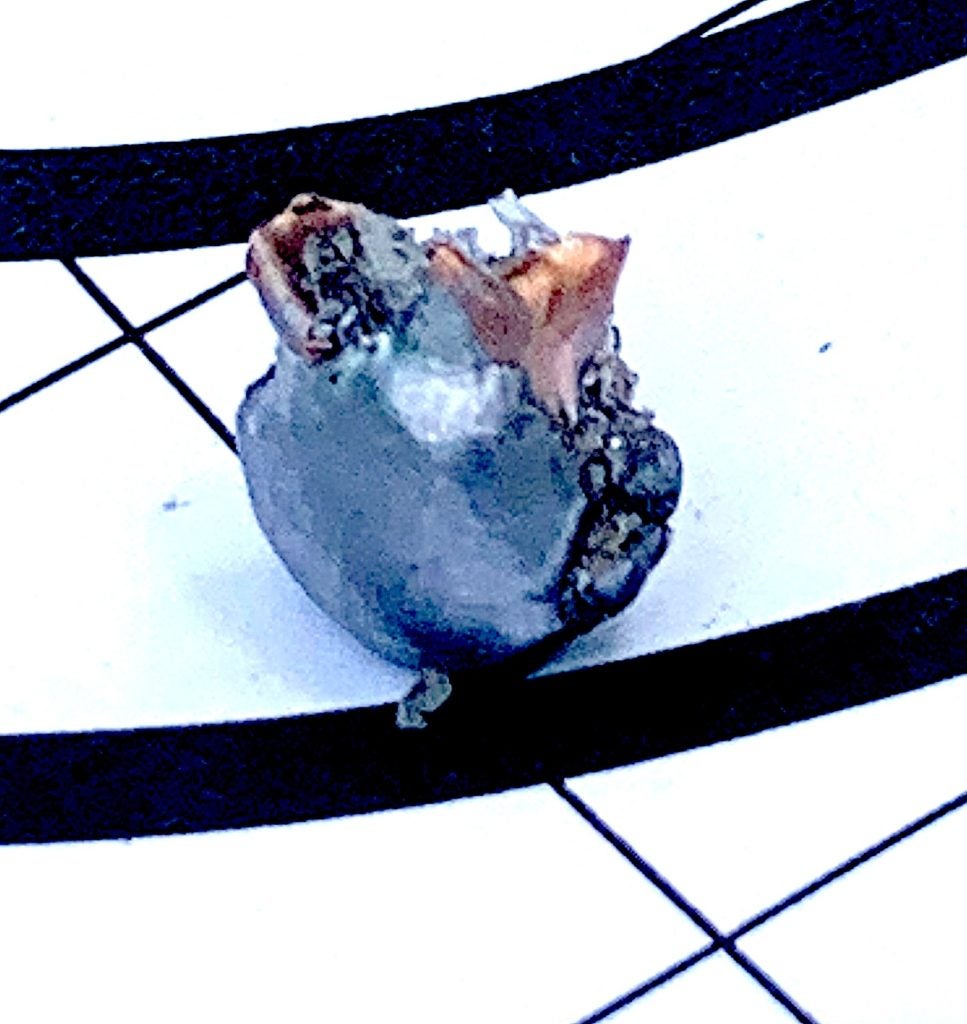
No sign of the green tip, but the bullet held together very well. I would imagine that some hunters might use this or a similar load for deer where legal. It was OK’d last deer season here in Indiana, but I’m not sure how many used it. I wouldn’t go any lighter; that’s for sure.
The rifle shows potential and, since it’s a Henry, would more than likely deliver MOA accuracy with the right optic (or shooter!).
Let me make a couple of observations…
Trigger. The trigger was excellent. You can tell that they installed a match-grade trigger. It consistently broke at just a hair under four pounds (how’s that for scientific terminology? It sounds more interesting than “three pounds, 13 ounces”). There was no take-up and absolutely no creep… I kept dry-firing it, pulling the trigger v-e-r-y slowly, to check it. (The manual says dry firing is OK.)
This is one of the best factory triggers I’ve felt in a long time, and certainly THE best of any lever-action I’ve ever shot. It’s incredible. You’d better be sure to keep your finger off it until you are for-sure ready to shoot… It’s light enough that a decent bump will trip it.
Lever Operation. I said above that I’ve had a fair amount of experience with lever guns over the decades. I’d never run across one with an action this easy to operate. The lever just practically falls open when you pull on the large-loop lever. (Gloved hands are welcome.) It’s not loose; it’s just easy to drop. Again, amazing.
Sights. I was thinking that I had ordered the Predator version, with a Picatinny rail installed, but I did not. This LASR includes open sights and four drilled-and-tapped holes on the receiver top for a Weaver scope mount, old-school. That’s not a deal-breaker… for about $40, you can get a rail to screw to the receiver, then go from there, or just mount a scope directly on the receiver. The sights on the gun are very usable… the rear is a patent-pending trapezoidal affair with angles that match the front post’s wide-at-the-base shape. It’s easy to frame the front in the rear. It’s not quite an aperture, but it behaves in a similar fashion.
Both sights are fairly tall, in case you want to mount a suppressor. They need a tiny Allen wrench for adjustment, included. For open sights, they work fine.
Stock. The American Walnut stock is richly-grained, with its laser-engraved checkering adding to its usefulness on both the fore end and the wrist. The buttstock is capped with a thick rubber recoil pad… not so much needed for .223, but it would come in handy on the .450 Bushmaster. You have sling mounts installed, as well.
Magazine. Since you can use AR-standard magazines, that really opens things up. Many of us have multiple magazines in that format, but in order to keep the rifle’s balance intact, the ten-rounder that comes with the gun is a good choice, especially if you are going to hunt with it. Many states limit magazine capacity to 5 or 10 for hunting… the gun comes with a 5-round limiter that you can install if needed. Be aware that the rifle’s center of gravity is exactly over the magazine well, so choose your magazines wisely.
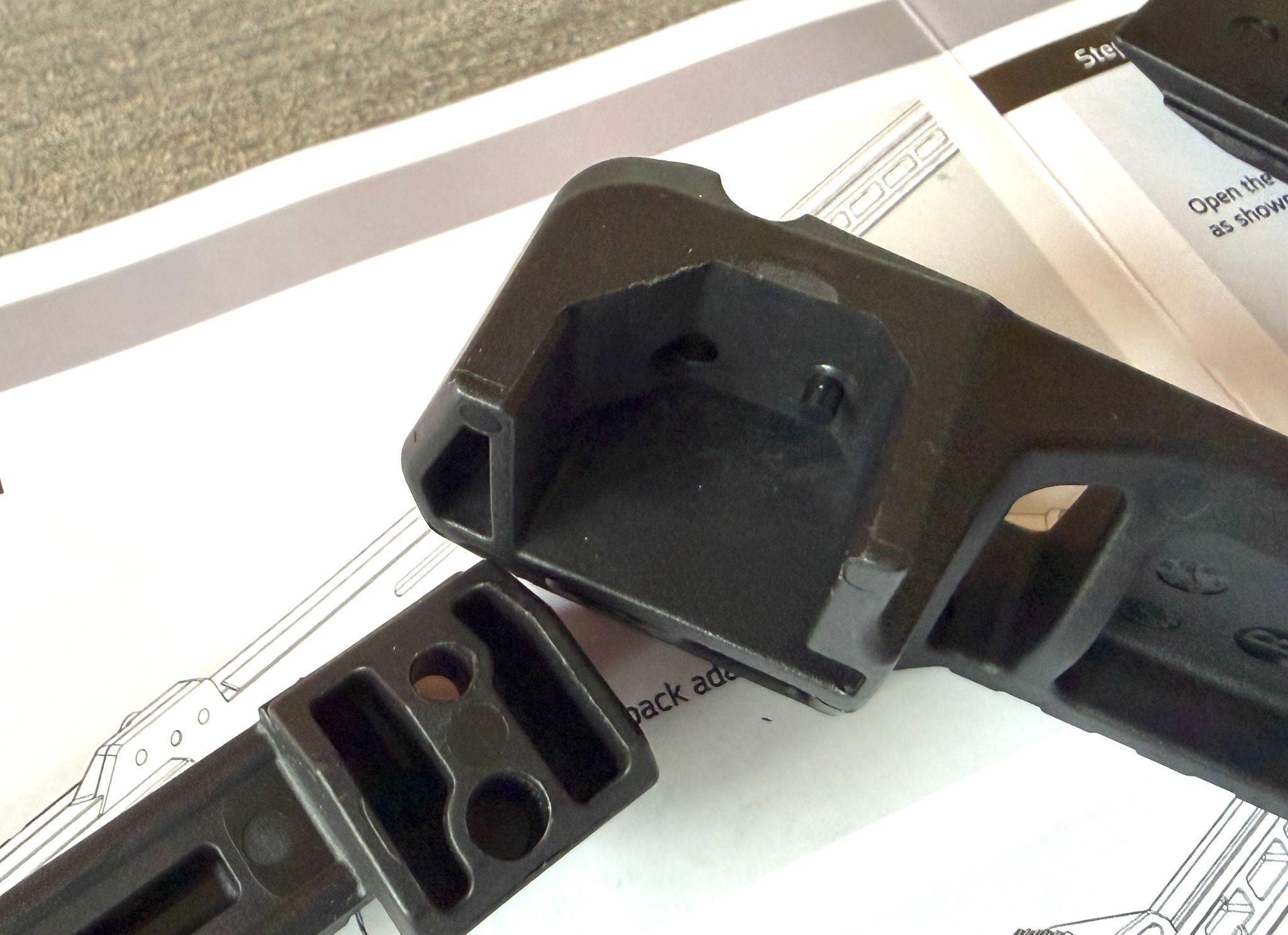
Along with the magazine comes a mag release, as we all know. This one is different… it is in the process of being patented by Henry. It sits just behind the mag well and pushes forward to release the magazine. It uses a wide, “W”-sort of lever that is accessible by either hand.
(Actually, after looking at it some more, it puts me in mind of those hats that they used to sell to kids after the Mickey Mouse Club made its appearance in the 1950s, and that you see at Disney World today. This lever looks like it could’ve been a Mousketeer!) All in all, it’s a good design and works very well.
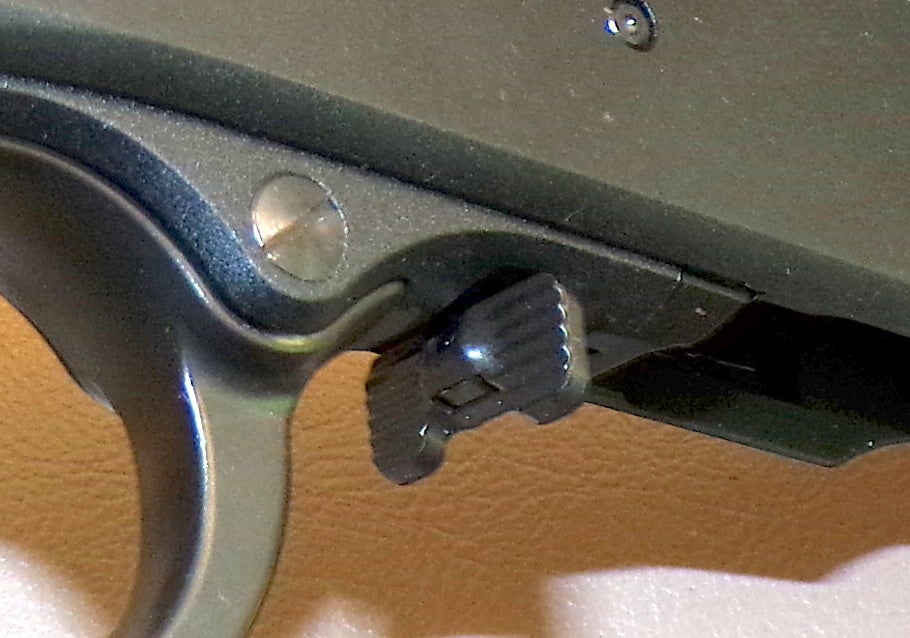
🎵M-I-C… K-E-Y…🎵 OK, maybe not, but if you turn the release upside down and squint just right… OK, enough trying to be funny…
Summing Up
I have long been a fan of lever-action rifles and carbines. I have owned a few of them over the decades, and I still am drawn to their simplicity, ease of carry, and reliability. Their ease of handling and balance when carried are legendary. I would conjecture that more deer have fallen to lever-action rifles here in the U.S. than to any other action type.
I loaned my S&W 1854 .44 Magnum lever rifle to a friend’s brother last deer season, and it connected with a large doe, so I know they work. I don’t have numbers, but it just makes sense. The old Winchesters, Marlins, and Henrys seem to “always get their deer”, whether in .30-30 or another caliber. They show no signs of going away… if anything, they’re selling stronger now than ever before.
For that reason, I think Henry has made a wise choice where the LASR is concerned. They have taken a design that dates back to before the Civil War and modernized it, using contemporary steels, modern technology and manufacturing techniques, beautiful American walnut, design elements, and aesthetics, and they have come up with a very interesting rifle.
If you are considering adding a lever gun to your collection, you might want to give this one a look, especially if you are interested in one of the three calibers it comes in. Whether you use it for hunting, target shooting, or another purpose, I would bet that once you add it to your safe, you won’t want to move it out. That’s a great testimony about a great rifle.
Links To Items Used In This Review
- Birchwood Casey Filled Shooting Bags, $40
- Black Hills Ammunition
- Caldwell Brass Trap, $68
- Caldwell E-Max Low-Profile Hearing Protectors, $33
- Caldwell AR-15 Magazine Charger, $55
- Caldwell 66% AR500 Steel Silhouette Target, $127
- Caldwell Ultimate Target Stand, $33
- Clear Ballistics Gel, various prices
- GPS Medium Range Bag, $150
- MTM Case-Gard High-Low Shooting Table, $160
- Wheeler Trigger Pull Gauge, $88
- Wheeler Red Laser Bore Sighter, $193 (available in green, also)



I love my 300BLK LASR. Henry wasn’t kidding when they said they wanted to build a lever gun with the accuracy of a bolt action.
Notes:
I had to send mine back to Henry when I first got it; the mags would not release without smacking the left side of the bottom of the mag. Henry returned it super quickly and resolved the issue.
A little beveling on the edges of the mag well would really help. Mags have to be in perfect alignment for insertion.
The rifle doesn’t work well with German Hera Himags. Stick with the Magpul as supplied or GI aluminum.
There was a gorgeous Henry (slightly different model) on GB, and you pushed me over the edge, curse you!😉
I have a Henry in 300 blk and it shoots like a dream.
Uhhhhh,,, my grandaddys Henry wasn’t a piece of shit.
That’s one difference.
…. I’ll bet that your 160-plus year old grandpappy’s Henry IS a POS now, seeing that iron and brass don’t hold up that well under a diet of corrosive ammo. And speaking of ammo, the 44 Rimfire of the time is roughly the equivalent of today’s wimpiest loadings of 45ACP (out of a carbine length barrel, not the Henry’s 24 incher) and due to its tube magazine design, took much longer to “Load on Sunday, shoot all week” than today’s side gate or detachable magazine setups.
So, “The Good Ole’ Days” invention by Benjamin Steven Tyler Arrowsmith really ain’t all its cracked up to be
…. even ON Crack
yes the modern Henry is leagues ahead of the old lever gun Henry
But in the day it was something.
Hey unicorn – close but no cigar. The Henry rifle was actually invented by Benjamin Tyler HENRY in 1860.
Benjamin Steven Tyler Arrowsmith , along with Benjamin Franklin, co-invented the electric guitar in 1782.
The invention was not immediately popular, due to it only being able to be used during thunderstorms, which were both hard to predict and proved to be a turnoff to concert-goers before the later development of rain gear.
A lever action labelled as “.223 Remington / 5.56 NATO”… that’s sure to set Fudd heads to spinning.
With any luck it will only be briefly popular in NY. Like the design I just wish it came out 13 years ago.
I handled one of these in person but did not fire it. It is an amazingly well made firearm, very smooth, short lever throw. While the practical side says buy two AR rifles instead this is a super smooth rifle with much to recommend.