
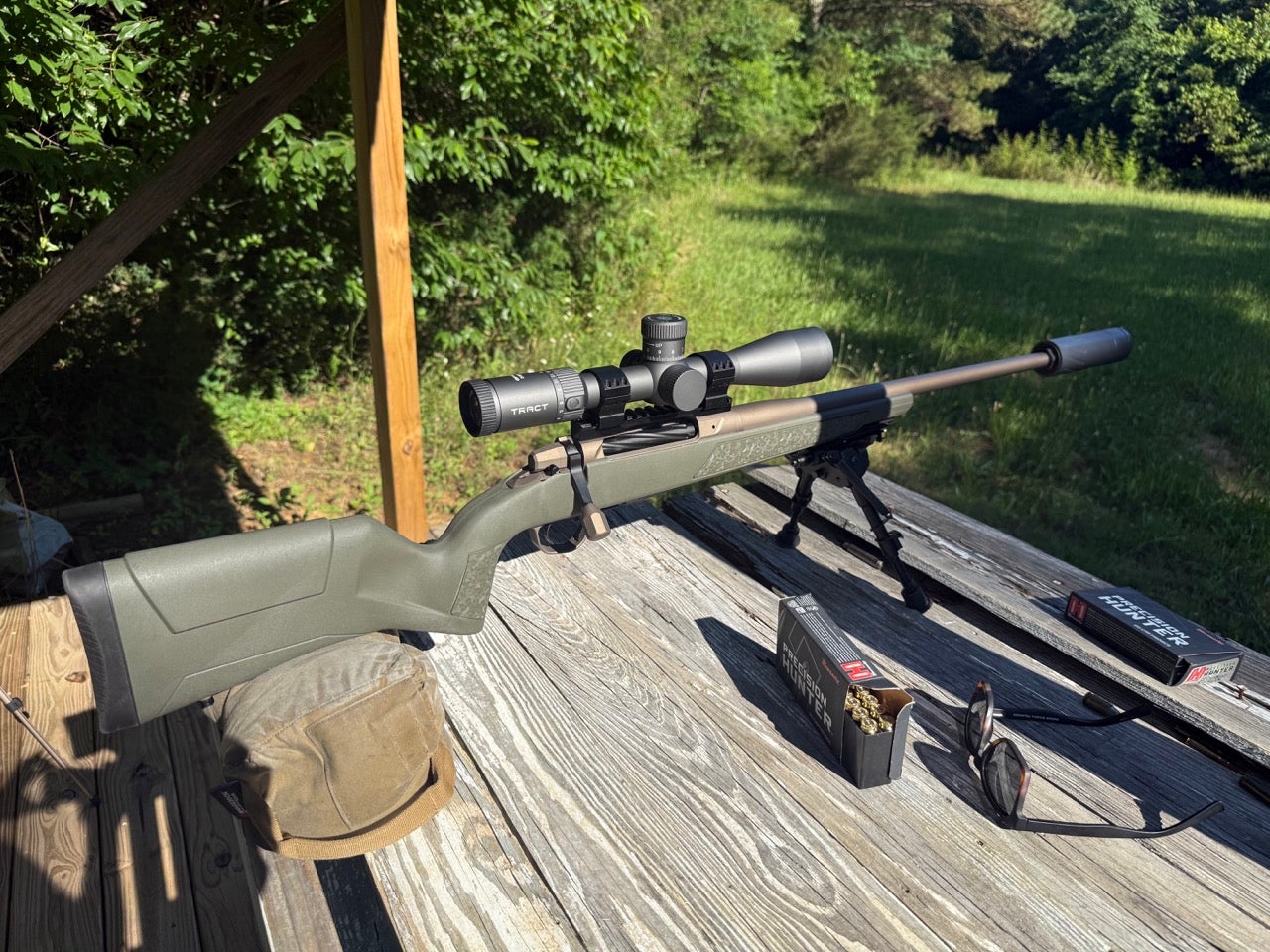
Quarter-bore rifles have a long history in the deer woods and on the open plains. The .250 Savage was a hit with hunters in the early 1900s, and the .257 Roberts followed in the 1930s, building a loyal following among deer and pronghorn hunters who liked its mild recoil and flat flight. The .25-06 Remington took that idea further, pushing a .257 bullet fast enough to become a go-to for western hunters, and Weatherby’s .257 Magnum pushed it faster still. Plenty of guides and old-timers have a story about a quarter-bore that never seemed to miss.
Then the 6.5s and .270s took over, and for a long time the quarter bore faded from the spotlight. Part of the reason was the bullets. Compared with the 6.5mm world, shooters had far fewer sleek, high-BC projectiles to choose from, and ballistic coefficient is what wins at long range. That’s the gap Hornady went after with the 25 Creedmoor. It’s the first SAAMI-accepted .25 caliber cartridge built around modern low-drag bullets, in a short action package with the same pedigree as the 6.5 Creedmoor. It lands between 6mm and 6.5mm, with stronger wind resistance and manageable recoil, and is a versatile cartridge that can truly do it all from hunting varmints to big game.
Christensen was one of the early manufacturers chambering the new cartridge, which is how this rifle ended up on my bench to evaluate. I wanted to see what the cartridge could do in a relatively affordable build: a Christensen Arms Evoke, a Tract Optics Toric UHD 2.5-15×44 scope, a .30 caliber suppressor, and Hornady factory ammo.
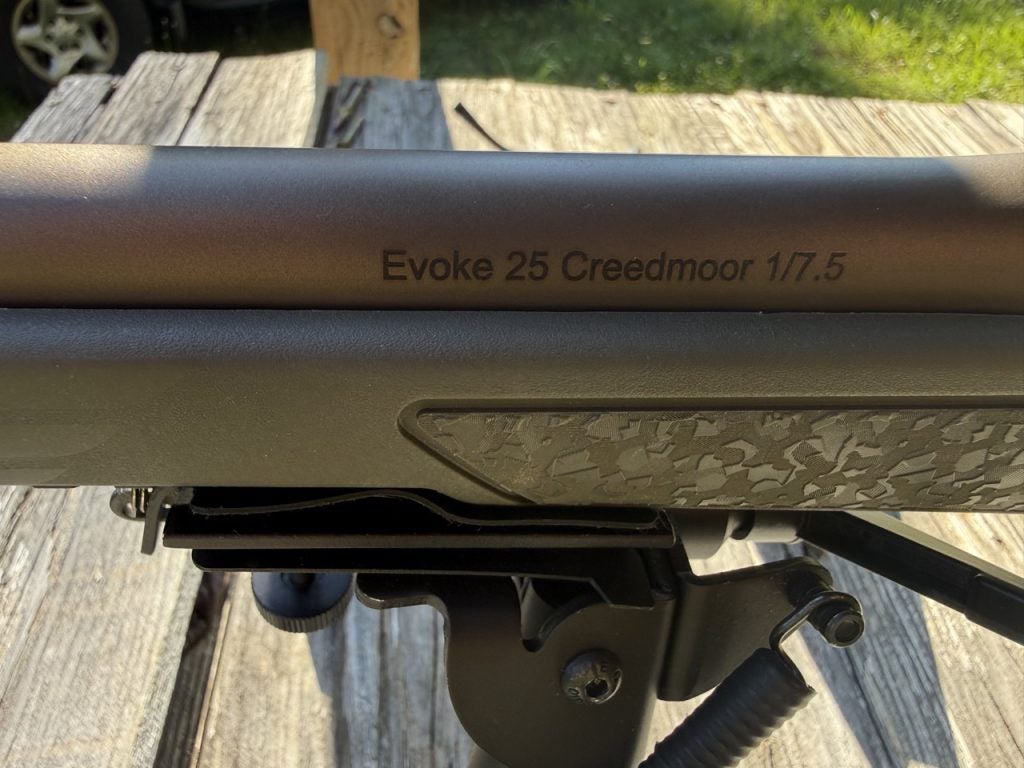
The Rifle: Christensen Arms Evoke
Christensen Arms built the Evoke to bring its quality to a lower price, and the numbers back that up. The MSRP price runs from $999 to $1,049 depending on the stock and barrel configuration, with a starting weight of 7.7 pounds. Here is what you get:
- A 20″ button-rifled, free-floated 416R stainless medium contour barrel with a 1:7.5 twist for the 25 Creedmoor
- A precision-machined receiver on the proven Remington 700 footprint
- An adjustable TriggerTech, set at roughly 3 pounds from the factory and adjustable from 2.5 to 5
- A polymer stock with an integrated Picatinny section, a hybrid grip angle, and a nice recoil pad
- A 5/8×24 threaded muzzle with a color-matched thread protector
- A detachable three-round magazine and a sub-MOA accuracy guarantee with match ammunition

One quirk is worth knowing before you buy. Christensen uses a long-action receiver regardless of caliber, so a short cartridge like the 25 Creedmoor sits in a slightly bigger footprint than it needs. This is common for rifle manufacturers to keep the costs down and the prices more affordable, and to me it’s a worthy tradeoff. The bolt is silky smooth and the TriggerTech trigger has a premium feel.
A word on cleaning. The two rifles I’ve tested in 25 Creedmoor tend to like a little more frequent attention at the cleaning bench than some of the milder cartridges. Accuracy started to drift after shooting 50-75 rounds as the fouling built up, and a routine bore cleaning brought groups back in line.
The Glass: Tract Toric UHD 2.5-15×44
The Tract Toric UHD 2.5-15×44 scope is the other half of the rifle build. It is a first focal plane optic with a 30mm one-piece tube, SCHOTT HT glass, and extra-low dispersion elements, built in Japan and designed in the U.S.
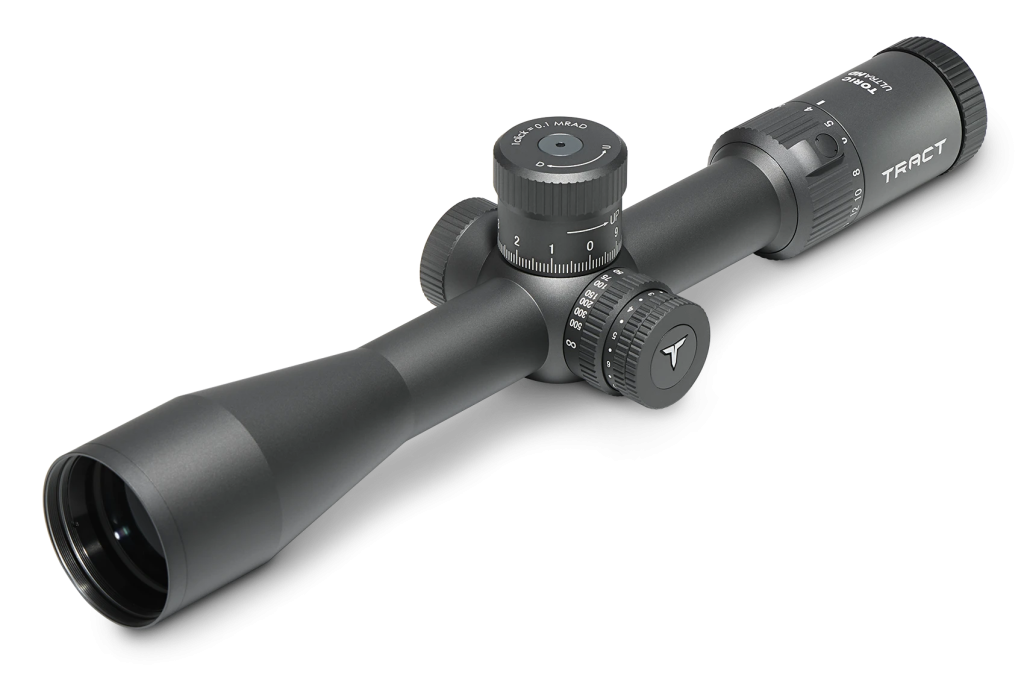
The specs that matter for a hunting rifle:
- 2.5-15x magnification, so you can cover a close-timber shot or stretch out across a canyon
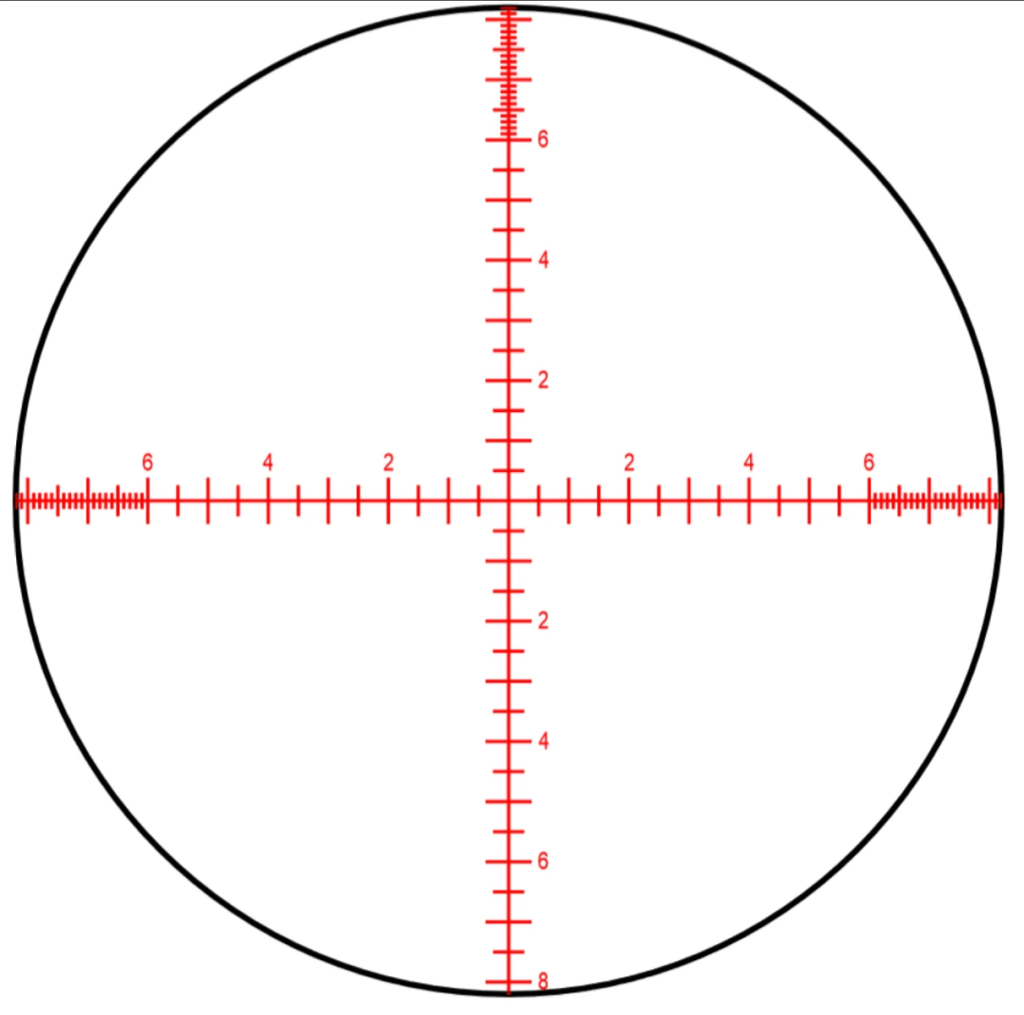
- A glass-etched MRAD reticle with 0.5 mil hash marks, 1 mil references, and 0.25 mil grids on the upper post and horizontal arms
- 0.1 mil clicks, 30 mils of elevation travel, a locking elevation turret, and a multi-rotation zero stop
- An illuminated reticle with 11 intensity settings and off positions between each
- Side-focus parallax from 10 yards to infinity
- 4 inches of eye relief and a 3″ sunshade in the box
It weighs 29.8 ounces, which isn’t feathery, but it’s manageable on a 7.7-pound rifle. The FFP design means the holdover marks stay true at any magnification, which matters when you’re ranging a deer through a rushed zoom. The SCHOTT HT glass is known for it’s clarity, and I found it earned it’s legendary reputation. The locking zero stop turrets are smooth to operate but still tactile, an experience that seems contradictory until you’ve felt it first hand. The $1,094 price point is less than many other scopes with similar glass quality and features.
Adding the Suppressor
The Evoke’s standard 5/8×24 threads meant the Banish MeatEater suppressor I already had on hand bolted right on. It adds some length and weight out front, but the 20-inch barrel keeps the overall length and balance quite manageable. The MeatEater tames muzzle blast and the anchor brake softens the push on a cartridge that is already easy on the shoulder, which allows you to easily spot your shot in the field or on the clock during a competition stage. It also protects your ears as well as your hunting partner’s, and improves the entire hunting and shooting experience.
Range Testing: Two Hornady Loads
Hornady currently offers four factory loads in 25 Creedmoor, and each has its own job:
- 95 gr. ELD-VT V-Match: the varmint and target load, advertised at 3,250 fps, with a fast-fragmenting bullet for prairie dogs, coyotes, and similar targets
- 112 gr. CX Superformance: a copper-bullet option for hunters who want deep penetration and lead-free performance
- 128 gr. ELD-X Precision Hunter: the traditional long-range big game choice
- 134 gr. ELD Match: a target bullet, great for banging steel targets and competition
I tested the last two loads that Hornady sent me, shooting groups at 100 yards with the suppressor attached.
| Load | Avg. Velocity | Best Group | Avg. Group |
|---|---|---|---|
| 128 gr. ELD-X Precision Hunter | 2,790 fps | 0.765″ | 0.881″ |
| 134 gr. ELD Match | 2,711 fps | 0.837″ | 0.986″ |
Both loads stayed under an inch on average, which backs up Christensen’s sub-MOA guarantee. The ELD-X was the clear winner, shooting tighter groups and running about 80 fps faster. Its 0.881″ average works out to roughly 0.84 MOA. The ELD Match was a touch looser at 0.986″ on average, still sub-MOA, but only just. Since the ELD-X is also the bullet designed for hunting, that’s the load I’d put in the magazine for a big game hunt. I also stretched both loads out to 300 and 500 yards and had no problem banging steel targets, and you could see the wind bucking ability much better at these ranges.
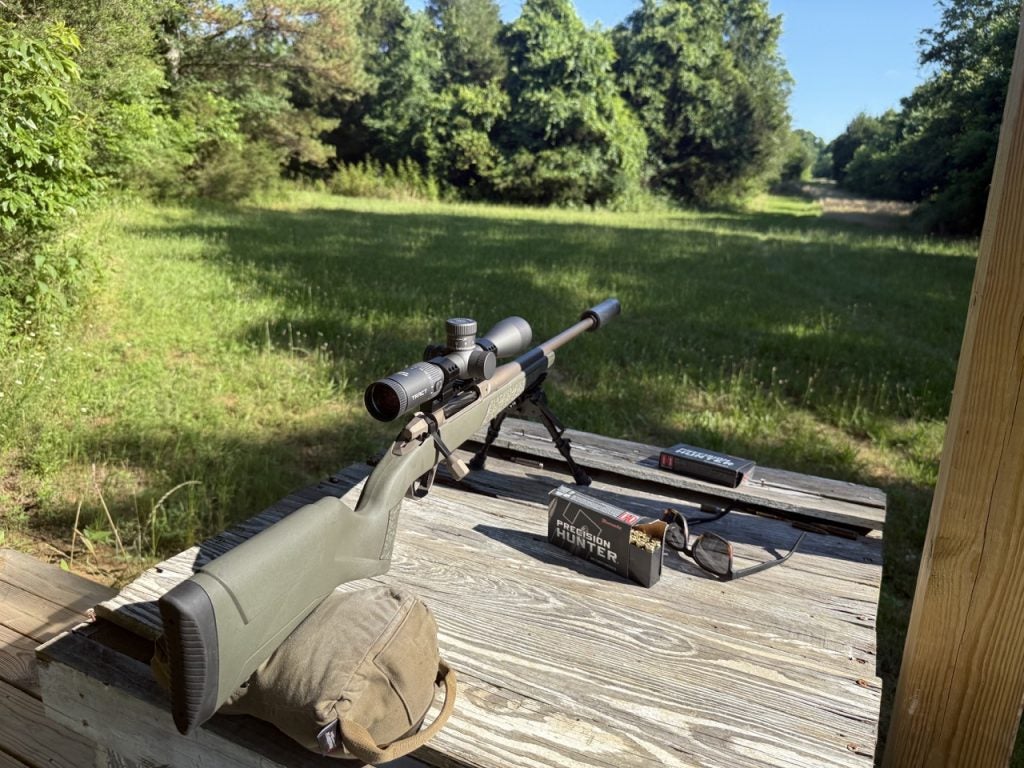
I didn’t get to shoot the 95 gr. ELD-VT or the 112 gr. CX on the bench for this review, so I can’t speak to how this Evoke handles them. For someone who wants one rifle that covers deer and varmints, this is a natural pairing worth trying out.
Final Verdict
The Evoke in 25 Creedmoor isn’t trying to be a custom rifle, and that’s the point. It pairs a good barrel, an upgraded trigger, and a standard action with a cartridge built for modern bullets and wind-fighting performance. Add a scope that gives you real MRAD tools and a can that keeps the bullet on target, and you have a legitimate long-range hunting setup for roughly the price of a premium optic alone. If you’ve been waiting for a sensible way into long-range shooting and hunting, this is a strong place to start.