

The growing popularity of suppressors among both hunters and tactical shooters has brought increased attention to the various mounting systems available on the market. When selecting a suppressor, the mounting system is a critical consideration that directly impacts performance, convenience, and versatility.
The two primary mounting types—direct thread and quick-detach (QD)—each offer distinct advantages and disadvantages depending on your specific needs and usage scenarios. This comprehensive comparison examines both systems through the lens of practical application, helping you determine which option best suits your particular requirements.
Whether you’re a hunter seeking noise reduction in the field or a tactical shooter needing rapid deployment capabilities, understanding the nuances of these mounting systems will guide you toward making an informed decision.
Direct Thread Suppressors: The Basics
Direct thread suppressors represent the most straightforward mounting solution available. As the name suggests, these suppressors thread directly onto the barrel of your firearm using the barrel’s existing threads.
The concept is elegantly simple: the suppressor has internal threads that match the thread pattern of your barrel, allowing for a direct connection without additional components or adapters. This design philosophy emphasizes simplicity and reliability above all else. The direct thread approach has been around since the earliest days of commercial suppressors and continues to maintain a significant market presence despite the introduction of more complex mounting systems.
Its enduring popularity stems from several key advantages that remain relevant for many users, particularly those with bolt action rifles who prioritize accuracy, weight considerations, and straightforward operation. Some popular direct thread suppressors include the Griffin GP7, Q Half Nelson, and Texas Silencer Company Hunter.
Advantages for Hunters: Direct Thread
For hunters, direct thread suppressors offer several benefits that align perfectly with field requirements. The most significant advantage is their exceptional accuracy potential. Without the additional tolerances and potential play that can occur with QD systems, direct thread suppressors typically provide superior precision.
This is particularly valuable for hunters taking long-range shots where every fraction of MOA matters. The secure, solid connection creates minimal point-of-impact shift, allowing for consistent shot placement—crucial when ethical harvesting is the goal. Weight reduction is another major benefit. Direct thread systems eliminate the need for additional muzzle devices or adapter collars, reducing the overall weight at the end of your barrel. During long stalks or extended hunts, every ounce matters, and the lighter profile of direct thread suppressors can significantly reduce fatigue.
The simplicity of this system also means fewer things can go wrong in the field. There are no levers to jam, ratchets to fail, or locking mechanisms to malfunction when you need your equipment to perform flawlessly.

Tactical Applications: Direct Thread Benefits
In tactical scenarios, direct thread suppressors offer distinct advantages that might surprise those who assume QD is always superior for operational use. The reduced overall length is perhaps the most significant tactical benefit.
Without the need for a muzzle device interface, direct thread suppressors can be designed with a shorter overall profile, improving maneuverability in tight spaces such as vehicles, structures, or dense vegetation. This compact footprint can make a meaningful difference in CQB (Close Quarters Battle) situations. The reliability factor cannot be overstated in tactical applications.
Direct thread suppressors have fewer moving parts and locking mechanisms that could potentially fail under stress or harsh conditions. This simplicity translates to dependability when it matters most. Additionally, direct thread suppressors typically produce less flash signature compared to many QD systems that incorporate flash hiders or muzzle brakes as their mounting interface. The lower profile of the direct thread design minimizes visual signature—a critical consideration for night operations or situations requiring maximum stealth.
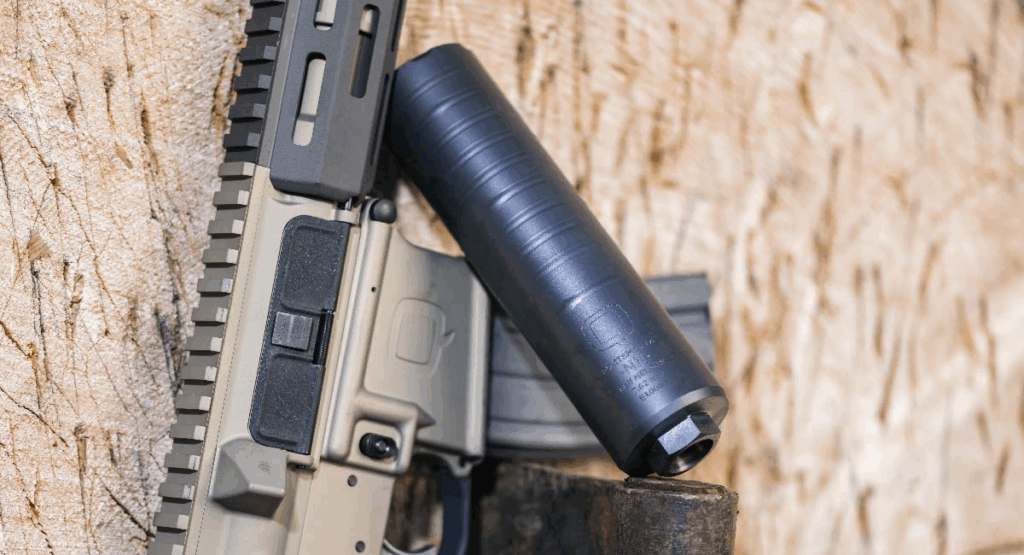
Disadvantages: The Direct Thread Drawbacks
Despite their advantages, direct thread suppressors come with a few notable limitations. The most obvious drawback is the time required for attachment and removal. Threading and unthreading a suppressor takes longer than engaging a QD system, making rapid transitions between suppressed and unsuppressed configurations impractical. This process becomes even more cumbersome when the suppressor is hot after firing, often necessitating the use of heat-resistant covers, gloves or tools.
Another significant concern is the potential for suppressors to loosen during use. The rotational forces generated by firing can gradually unthread the suppressor, requiring periodic checking and tightening during extended shooting sessions. This issue becomes particularly problematic in semi-automatic and fully automatic firearms where rapid fire accelerates this loosening effect.
Carbon locking represents another challenge, where carbon build-up between the threads can make removal extremely difficult after extensive use. This problem may require specialized tools or even professional assistance to resolve in severe cases, leading to frustration and potential downtime.
Quick-Detach Systems: A Versatile Approach
Quick-detach mounting systems represent a more modern approach to suppressor attachment, designed specifically to address the limitations of direct thread options. These systems utilize a separate muzzle device (typically a flash hider or muzzle brake) that remains permanently installed on the firearm’s barrel.
The suppressor then attaches to this muzzle device through various locking mechanisms—ranging from ratcheting toothed systems to spring-loaded collar designs. The fundamental principle remains consistent across different proprietary systems: allow for rapid attachment and removal while maintaining a secure connection during use.
QD systems have seen significant innovation over the past decade, with manufacturers continuously refining their designs to improve strength, repeatability, and ease of use. This evolution has made QD suppressors increasingly popular among both civilian and professional users seeking maximum versatility from their suppressor setups.

QD Attachment Methods: A World of Options
The landscape of QD suppressor attachment mechanisms has evolved significantly, with manufacturers developing proprietary systems that each offer distinct characteristics. Ratchet-based systems, like those pioneered by SilencerCo and Dead Air, utilize precisely machined teeth that interlock with corresponding notches on the muzzle device, creating a mechanical advantage when tightening.
These systems often incorporate a secondary locking mechanism—typically a spring-loaded collar or latch—that prevents rotation once engaged. By contrast, taper-mount systems such as those from Q and Thunder Beast rely on precision-machined conical surfaces that create exceptional concentricity and alignment when the suppressor is fully tightened.
Some manufacturers have developed hybrid approaches, like the three-lug system popularized by Heckler & Koch and widely adopted for subguns, which combines the speed of a bayonet-style mount with a secondary locking mechanism for security. Cam-lock systems, exemplified by Gemtech’s bi-lock and Knights Armament’s designs, utilize rotating cams that lock the suppressor firmly in place with a partial turn of a collar or lever. More recently, self-timing systems have emerged that automatically index to the correct position regardless of how the muzzle device is timed on the barrel, eliminating the need for precision timing of the muzzle device during installation.
Each of these attachment methods offers varying degrees of speed, security, precision, and compatibility, giving users options tailored to their specific requirements.
QD System Categories: Understanding the Options
When exploring QD suppressor systems, it’s important to understand that they generally fall into three main categories, each with specific operational characteristics. Locking passive systems are the most rare out of the QD suppressor types, utilizing spring tension or other passive mechanisms to maintain connection with the muzzle device. These systems typically engage automatically when the suppressor is pushed onto the mount and twisted into position, with the locking mechanism engaging without additional user input. This design balances ease of use with secure attachment, appealing to specialized users seeking specific performance characteristics. Examples of this include the Dead Air Sandman-K or the SilencerCo Omega 300.
Locking active systems, by contrast, require deliberate user manipulation to engage and disengage the locking mechanism. This might involve rotating a collar, flipping a lever, or pressing a button to secure the suppressor to its mounting surface. While requiring an extra step and typically both hands, these systems often provide the most secure connection and typically exhibit the least amount of movement or tolerance stacking. A lot of AR15 shooters like using this type of mounting system because it allows for more peace of mind due to the separate locking collar. Examples include the Rugged Radiant, and the SureFire SOCOM 556 RC2.
The third category, non-locking passive systems typically uses a taper mount that activates the locking system by merely screwing the suppressor onto your host firearm. They provide significant surface contact between the suppressor and mount – which acts like a friction lock. As a result, a taper mount suppressor is far less likely to come unscrewed than a true direct thread suppressor. The taper actually aligns the suppressor better and more consistently than a true direct thread. Some of the best taper mount systems include the Q Trash Panda or the OSS HX-QD 7.62mm. As taper mounts improve, we are seeing more and more precision shooters and hunters using this mounting system.
The Hunter’s Perspective: QD Advantages
For hunters, QD suppressors offer versatility across different hunting scenarios and firearms. The ability to quickly move a single suppressor between multiple rifles can be a game-changer, especially when different calibers within the same family (like .308, 6.5 Creedmoor, and .300 Win Mag) can utilize the same suppressor.
This not only provides economic benefits but also reduces the number of suppressors you need to transport into the field. The rapid attachment capability can also prove valuable when hunting in areas with mixed regulations or when transitioning between different hunting environments. For instance, you might want to shoot a high volume range session unsuppressed during the day but quickly attach your suppressor for an evening hunt.
Additionally, the muzzle devices used with QD systems often function as effective muzzle brakes when the suppressor is removed, providing recoil reduction benefits with hard-recoiling hunting calibers.
Tactical Superiority: QD Systems in Action
In tactical applications, QD suppressors truly shine with capabilities that often align perfectly with operational requirements. The most obvious advantage is the rapid transition capability, allowing operators to quickly adapt to changing mission parameters or equipment malfunctions.
If a suppressor sustains damage or experiences an internal failure, the ability to remove it quickly can mean the difference between continuing a mission and being forced to abort. The secure lockup mechanisms of modern QD systems effectively eliminate the loosening problems associated with direct thread options, maintaining zero even during sustained rapid fire or full-auto use. This is crucial for maintaining accuracy during high-stress engagements.
Many QD systems also improve flash suppression capabilities through their muzzle device interfaces, which continue to reduce visible signature even when the suppressor is removed. This dual functionality provides tactical advantages in varied lighting conditions, whether operating with or without the suppressor attached.

The Drawbacks: QD System Limitations
Despite their advantages, QD systems introduce several compromises that users must consider. The additional components required—muzzle devices, locking collars, and more complex internal mechanisms—add both weight and length to the overall package.
This increased bulk can be noticeable, especially on lightweight hunting rifles or when maneuverability is paramount. There’s also typically some degree of point-of-impact shift when attaching and removing suppressors with QD mounts, even with the best designs on the market. While this shift is usually consistent and can be accounted for, it remains a consideration for precision applications.
The cost factor cannot be ignored either. QD systems generally command a premium price over comparable direct thread options, and the need for specific muzzle devices for each firearm adds to the overall investment required. This economic consideration becomes especially significant when outfitting multiple firearms with compatible mounting solutions.
Making Your Choice: Practical Considerations
When deciding between direct thread and QD suppressors, consider your primary use case realistically.
For dedicated hunting rifles that will always be used suppressed, direct thread often provides the best combination of accuracy, weight savings, and simplicity.
For tactical applications requiring rapid adaptability, the advantages of QD systems typically outweigh their drawbacks despite the additional cost and complexity.
Ultimately, many serious shooting enthusiasts end up owning both types of systems, recognizing that each has its place depending on the specific application and firearm platform in question.

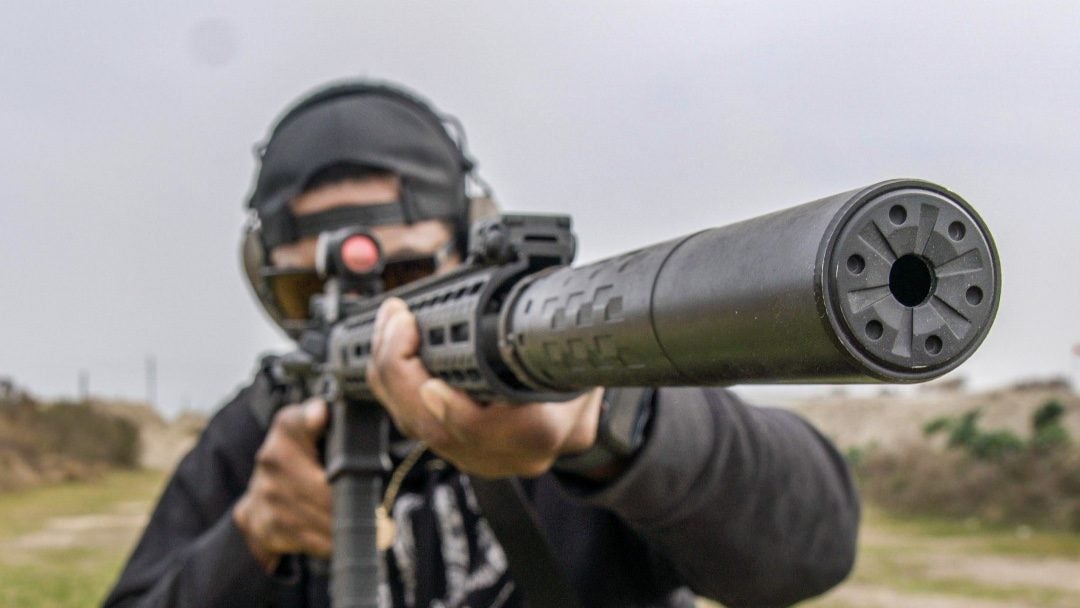
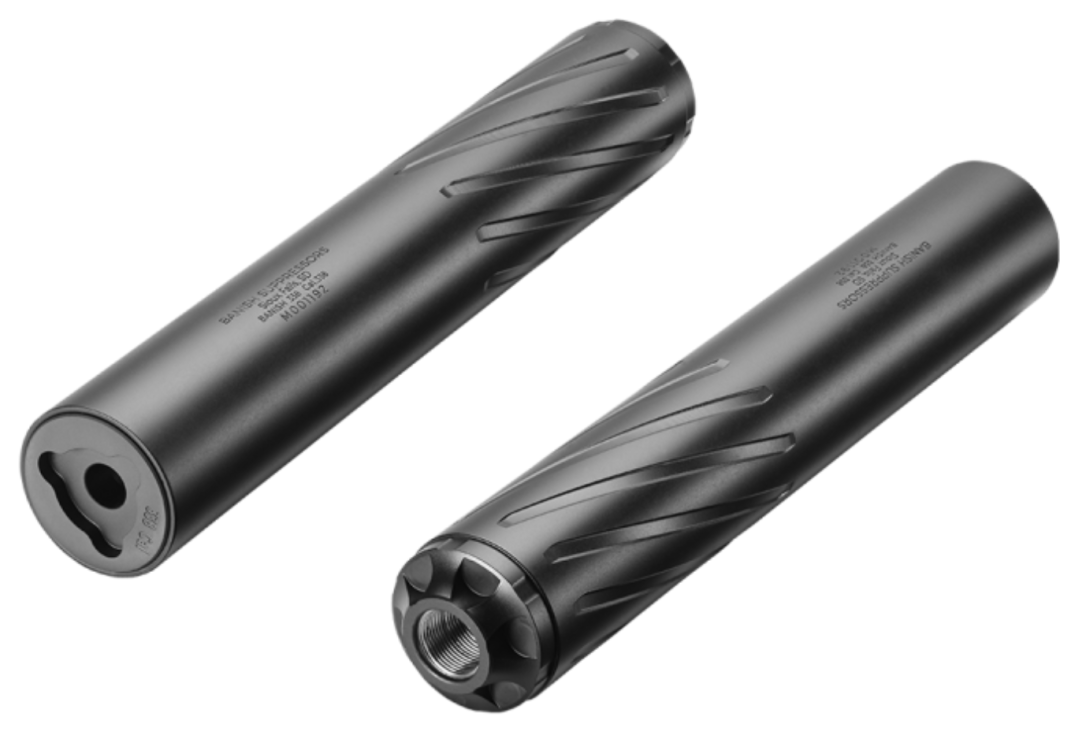
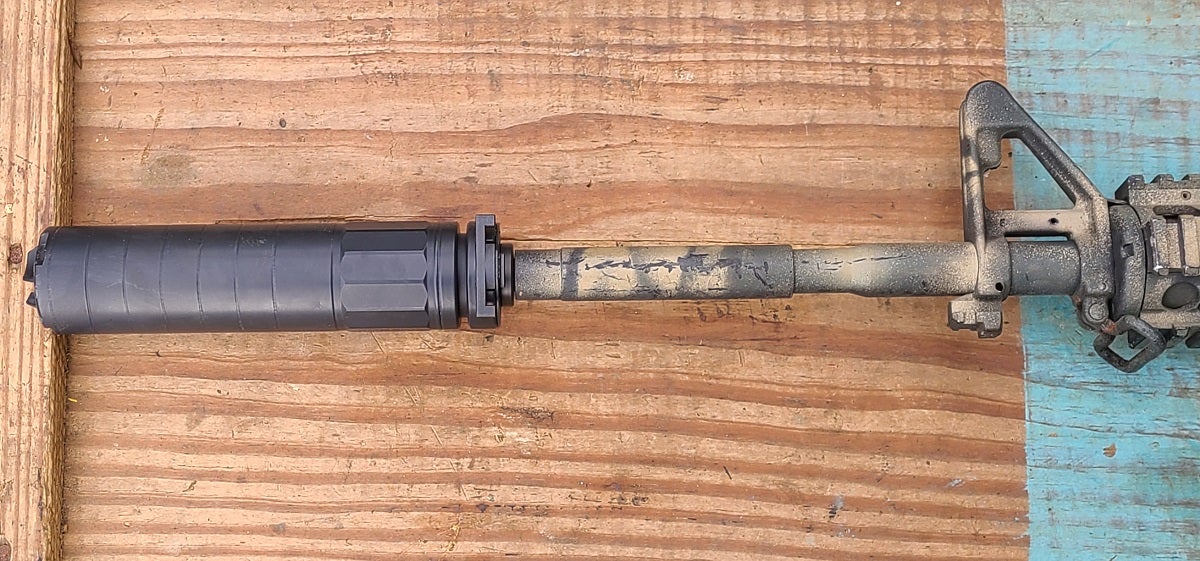


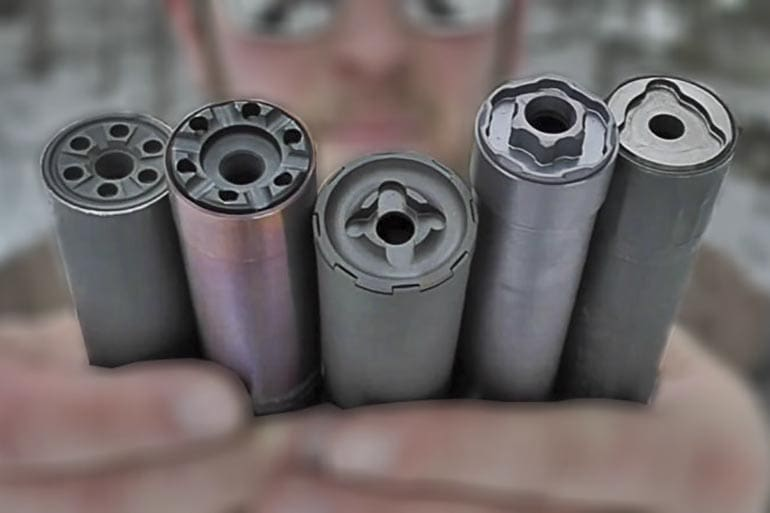
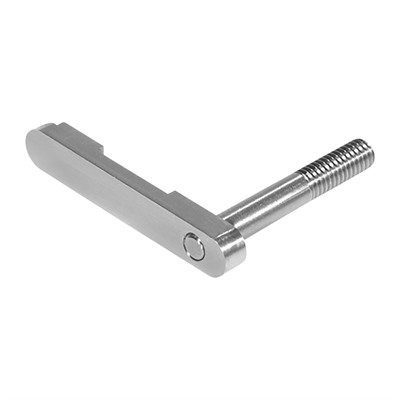




Many thanks for this explanation of attachment systems. With respect to QD mounts, is there any particular brand or model of muzzle device that provides broadest compatibility with suppressors from different manufacturers? Consider the scenario of purchasing a rifle with a pin-and-weld muzzle device (for shorter barrel length) where a suppressor would be selected for purchase based on options that fit that muzzle device – which muzzle device would give the greatest number of options?
Check out a HUB mount silencer (https://www.silencershop.com/blog/suppressor-hub-mount). You can then pick a wide variety of different mount options to work with that silencer. I’d recommend a Plan B style mount, as that seems to be one of the most widely accepted QD mounts.
Much appreciated!
Hello sir, i started with Direct Thread mounts because it was simple, cheap, and included with my suppressor lol. I found i had to re-tighten the can on my AR15 every mag or two (didn’t want it falling off or worse getting cock-eyed out of concentricity with the bore and now i’ve shoot my own can and wrecked it!). I also found the point-of-impact shift was different every time I screwed it onto my AR, which was annoying for precision shooting. I did find my groups got tighter with the can, using several different brands of ammo (probably i am flinching less with the can).
Eventually when funding allowed, i chose the KeyMo QD mount system from Dead Air. I got the KeyMo suppressor mount and muzzle devices about 1/3 off on a sale from Dack Outdoors. Dead Air’s KeyMo suppressor mount uses the HUB “standardized” thread pitch of 1.375×24 to screw into the back end of the can…slide it over a KeyMo pattern muzzle break or flash hider, give it a 1/4 turn to lock the ratchet, and it cannot come off no matter how many rounds you fire. Also the POI shift is exactly the same every time I mount the can because it uses a groove at 12:00 to index and can only be installed that 1 way…wrote down my POI shift of about 1.25″ and its the same every single time.
“HUB” is the threads in the rear of the can – since my can is “HUB” threaded i can put the KeyMo mount in my can when i want to shoot it on my AR’s that have KeyMo muzzle devices, and put the “HUB” threaded pistol booster into my can when i want to shoot the can on my pistols. Several different manufacturers are making KeyMo pattern muzzle devices now, it seems to be on its way to the most popular non-taper-mount QD system. There are even KeyMo compatible “blast cans” now, if you have the muzzle device and suppressor mount, and want to make your firearm not so obnoxious for the people next to you (IE and SBR/braced pistol with a KeyMo muzzle break will rattle the teeth of the shooter two benches over from you….blast can is not a suppressor, its a megaphone focusing the concussion downrange instead of sideways, more or less negating the muzzle brake sideways blast without removing it…hope some of my experience is helpful and happy shooting!
Very helpful, thank you!
I forgot to answer your original pin&weld question sir. There are a very few cans out there that are designed to clamp directly onto a standard milspec A2 birdcage flash hider (discontinued GemTech HALO and AAC Omni, Griffin GP-N might be the only one still in production, maybe a couple others or A2->HUB mounts available now, this method of attachment is out of fashion now).
Griffin’s QD system locks into the bayonet grooves on the A2 flash higher I think. PRO’s: quick, easy, and cheap, no gunsmith required to remove the pin&weld muzzle device’ easily portable between multiple AR’s with standard A2 flash hiders…CON’s include: the can’s A2 birdcage mount is a permanent part of the can, meaning you can’t screw any other QD mount/Direct Thread/Pistol Booster into the Griffin can and use it on any gun without a A2 birdcage; need to use rods to align it to bore axis, lotta sloppy tolerances in this attachment method, don’t want a borestrike to wreck your can.
Second option – pay a gunsmith to remove the pin&weld A2 flash hider, and then pin&weld on the QD muzzle device you like best (and is long enough to make 16″!). KeyMo seems to be popular, other popular QD systems include Q, SureFire, AAC, Xeno, and others, nothing standardized yet in the suppressor industry, pretty much each company has their own mostly-proprietary QD system). This option is expensive but opens up the entire market of mounts&cans.
Third option, mid cost – replace the pin&weld barrel with a non pin&weld 16″+ barrel and replace the muzzle device with whatever QD mount you prefer (or simply Direct Thread). A 16″ bbl with a really short can (such as 4-6″ Banish Speed K, YHM Fat Cat, Huxwrx Flow 556K) might end up shorter overall than a 14.5″ bbl with a typical length 8-12″ can…
Also helpful tips, I keep an old oven mitt with my can for removing it and use it a lot to tighten when I was shooting Direct Thread or done shooting for the day. You may also want to buy a high temp “suppressor cover”, the good ones are rated a couple thousand degrees – prevents burns if you sling your rifle, lets you put it in your vehicle a little bit quicker when done at the range without having to wait for it to cool as long, and in my AR I get real bad heat shimmer on the scope after 1 full mag, helps mitigate that heat shimmer. Hope that helps!
My first experience with a suppressed weapon was after I arrived at my first permanent duty station. It was an MP-5 SD. It was threaded. The arms room also had suppressed Woodsmans, or maybe they were Hi-Standards. It was a long time ago and I never had the opportunity to touch one anyway. Since then I’ve had the opportunity to use lots of suppressed weapons. If I were inclined to own one it would be threaded. Incidentally, I have a cousin that just bought his first suppressor. His paperwork cleared in four days.